
Last updated September 23, 2026
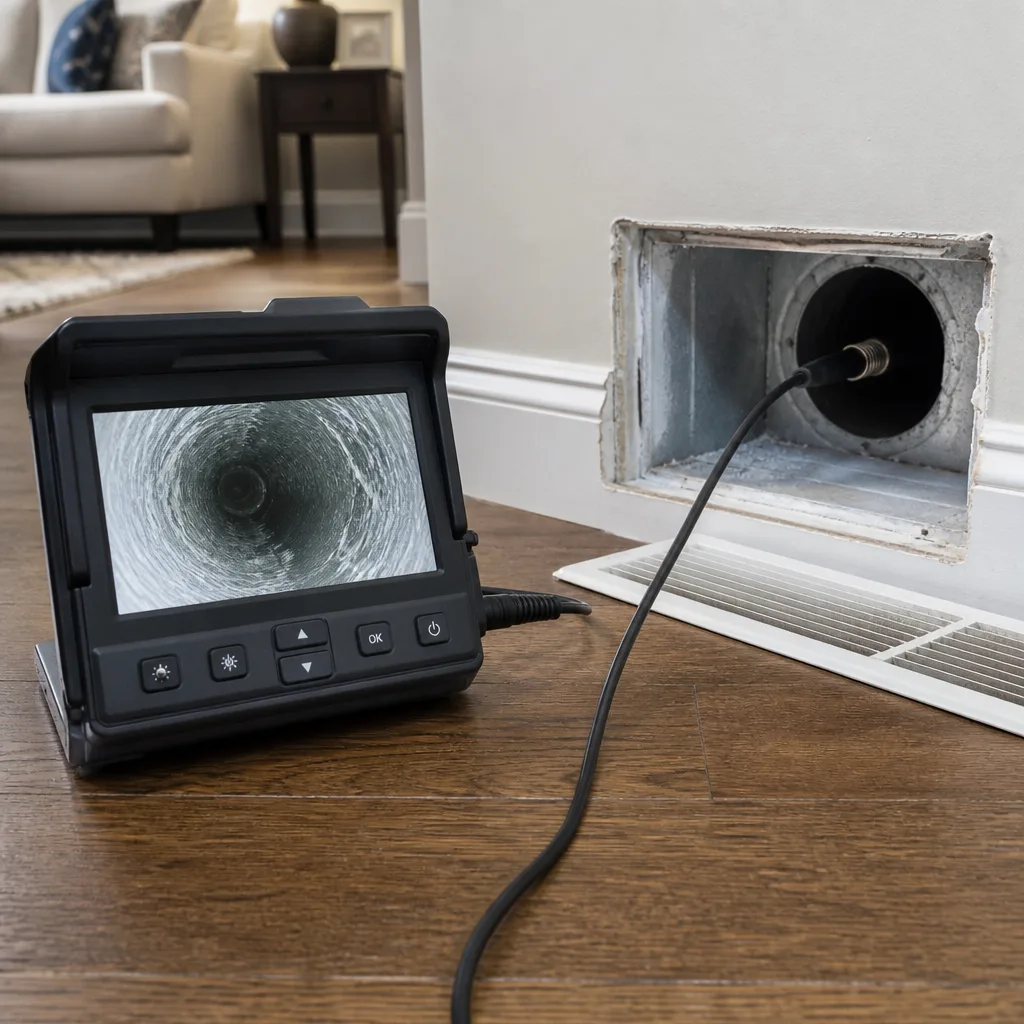
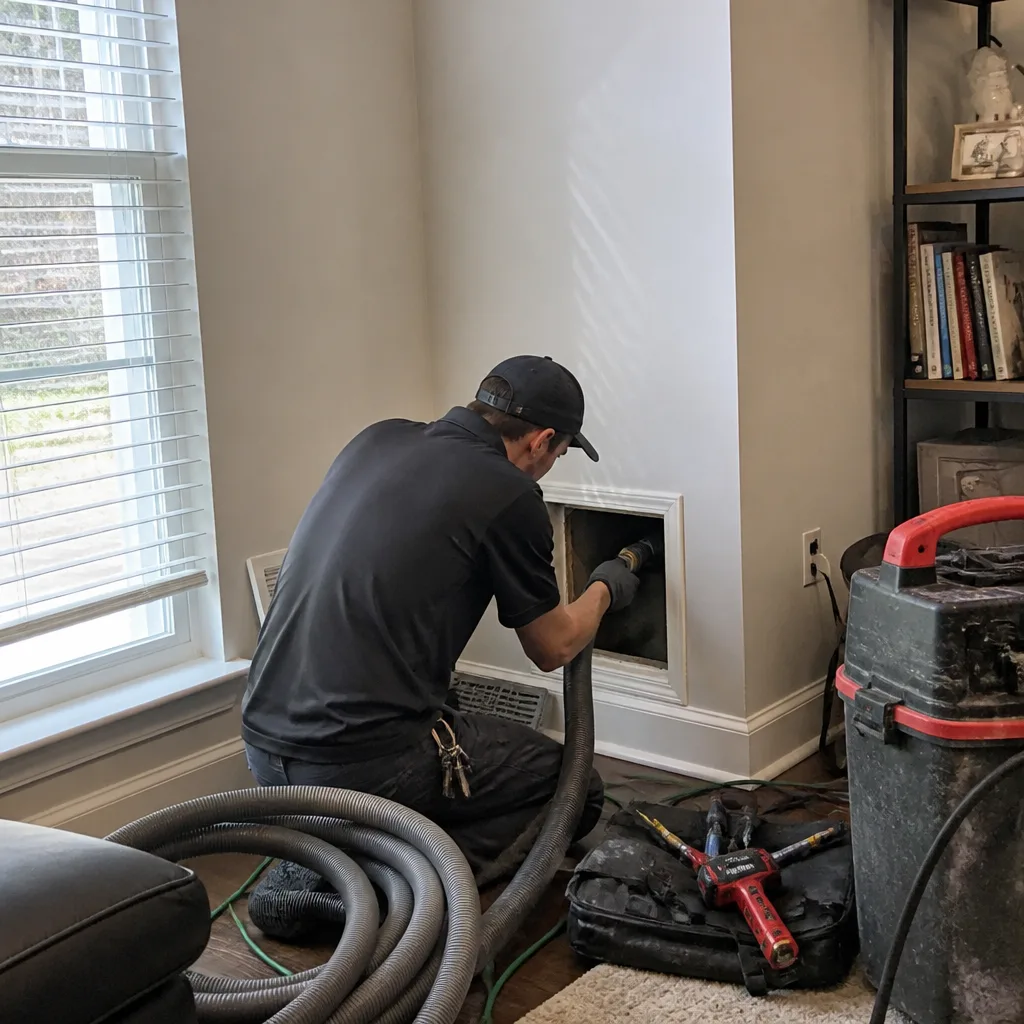
Whole-system duct and dryer vent check with before-and-after photos - you see exactly what came out of your vents
That "$99 whole-house special" is a bait ad - the real number appears once they are in your hallway, or the "clean" is a shop-vac at the register. We photograph the inside of your ducts before and after instead.
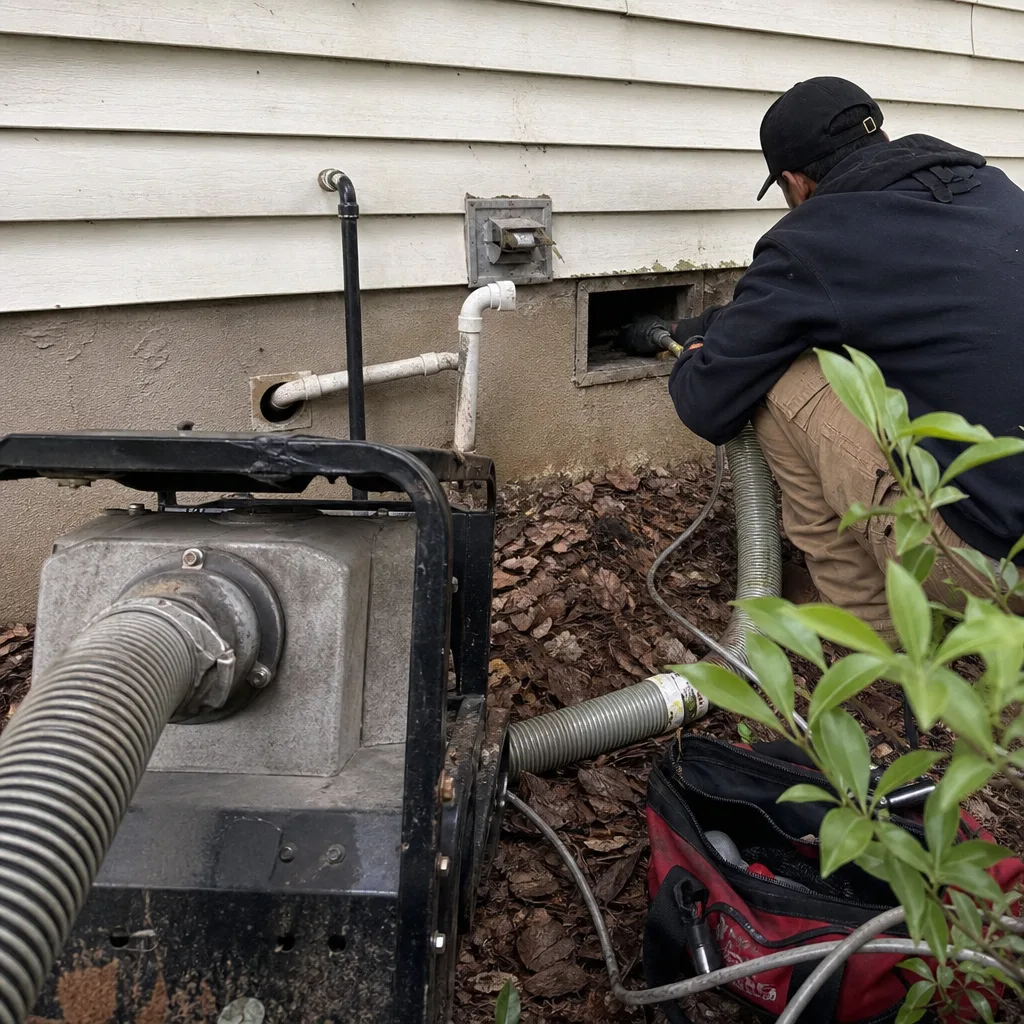 Before
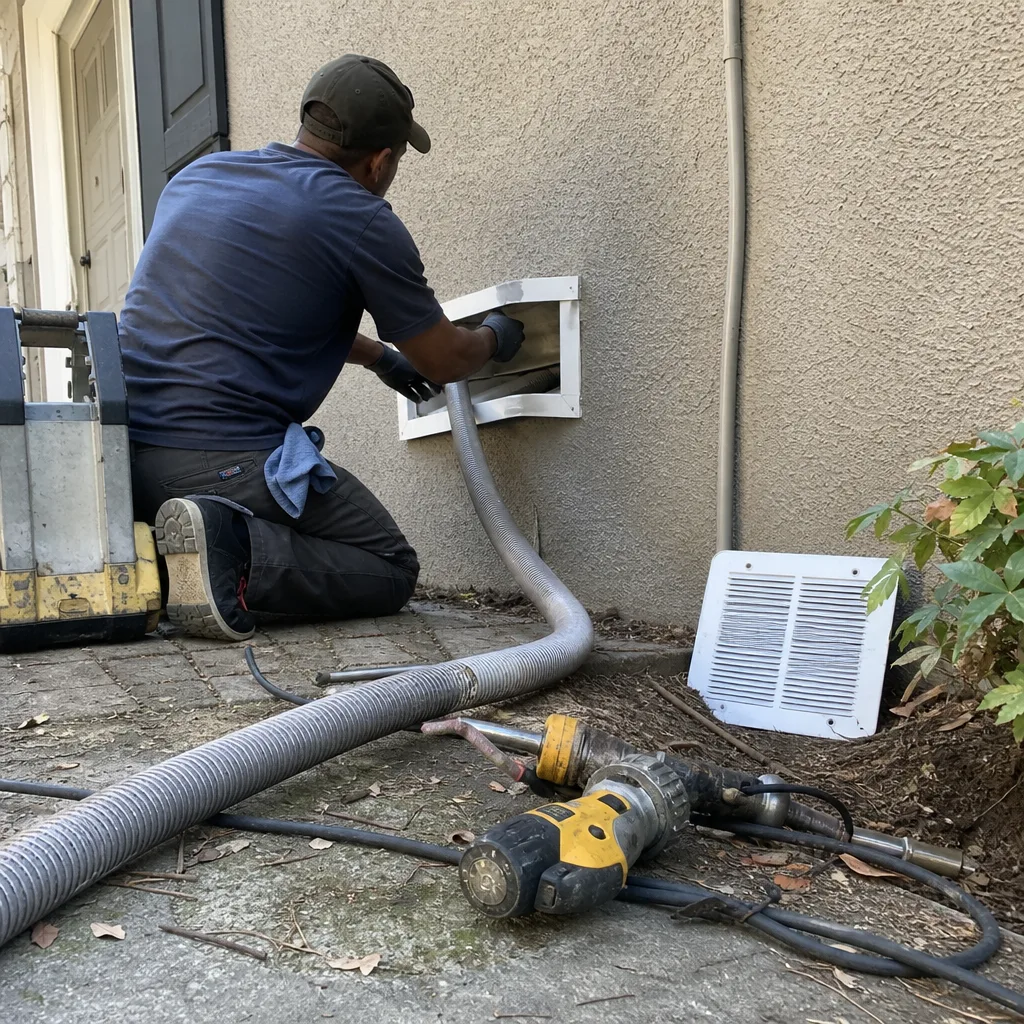 After
After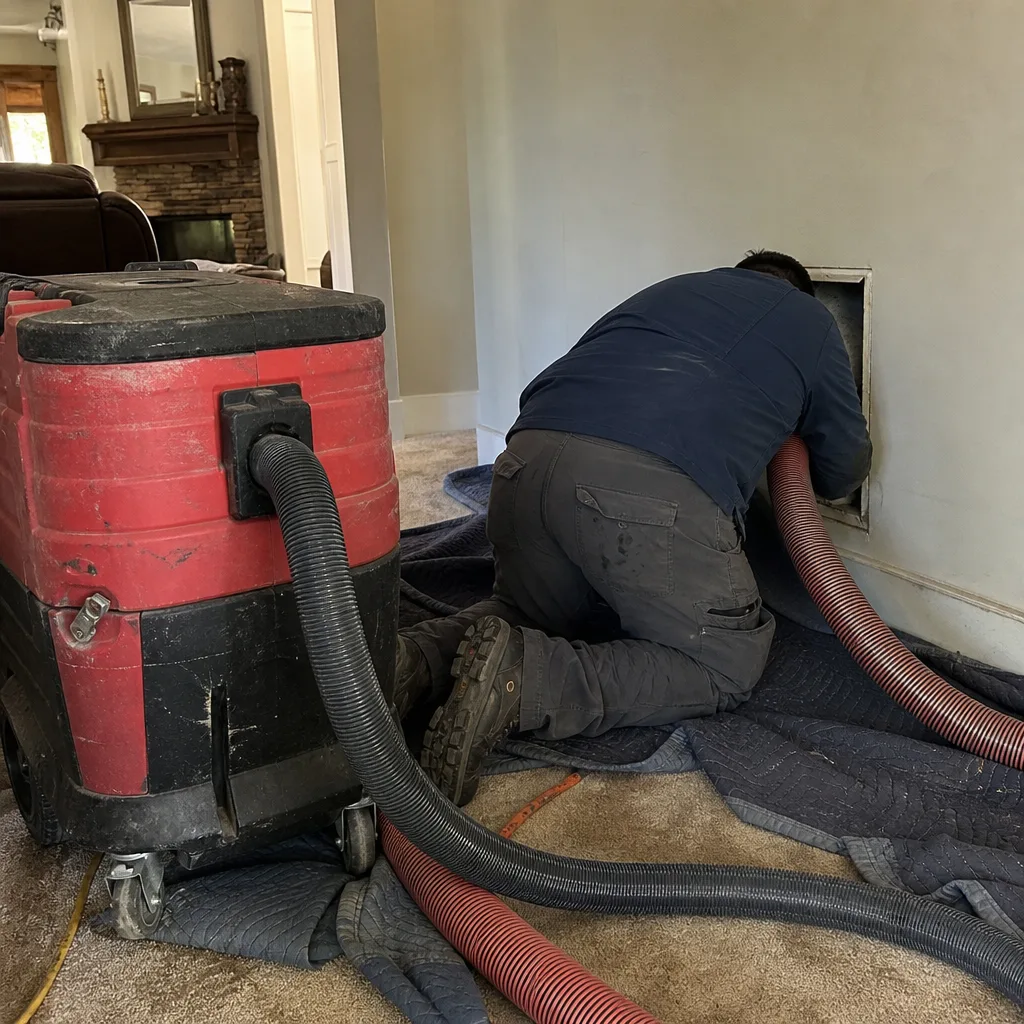 Before
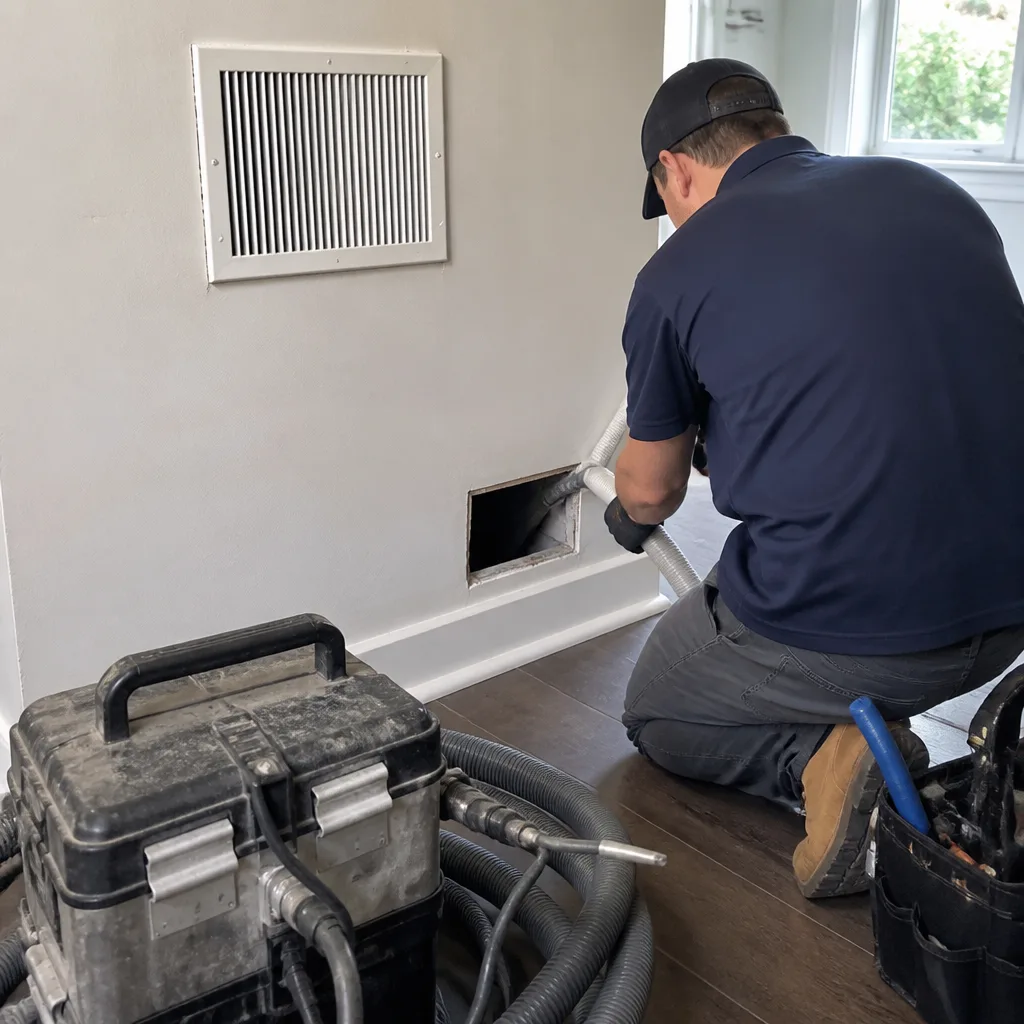 After
After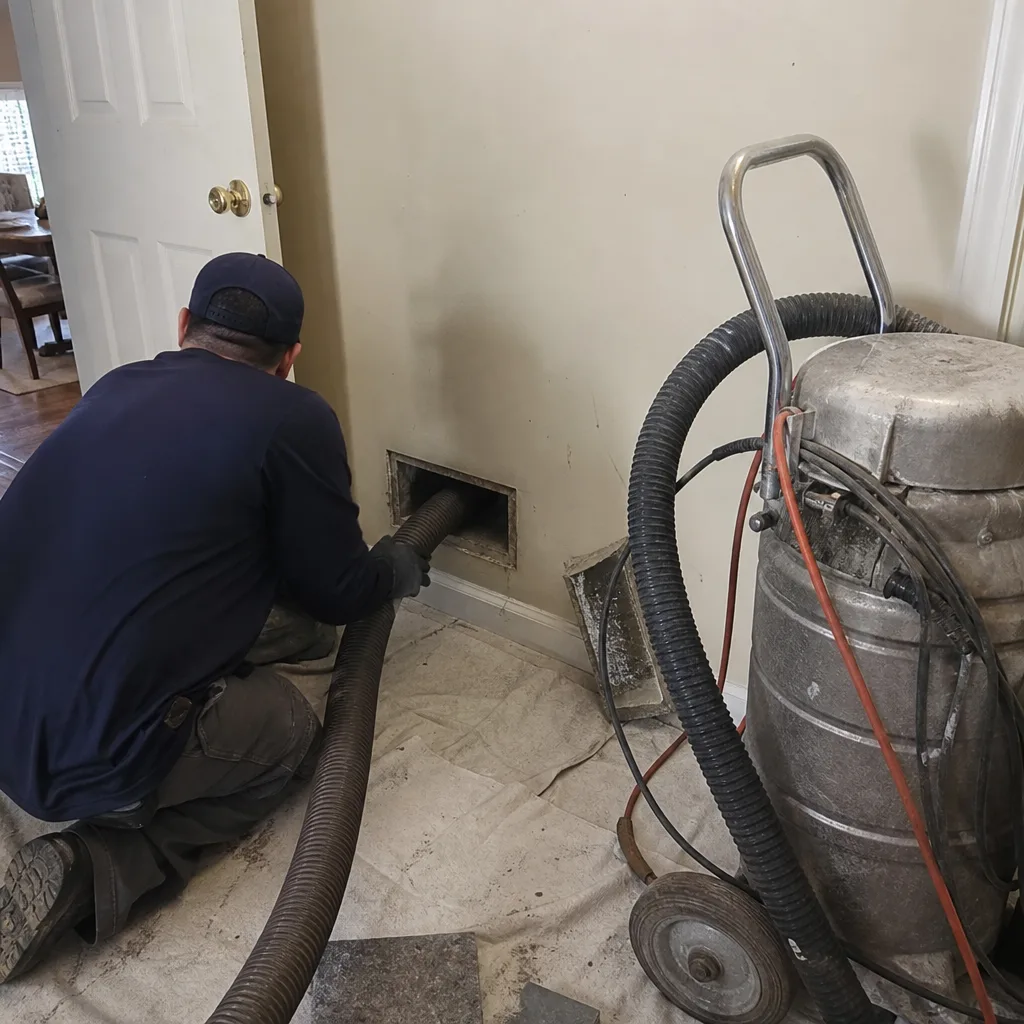 Before
 After
AfterDIY vs Professional Air Duct Cleaning: The Marietta Homeowner’s Decision Guide
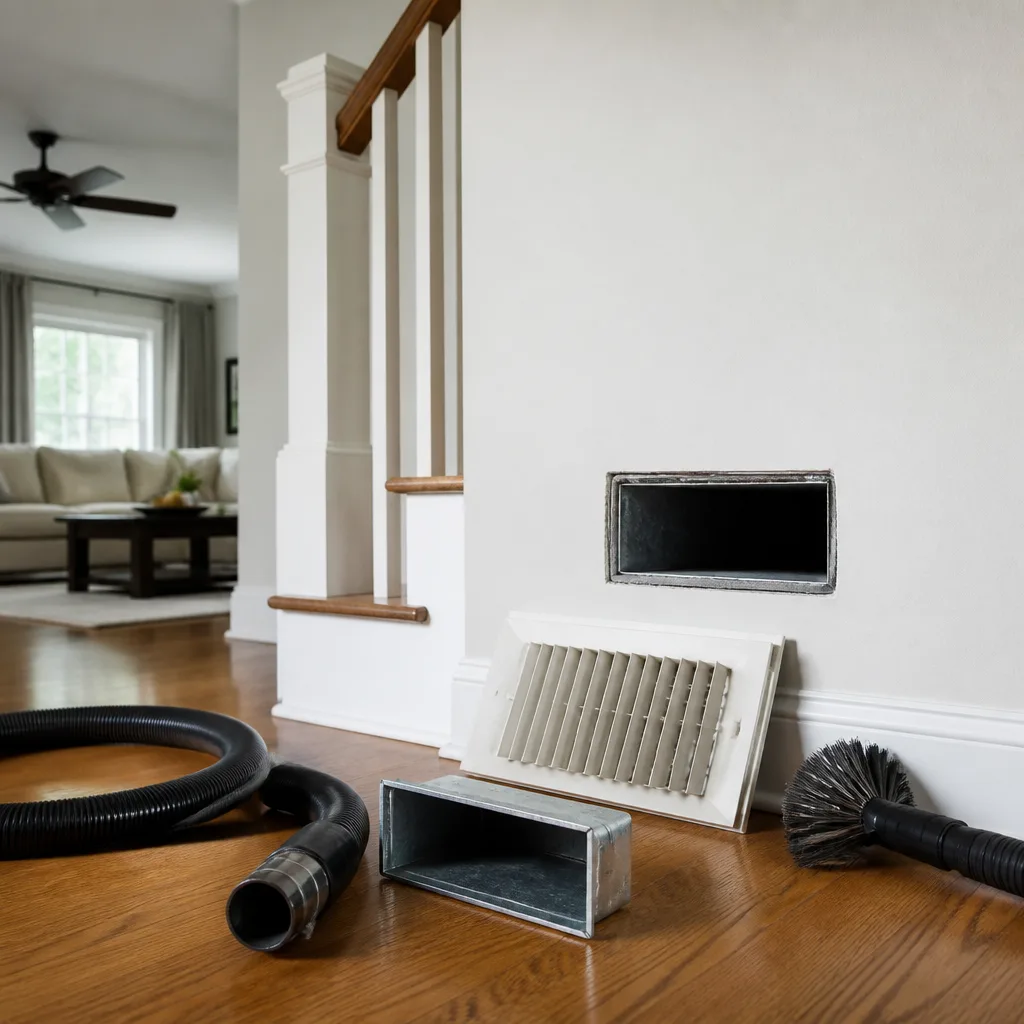
A homeowner in East Cobb with a HEPA shop-vac and a dryer vent brush can clean register grilles, the first 12 inches of each duct run, and the visible return drop. That covers roughly 8% of the system’s total surface area. The other 92% sits past the first elbow, in the trunk lines, and inside the air handler, where the physics of debris removal change completely. This guide draws the exact line between what you can legitimately accomplish yourself and where professional equipment becomes non-negotiable. We’ll cover honest cost comparisons, the documentation gap most homeowners overlook, and how Marietta’s clay-heavy soil and pollen cycles affect what actually builds up inside your ducts.
Quick Answer
DIY air duct cleaning in Marietta is effective for register maintenance, accessible return cleaning, and dryer vent runs, but it cannot remove debris from trunk lines or clean HVAC coils safely. Professional service with negative-pressure extraction runs $350-$850 for a typical Marietta home, while DIY-appropriate tasks save $80-$150 of that scope if done first. The real dividing line is physics: a shop-vac at one end of a duct run without sealed negative pressure at the other disperses more debris than it captures.
Table of Contents
- What DIY Can Actually Accomplish
- The Physics Limitation: Why Shop-Vacs Hit a Wall
- What Requires Professional Equipment
- Honest Cost Comparison: DIY Savings vs. Professional Value
- The Documentation Gap: When It Matters
- Marietta-Specific Factors: Climate, Soil, and Code
- Common Mistakes to Avoid
- When to Call a Professional
- Frequently Asked Questions
- The Bottom Line
BeforeAfterWhat DIY Can Actually Accomplish
We are not going to tell you that duct cleaning is mystical work only a technician can perform. Some of it is straightforward maintenance, and doing it yourself saves money while keeping your system in better condition between professional services.
Here are the tasks where a motivated homeowner with basic tools gets real results:
- Register grille removal and washing. Pop the grilles off, soak them in warm water with dish soap, scrub the fins clean, and let them dry completely before reinstalling. This removes the dust mat that forms on the grille face and the first few inches of the duct opening. In Marietta’s pollen-heavy springs, we see grilles clogged with a felt-like layer of oak and pine particulate that restricts airflow measurably.
- Accessible return filter housing vacuuming. Remove the filter, then use a brush attachment on a HEPA vacuum to clean the sheet-metal box behind it. This is where the largest debris concentration sits in the return path, and it’s fully accessible without entering the duct system.
- Condensate pan inspection and cleaning. The pan beneath your indoor coil collects water and, eventually, biofilm. A wet-dry vac, a bottle brush, and a diluted vinegar rinse handle this safely if the power to the unit is off. In Marietta’s humid summers, standing water in a neglected pan produces musty odors that travel through every duct run.
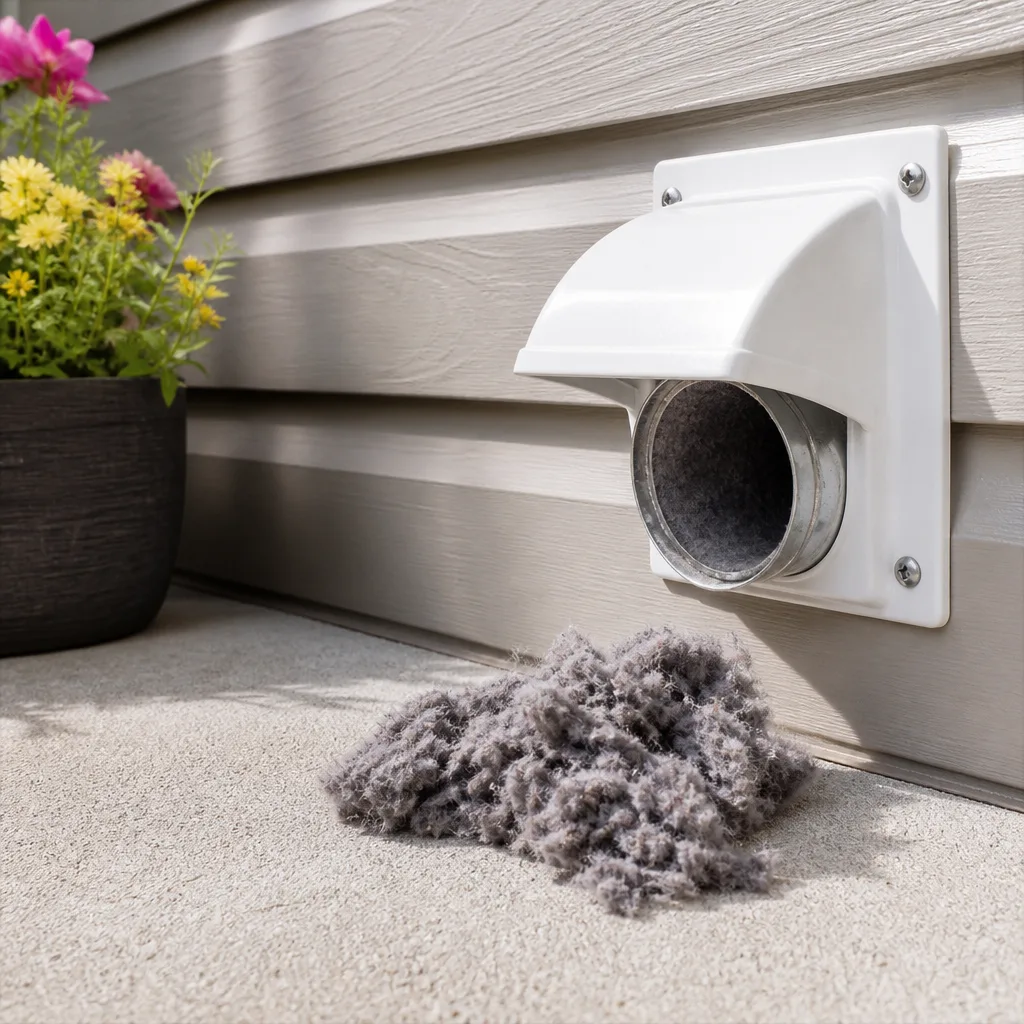
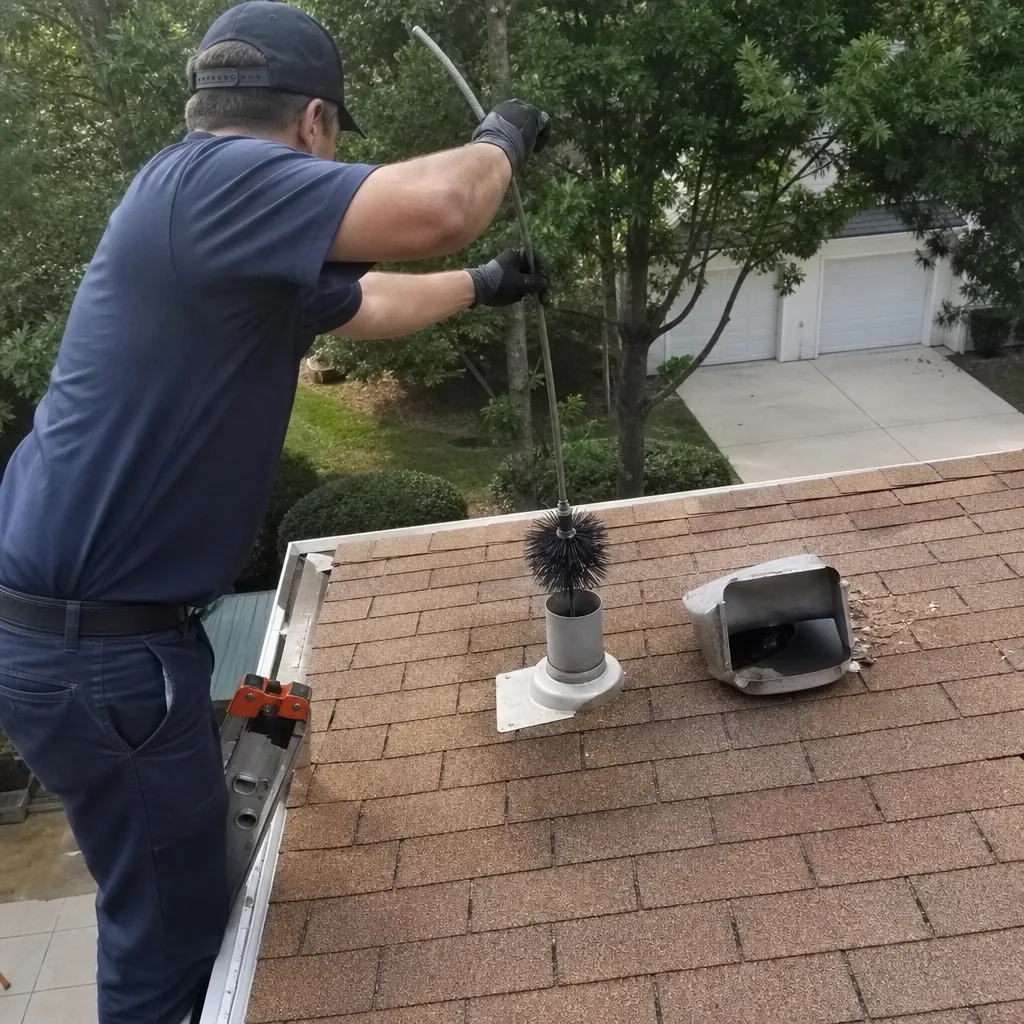
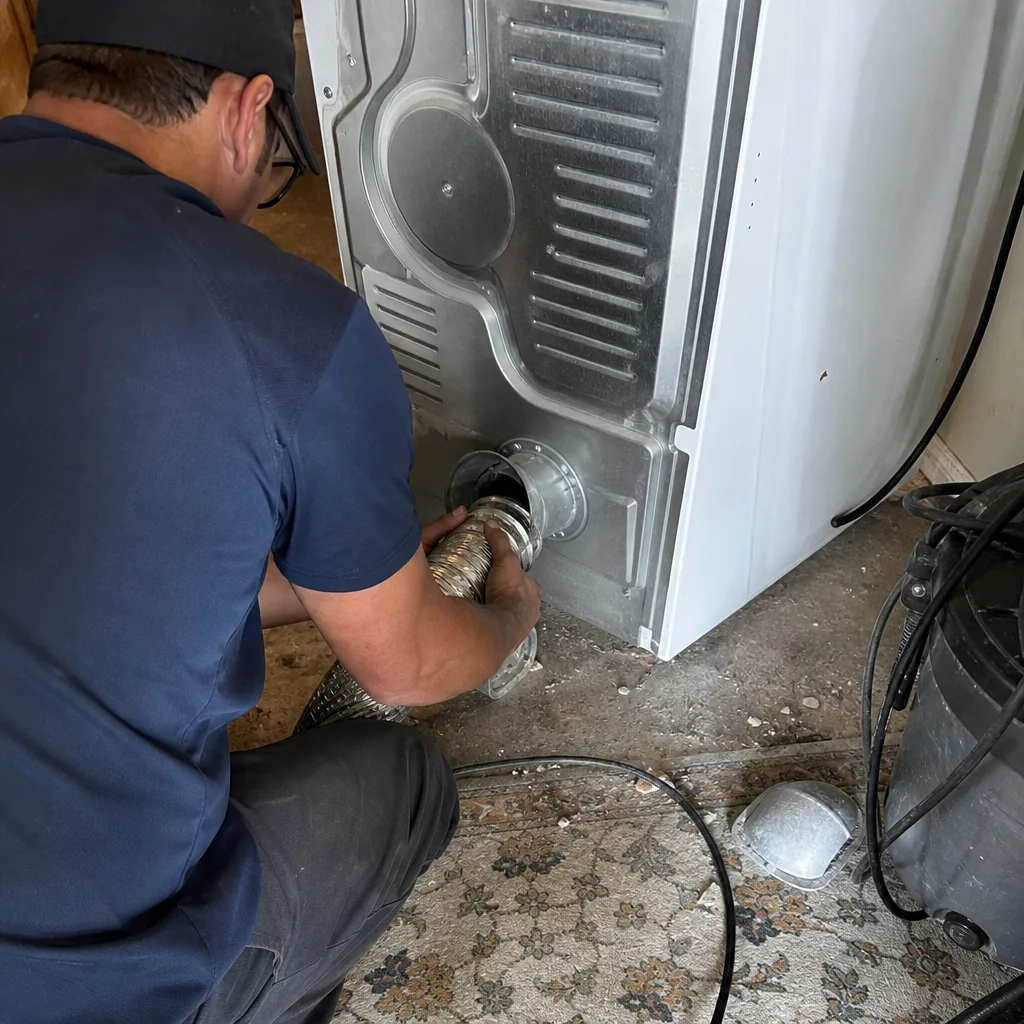
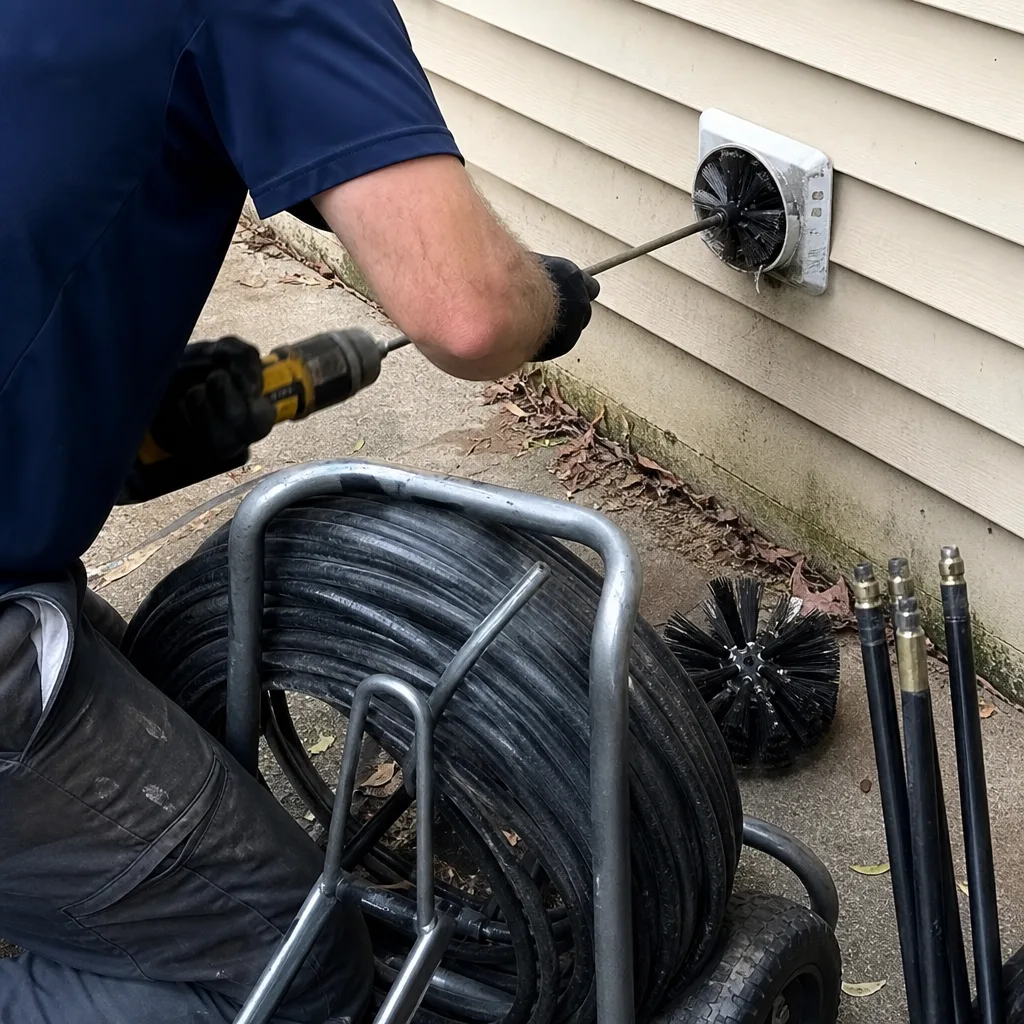
- Dryer vent cleaning with a rotary brush kit. This is the most impactful DIY task. A 25-foot rotary brush kit costs $30-$50 and removes lint buildup that is a genuine fire hazard. The vent run from your dryer to the exterior wall is separate from your HVAC ductwork, but it’s often the dirtiest duct in the house. Dryer Vent Cleaning in Marietta covers when this crosses into professional territory, typically when the run exceeds 25 feet, passes through a crawl space, or terminates on the roof.
The tools for this scope: a HEPA shop-vac ($80-$150), a screwdriver set, a bottle brush, a rotary dryer vent brush kit, and a flashlight with a narrow beam to inspect the first elbow of each duct run. Total investment: under $200 if you don’t already own the vacuum.
What you will not reach: anything past the first 90-degree elbow in a supply duct, the horizontal trunk lines in your attic or crawl space, the plenum (the large distribution box that splits airflow to each run), or the evaporator coil inside the air handler. That is where the physics change.
The Physics Limitation: Why Shop-Vacs Hit a Wall
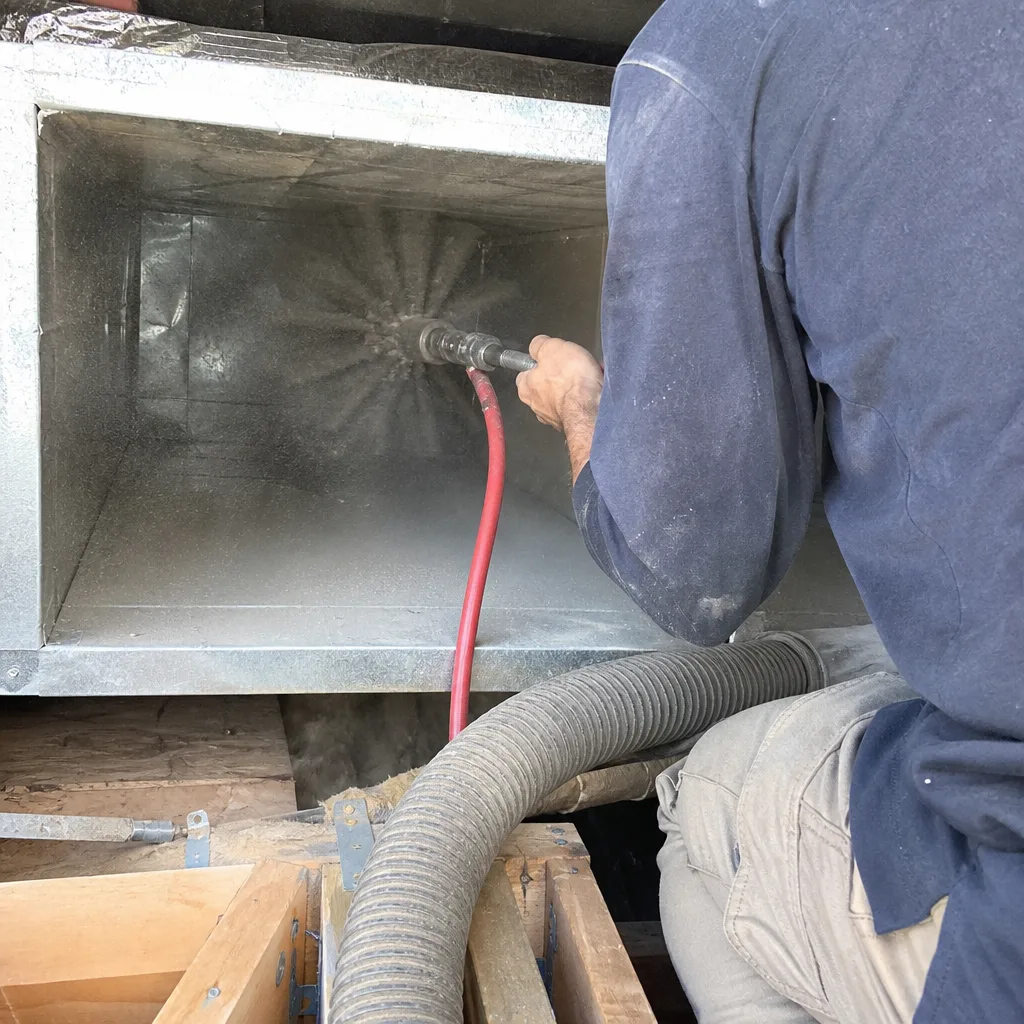
Negative-pressure source removal, the method specified by the National Air Duct Cleaners Association (NADCA), requires two things happening simultaneously: debris must be dislodged at the far end of the duct run, and it must be captured at the trunk end by a sealed negative-pressure source.
A shop-vac at a register does one of those things, poorly. It creates suction at a single point, but it does not seal the system. Without containment, the vacuum’s airflow pulls debris off surfaces near the nozzle, then loses velocity before reaching the trunk. Fine particulate, the material most likely to affect air quality, becomes airborne and resettles deeper in the system. We’ve opened duct runs in Kennesaw Mountain-view homes where the homeowner had vacuumed registers annually for years, only to find the first elbow packed with compressed dust that the shop-vac had pushed forward but never removed.
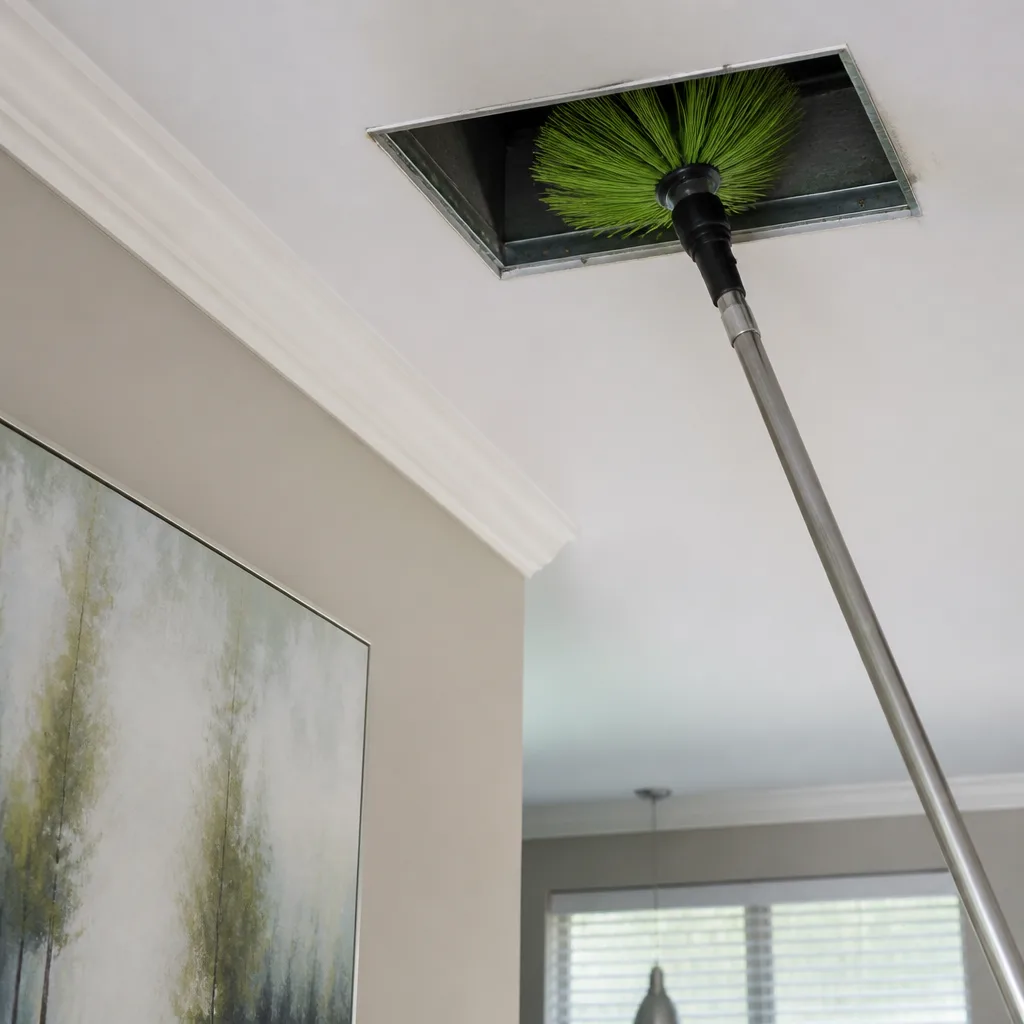
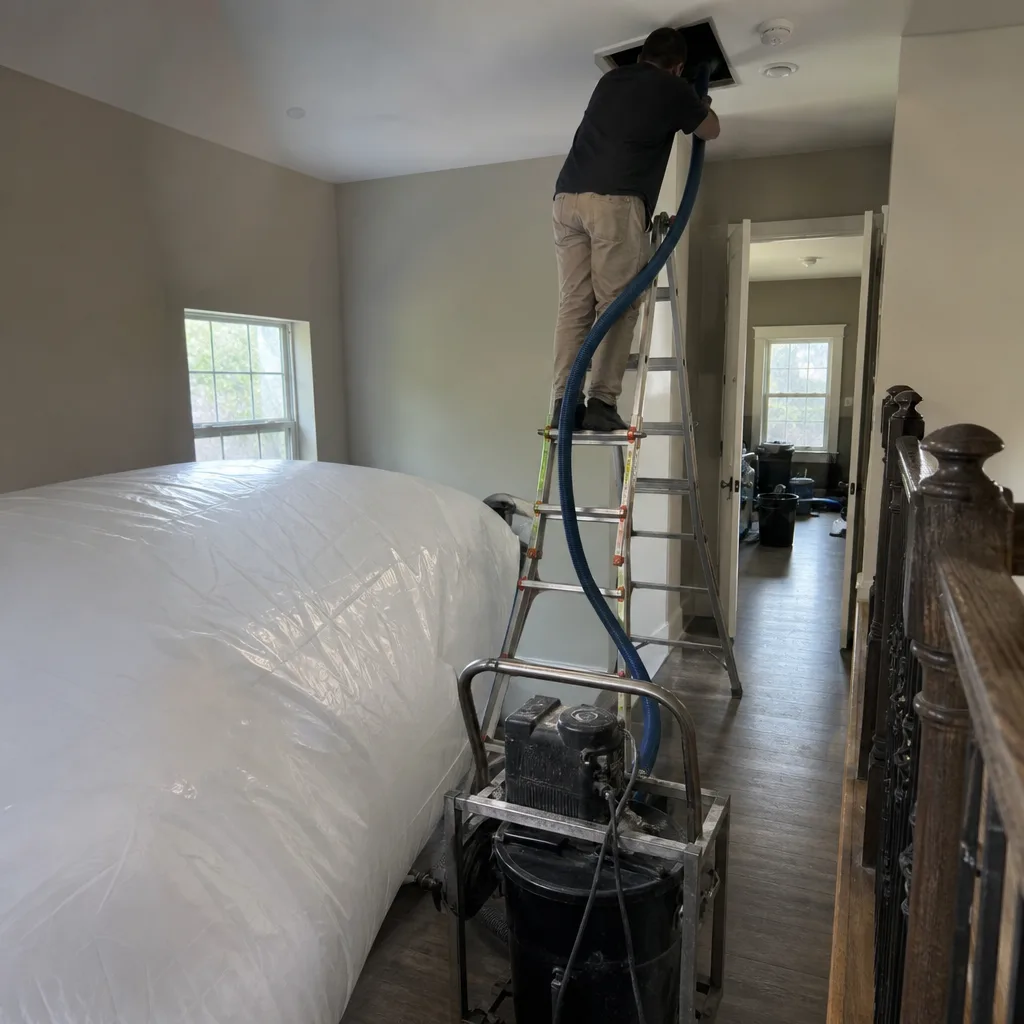
Professional equipment solves this with truck-mounted or portable negative-pressure machines that draw 4,000-15,000 cubic feet per minute (CFM) through the entire duct system. The ductwork is sealed at the air handler, and access ports are cut into the trunk lines to insert agitation tools, whips, or brushes that dislodge debris while the vacuum captures it at the source. This is not a matter of more powerful suction. It is a sealed-system design that a shop-vac cannot replicate.
The CleanRun Air Duct Cleaning Marietta home approach uses portable negative-pressure units from Abatement Technologies and Rotobrush, with HEPA filtration rated at 99.97% efficiency at 0.3 microns. These are not consumer tools. They are trade equipment sized for the static pressure and airflow dynamics of residential duct systems.
What Requires Professional Equipment
Four categories of work cross the line from DIY maintenance to professional service. Each has a specific physical or safety reason.
Trunk line debris removal. The trunk lines, typically 8-14 inch rectangular or round ducts in your attic, basement, or crawl space, collect the heaviest debris loads. They are also the hardest to access. Cleaning them requires cutting access ports, inserting mechanical agitation tools, and applying negative pressure across the entire trunk section. In Marietta’s older homes near the Square, we’ve found trunk lines packed with construction debris from pre-2010 renovations, drywall dust, and in one case, a collapsed section of flex duct that had been dumping conditioned air into a crawl space for years.
Air handler coil cleaning. The evaporator coil sits inside your indoor unit, adjacent to refrigerant lines and electrical components. Cleaning it requires foaming cleaner applied at specific concentrations, rinsed with controlled water pressure that will not bend the aluminum fins. Bent fins reduce heat transfer efficiency permanently. Refrigerant lines are under pressure and must not be disturbed. This is not a task for a homeowner with a spray bottle and optimism.
Flex duct reconnection and sealing. Flex duct, the insulated flexible tubing common in Marietta homes built 1995-2015, disconnects at collars, gets crushed by storage items in attics, and degrades at connection points. Reconnecting it requires mechanical fastening, mastic sealant application, and pressure testing. Improperly sealed flex duct leaks conditioned air into unconditioned spaces, raising energy bills and creating pressure imbalances that pull attic dust into the system.
Sanitizing and antimicrobial treatment. After mechanical cleaning, some systems benefit from EPA-registered antimicrobial application, particularly if there has been moisture intrusion or rodent activity. This requires product knowledge, application equipment that produces proper droplet size for duct surfaces, and safety protocols for occupied homes. Guardsman and Honeywell make products rated for this application, but the equipment to apply them correctly is not available at retail.
HVAC Cleaning in Marietta covers the full scope of coil, blower, and cabinet cleaning that accompanies professional duct service.
Honest Cost Comparison: DIY Savings vs. Professional Value
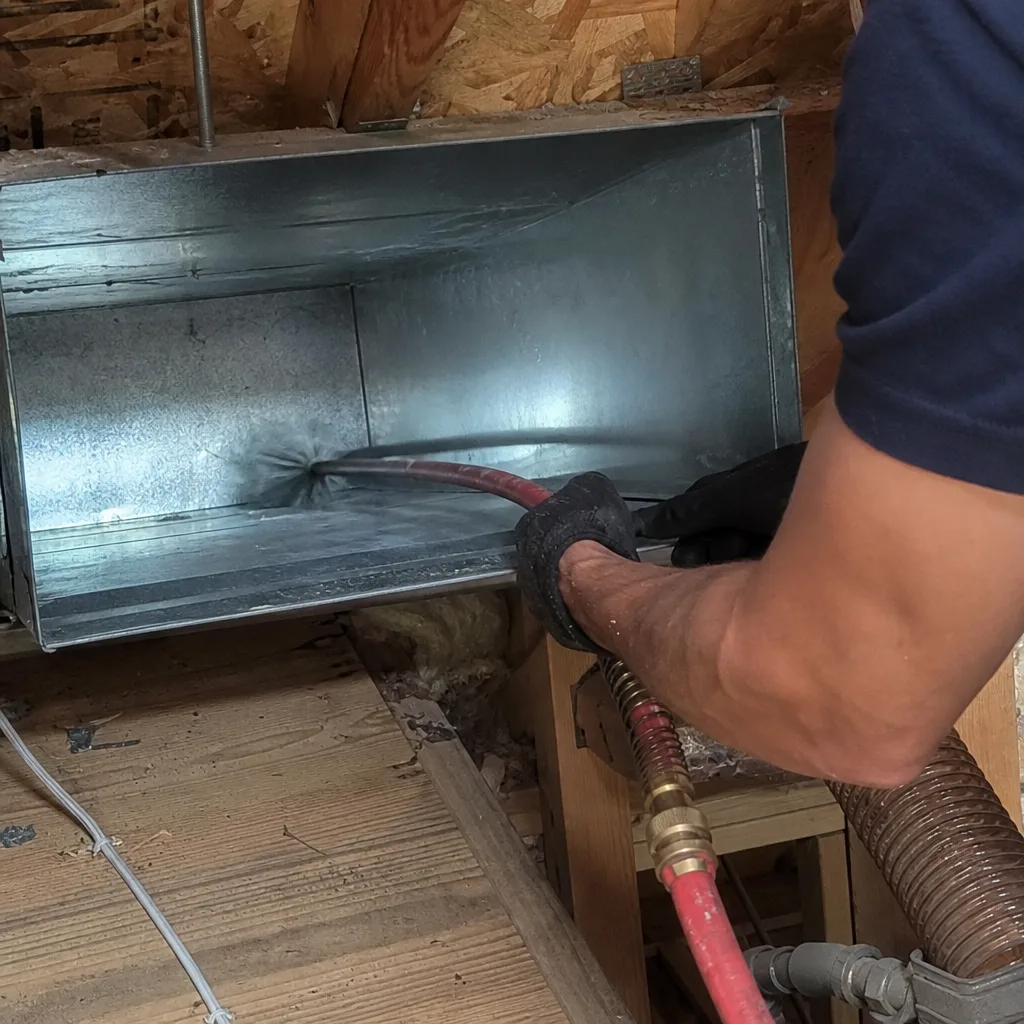
Most cost comparisons online are dishonest in one direction or the other. Either they pretend a shop-vac equals professional service, or they dismiss DIY entirely to justify a high price. Here is the actual math for a typical Marietta home, 2,000-2,500 square feet, with 12-16 supply registers and 2-3 return grilles.
DIY-appropriate scope cost (one-time tool purchase + your labor):
- HEPA shop-vac: $120
- Rotary dryer vent brush kit: $40
- Basic hand tools, brushes, cleaning supplies: $30
- Your time: 3-4 hours first pass, 1.5 hours for annual maintenance
Annual recurring cost after initial purchase: roughly $15 in supplies and 1.5 hours of labor.
Professional air duct cleaning in Marietta:
CleanRun’s written pricing for a complete system cleaning, with negative-pressure extraction, trunk line access, coil inspection, and documented photo record, runs $350-$850 depending on system size, accessibility, and condition. Homes in the Indian Hills or West Cobb areas with complex attic duct layouts tend toward the higher end. Single-story ranch homes in neighborhoods like Powers Ferry tend toward the lower end.
The honest overlap: If you perform the DIY-appropriate tasks before calling a professional, you should expect a reduced scope and a corresponding price reduction. A contractor who finds clean registers, a clear filter housing, and an empty condensate pan has less work to perform. At CleanRun, we adjust our written scope and price accordingly under Haven Standard Clause 1: the written price reflects the actual work required, not a flat rate for tasks already completed.
What you do not save by DIYing the accessible 8%: the labor of trunk line access, the equipment cost of negative-pressure extraction, the liability of coil cleaning, and the documentation that accompanies professional service. Those remain fixed costs of the professional scope.
The Documentation Gap: When It Matters
A DIY cleaning produces no record. This is not always a problem, but it is a gap that becomes material in specific situations.
Home sale transactions. In Marietta’s competitive market, buyers increasingly request HVAC maintenance records. A documented photo record of duct condition, dated and referenced to the property address, supports your disclosure statements and can prevent post-sale disputes. We have been called to provide retroactive documentation for homeowners who cleaned their own ducts, then faced a buyer’s inspector who flagged “possible deferred maintenance” with no evidence to refute it.
Insurance claims related to HVAC. If a system failure leads to an insurance claim, adjusters may request maintenance history. “I vacuumed the registers periodically” does not carry the weight of a dated photo record showing internal duct condition before and after service.
Tracking system condition over time. Debris accumulation is not linear. A system that was clean in 2020 may show rapid buildup by 2023 if a filter was neglected or a return duct developed a leak pulling attic air. Without periodic documentation, you are guessing at trends based on airflow feel or odor, both of which lag behind actual conditions.
When the gap is acceptable: If you plan to remain in your home indefinitely, have no insurance exposure, and perform consistent DIY maintenance, the absence of documentation is a reasonable trade-off for the savings. The gap becomes a liability only when external parties need evidence of maintenance.
CleanRun’s documented photo record, included on every visit since 2013, captures the inside of every duct run before and after work. Customers receive these images as part of the standard job record, stored with the written scope and warranty.
Marietta-Specific Factors: Climate, Soil, and Code
Marietta’s geography and building patterns create conditions that affect duct contamination differently than other metro Atlanta markets; our seasonal air duct cleaning care for Marietta: year-round homeowner’s guide breaks down what to expect each quarter.
Pollen load. The oak-hickory-pine forest canopy in Cobb County produces pollen counts that regularly rank among Georgia’s highest. Oak pollen peaks in late March and early April; pine pollen follows in April and May. Standard fiberglass filters capture large particles but pass finer pollen fragments that accumulate in duct runs. Homes near Kennesaw Mountain or the Chattahoochee River corridor, with denser tree cover, see measurably higher accumulation rates than more cleared subdivisions.
Clay soil and foundation settling. Marietta’s red clay expands and contracts with moisture, producing foundation movement that cracks slab ducts and separates flex duct connections. We find more duct leakage in 1980s-2000s homes in East Cobb than in comparable Atlanta markets with sandier soils. Leaky return ducts pull crawl space or slab cavity air into the system, introducing soil particulate and, in some cases, radon-bearing soil gas.
Humidity and microbial growth. July and August average relative humidity above 75%. Duct systems with poor insulation or air leaks develop condensation on exterior surfaces, and occasionally on interior surfaces near cooling coils. This creates conditions for mold growth that DIY cleaning cannot address safely. The EPA and NADCA both recommend professional remediation for visible mold growth exceeding 10 square feet; in duct systems, any visible mold is typically distributed across multiple surfaces.
Local code considerations. Cobb County building code requires permits for duct modifications, including trunk line alterations and air handler replacements. Cleaning does not require a permit, but contractors performing access port cuts in trunk lines should be aware of code-compliant materials and sealing methods. CleanRun technicians work to ACCA Manual D standards for duct design and modification, even when only cleaning is performed.
Common Mistakes to Avoid
- Using a standard shop-vac without HEPA filtration. Non-HEPA vacuums exhaust fine particulate back into the living space. In Marietta’s pollen-heavy environment, this can worsen indoor air quality during the very task meant to improve it.
- Agitating debris without containment. Running a brush or compressed air into a duct run without sealed negative pressure at the trunk end disperses contamination into the home. We’ve responded to calls in West Cobb where homeowners triggered respiratory symptoms by “cleaning” their ducts with a leaf blower.
- Ignoring the condensate drain. A clean duct system with a clogged drain pan floods the air handler cabinet, creating a new contamination source. The drain line and pan are part of the system, not an afterthought.
- Cleaning registers but never changing the filter. A MERV 8 filter in a home with pets should be changed every 60-90 days in Marietta’s high-pollen seasons. Clean registers with a clogged filter are cosmetic work.
- Assuming flex duct is cleanable. Flex duct with internal fiberglass lining cannot be mechanically cleaned without damaging the liner. If your home has lined flex duct and a contractor proposes brushing it internally, that is a red flag. The correct approach is replacement or gentle negative-pressure extraction without mechanical agitation.
- Neglecting the dryer vent while focusing on HVAC ducts. The dryer vent is more likely to cause a house fire than any HVAC contamination. It is also the most impactful DIY task. Do not spend three hours on registers and skip the vent that actually endangers your home.
- Accepting a per-vent quote. Per-vent pricing invites bait-and-switch tactics: a low per-vent rate multiplied by “discovered” additional vents, plus mandatory add-ons. CleanRun’s written price is per system, agreed before work starts, with no per-vent arithmetic.
When to Call a Professional
Call a professional when you can see or smell contamination past the first duct elbow, when your energy bills have risen without explanation, when you are preparing to sell your home, or when anyone in the household has respiratory symptoms that correlate with HVAC runtime. Also call when the system includes flex duct, when the air handler is in an inaccessible attic, or when you simply want a documented record of condition for your files.
CleanRun Air Duct Cleaning Marietta offers free estimates in Marietta. Every estimate includes a written price before any work starts, under Haven Standard Clause 1. Call (470) 516-9337 to schedule.
Frequently Asked Questions
Complete system cleaning for a typical Marietta home runs $350-$850, depending on system size, duct accessibility, and contamination level. Single-story homes with simple attic layouts fall at the lower end; multi-zone systems with crawl space ductwork or heavy construction debris fall higher. Call (470) 516-9337 for a written estimate specific to your home.
Low quotes typically reflect limited scope: register vacuuming only, no trunk line access, no coil inspection, no photo documentation. The $79-$149 offers common in Marietta coupon mailers cover roughly the same work a homeowner can do with a shop-vac. A legitimate negative-pressure cleaning with trunk line access, proper equipment, and written warranty costs more because the labor and equipment are genuinely different.
Demand a before-and-after photo record of every duct run, delivered as part of the job completion package. At CleanRun, this has been standard practice since 2013. If a contractor cannot or will not provide dated photos with identifying property markers, you have no verification that internal duct surfaces were cleaned.
Every 3-5 years for most Marietta homes, with annual filter changes and register maintenance between services. Homes with pets, recent renovations, or located in high-pollen areas near Kennesaw Mountain may need more frequent service. The correct interval is determined by inspection, not calendar alone.
No. The evaporator coil sits adjacent to refrigerant lines under pressure and electrical components that can deliver fatal voltage even with the thermostat off. Coil fin damage from improper cleaning reduces efficiency permanently. This task requires training, specific foaming agents, and controlled rinse pressure.
DIY register and filter maintenance does not void warranties. However, damage caused by improper cleaning methods, including bent coil fins, disconnected ductwork, or water infiltration into electrical components, is typically excluded from coverage. Document your maintenance with dated photos if warranty claims are a concern.
The Bottom Line
DIY air duct cleaning in Marietta is worth doing for registers, filter housings, condensate pans, and dryer vents. It saves money and keeps your system in better condition. It does not replace professional negative-pressure extraction for trunk lines, coil cleaning, or documented condition assessment. The honest approach is to perform the maintenance you can, then hire a contractor for the physics you cannot replicate, with a written price agreed before work starts and photo documentation delivered when the job ends. For more guides & resources on maintaining your system between professional visits, explore our blog.
CleanRun has served 52,000+ homes since 2013, every one with a written price before work started and a documented photo record when the crew left. The 365-Day Done Right Promise backs every job in writing. For a free estimate in Marietta, call (470) 516-9337.
Written by Tomas Reyes, Owner at CleanRun Air Duct Cleaning Marietta, serving Marietta since 2013.