
Last updated September 23, 2026
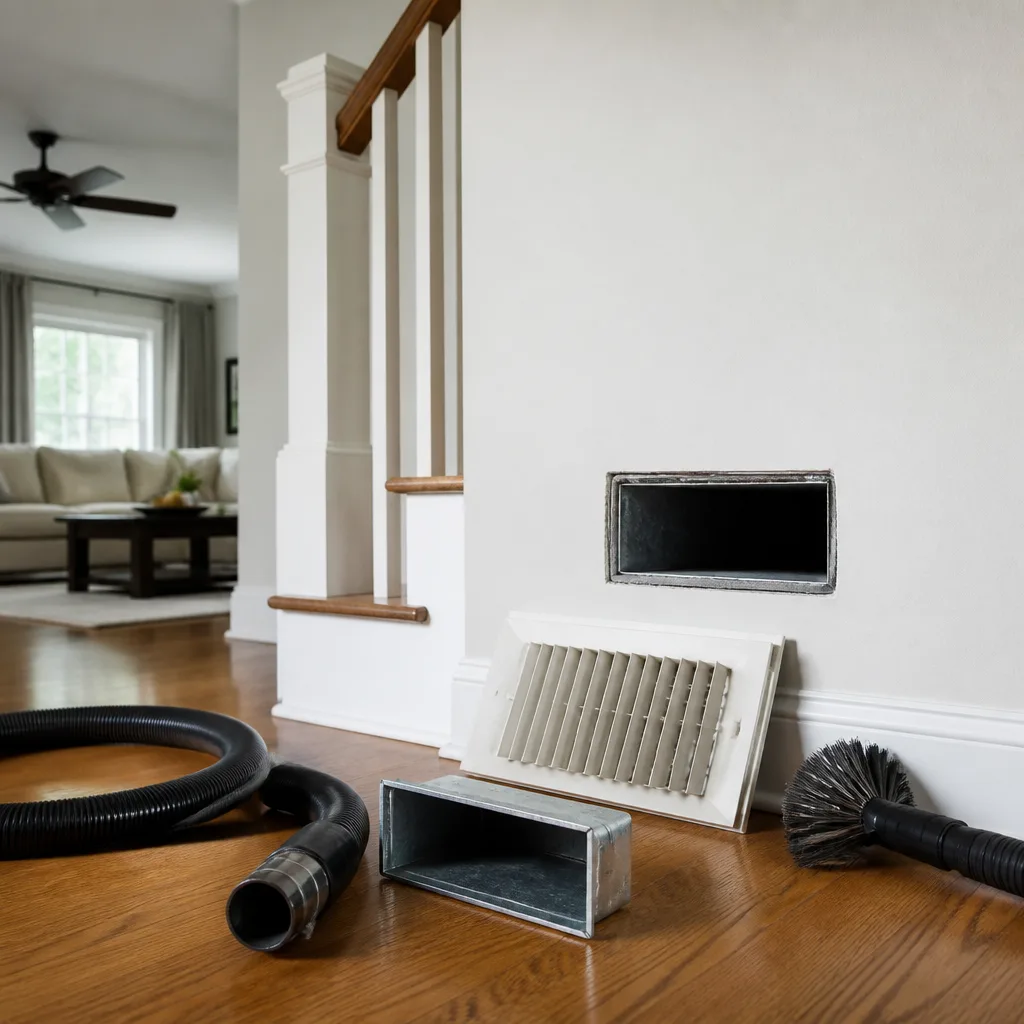
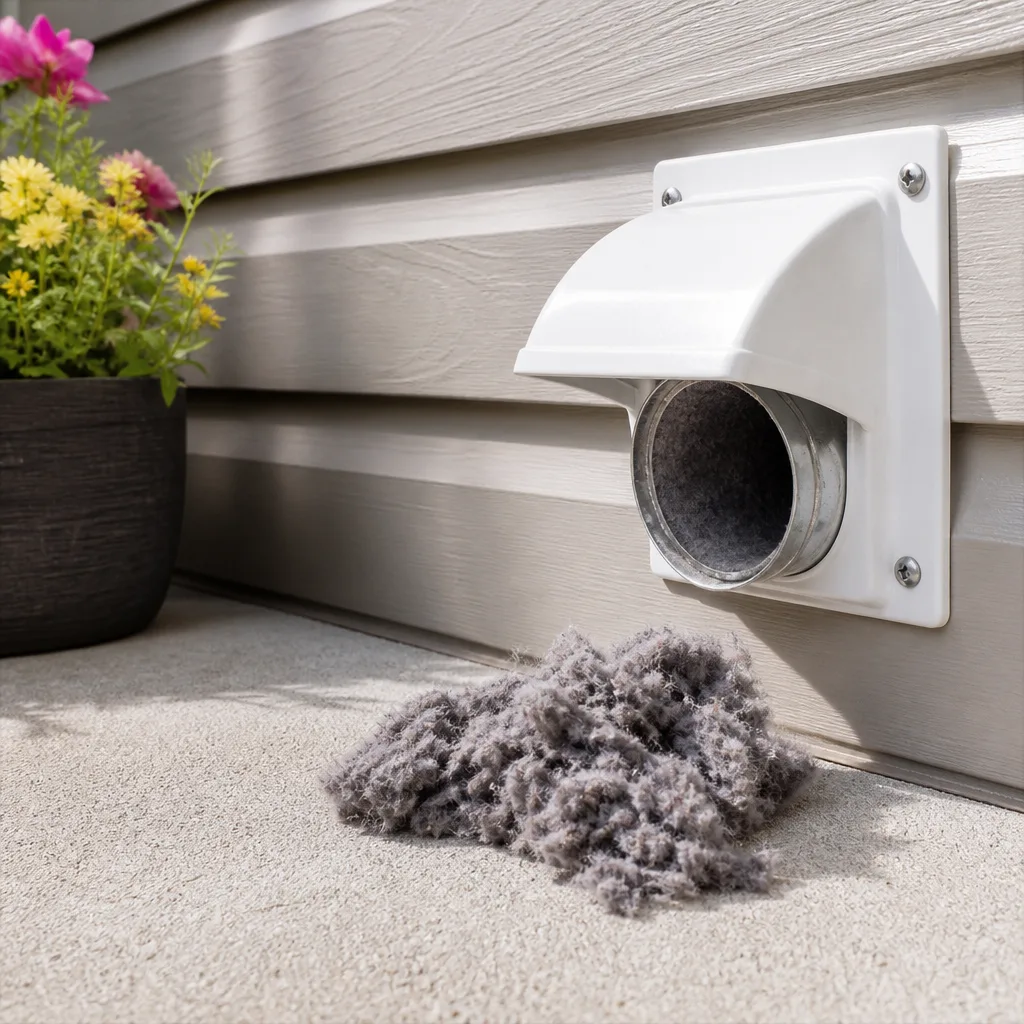
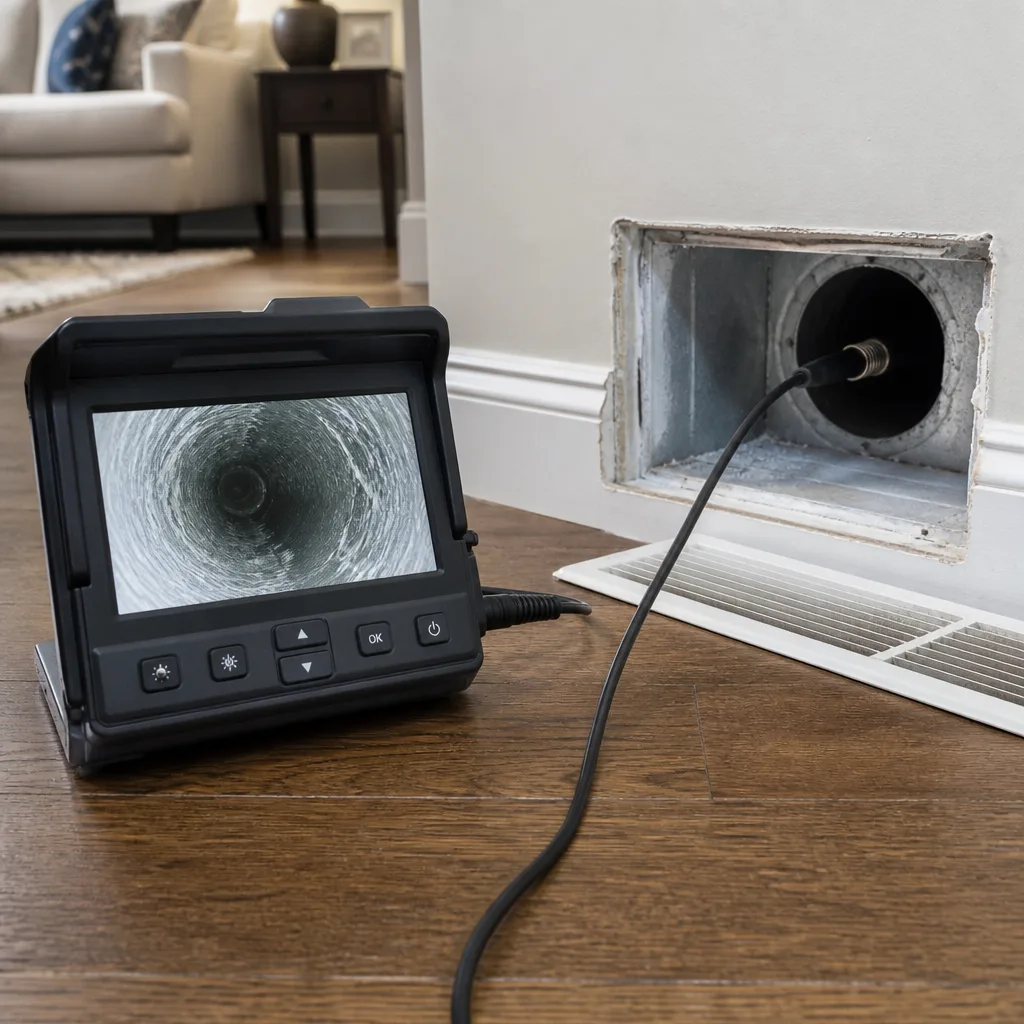
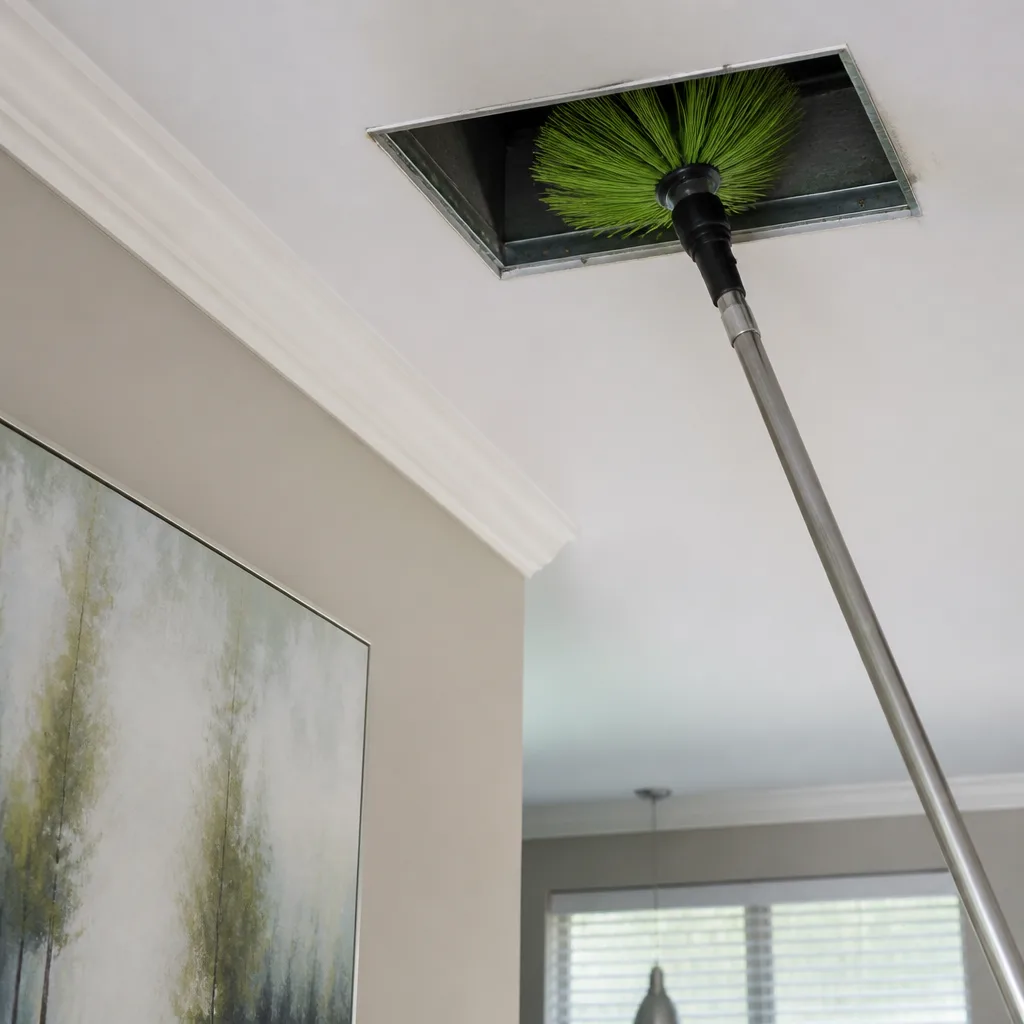
Whole-system duct and dryer vent check with before-and-after photos - you see exactly what came out of your vents
That "$99 whole-house special" is a bait ad - the real number appears once they are in your hallway, or the "clean" is a shop-vac at the register. We photograph the inside of your ducts before and after instead.
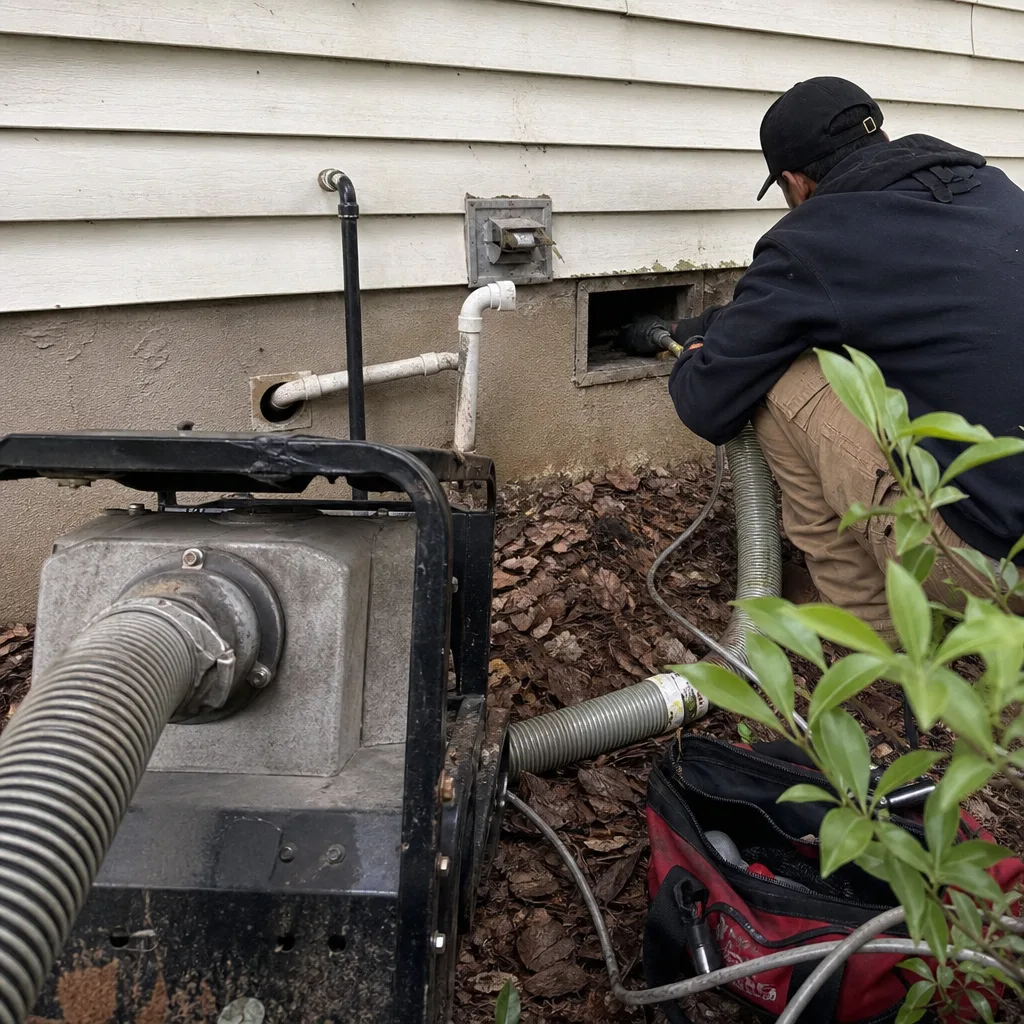 Before
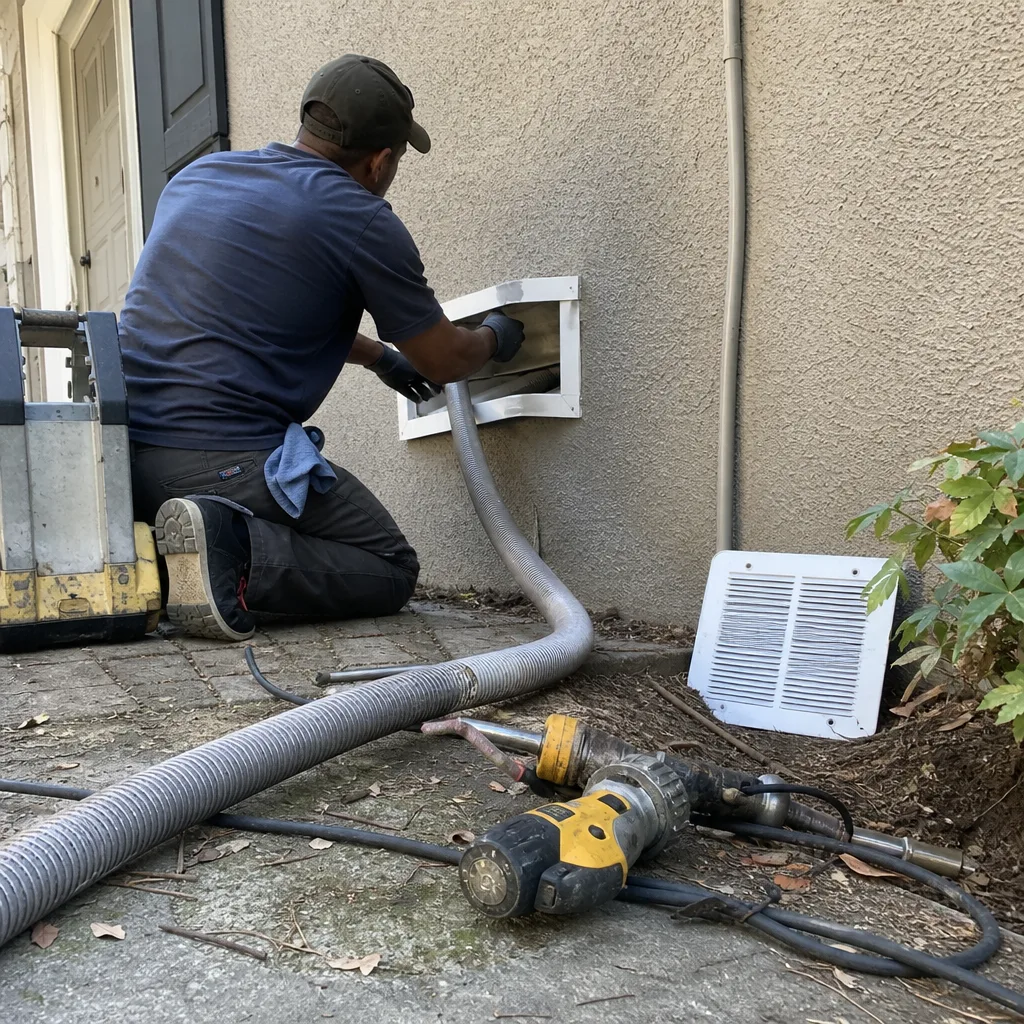 After
After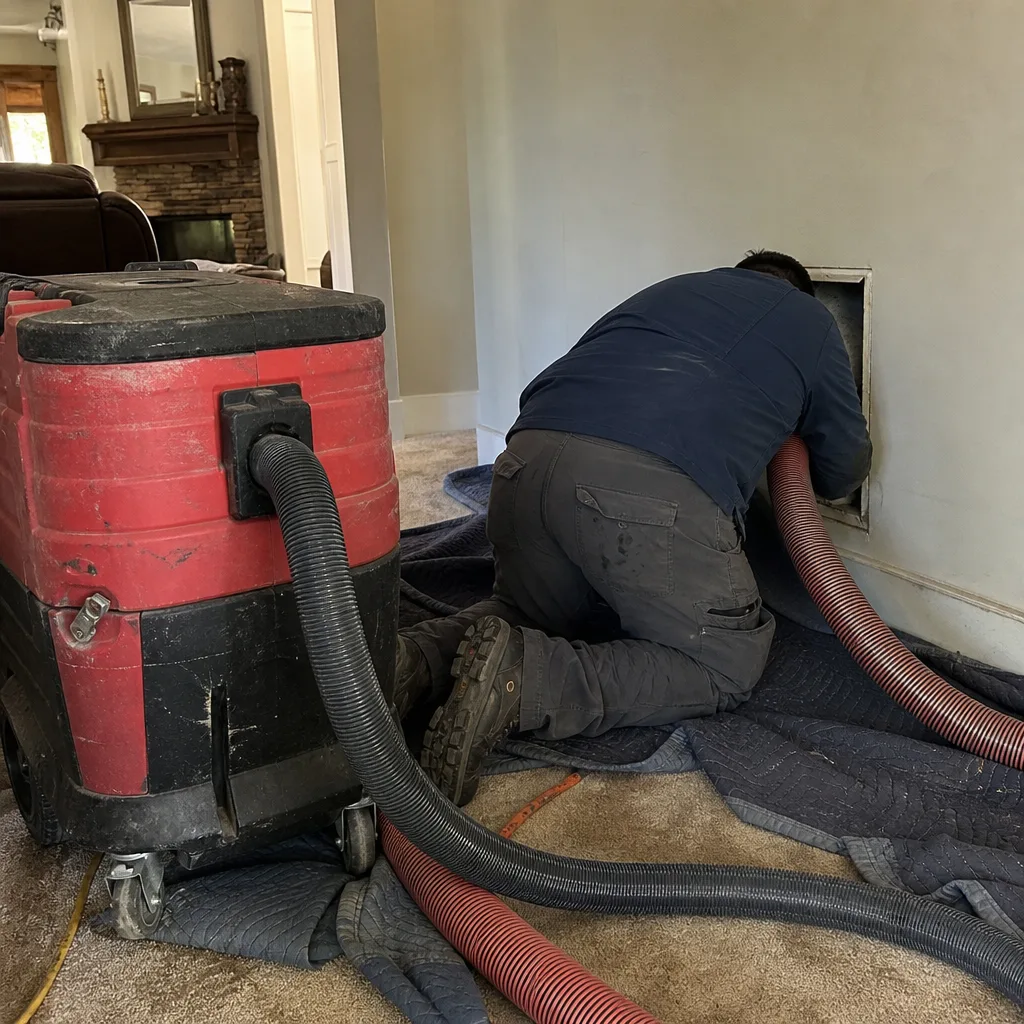 Before
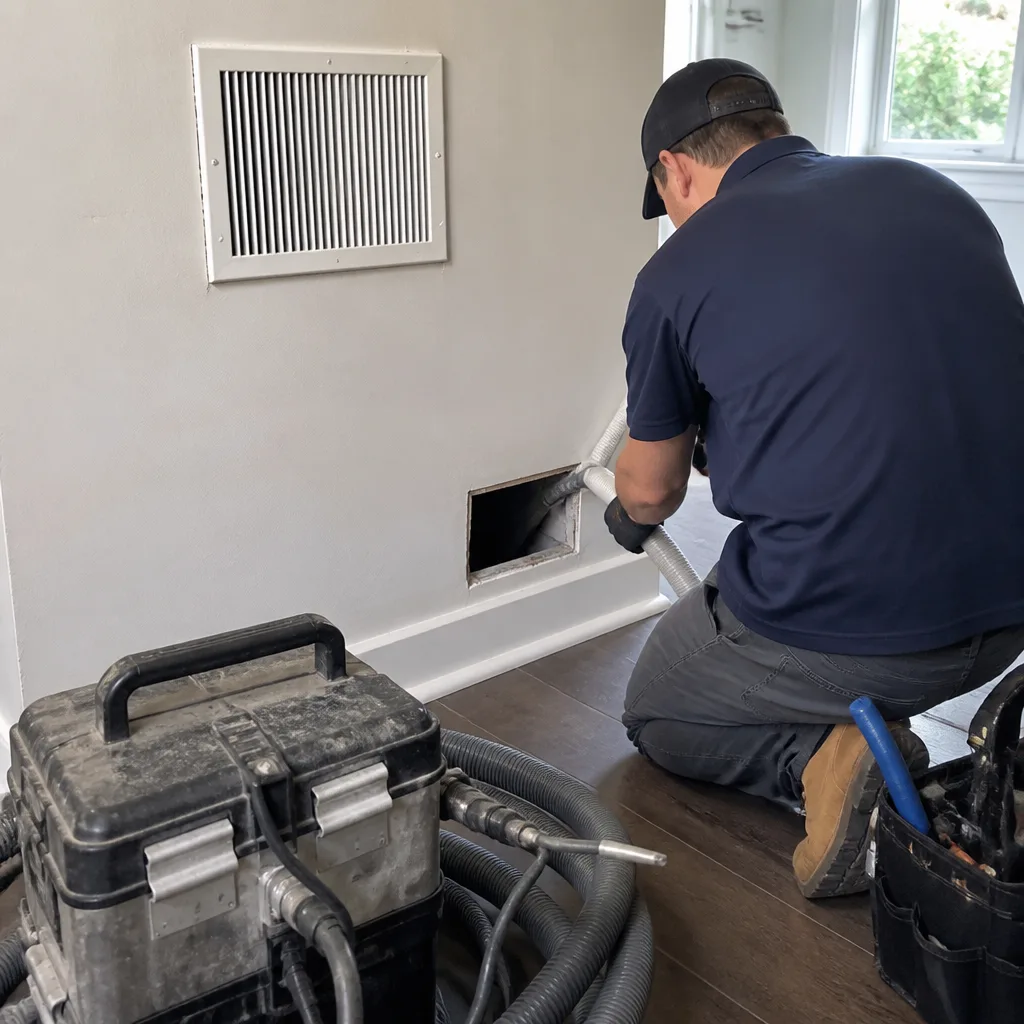 After
After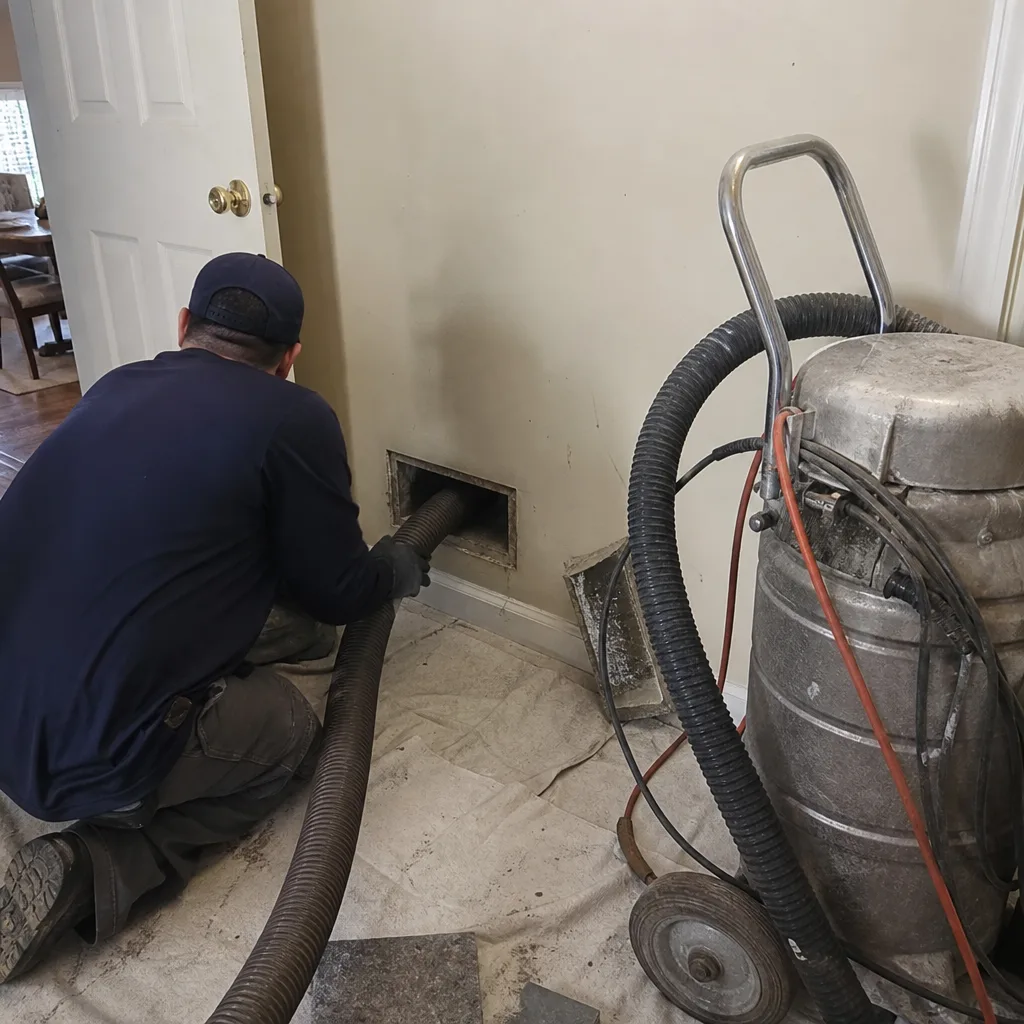 Before
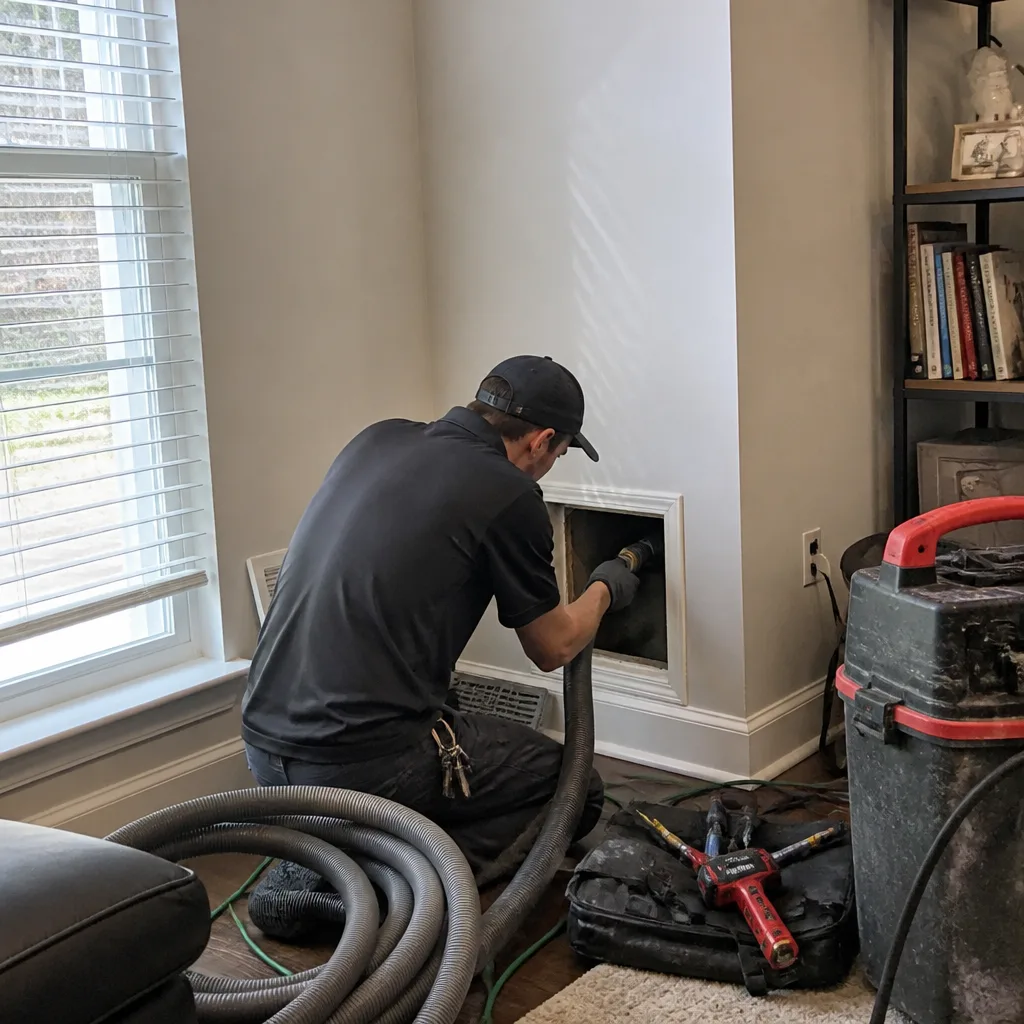 After
AfterSeasonal Air Duct Cleaning Care for Marietta: Year-Round Homeowner’s Guide
Marietta averages 109 days above 90°F per year. That means your HVAC system runs almost continuously from May through September, pushing air through ductwork that sat dormant all winter collecting debris. Most homeowners schedule Air Duct Cleaning in October, addressing last season’s accumulation rather than preventing next season’s problem. In our experience serving Marietta since 2013, the homeowners who get the best value from duct cleaning understand something the coupon mailers never mention: Marietta’s climate concentrates duct contamination into two specific windows, and timing your service to match those windows changes everything about what you get for your money.
Quick Answer
The two critical windows for air duct cleaning in Marietta are March through April, before pine pollen and renovation debris circulate through five months of continuous cooling, and October through November, after peak humidity has deposited condensation-borne mold spores in attic ductwork. A homeowner who cleans during these windows, rather than on an arbitrary calendar schedule, typically extends the effective life of each service by 40 to 60 percent.
Table of Contents
- How Marietta’s Climate Creates Two High-Contamination Windows
- Spring Window: Pollen, Renovation Debris, and Pre-Summer Preparation
- Fall Window: Post-Cooling-Season Mold and Condensation Damage
- The Condensation-Mold Cycle in Georgia Attic Ductwork
- Seasonal Filter MERV Guidance for Marietta Homes
- Two-Season Maintenance Calendar
- What Duct Cleaning Costs in Marietta and When Timing Affects Price
- Common Mistakes to Avoid
- When to Call a Professional
- Frequently Asked Questions
BeforeAfterHow Marietta’s Climate Creates Two High-Contamination Windows
Marietta sits at the intersection of two forces that punish ductwork: the Southeast’s heaviest spring pollen load and a cooling season long enough to turn any accumulated debris into a continuous distribution system.
The first window opens in March and runs through mid-April. Loblolly and shortleaf pines release pollen that blankets Cobb County in yellow film. Simultaneously, renovation season begins. Homeowners who bought between 2015 and 2025, particularly in newer developments like West Cobb and the Town Center corridor, are finishing basements, opening walls, and running HVAC systems before construction dust has settled. That debris enters the return side of the system and deposits at the first elbow, the plenum (the distribution box where all duct runs connect), and at low-velocity points near the end of each duct run (the individual pathways to each room).
The second window arrives in October, after the cooling season ends. From May through September, attic temperatures in Marietta regularly exceed 130°F. When 55°F conditioned air moves through flex duct (the insulated flexible tubing common in post-1990 construction) in that environment, temperature differentials create condensation at any point where insulation is compressed, torn, or poorly sealed. That moisture, combined with organic debris already in the system, feeds mold spore accumulation that becomes detectable in fall when homeowners first switch to heating and smell musty air from vents.
These windows are predictable. A homeowner who understands them can schedule strategically rather than reactively.
Spring Window: Pollen, Renovation Debris, and Pre-Summer Preparation
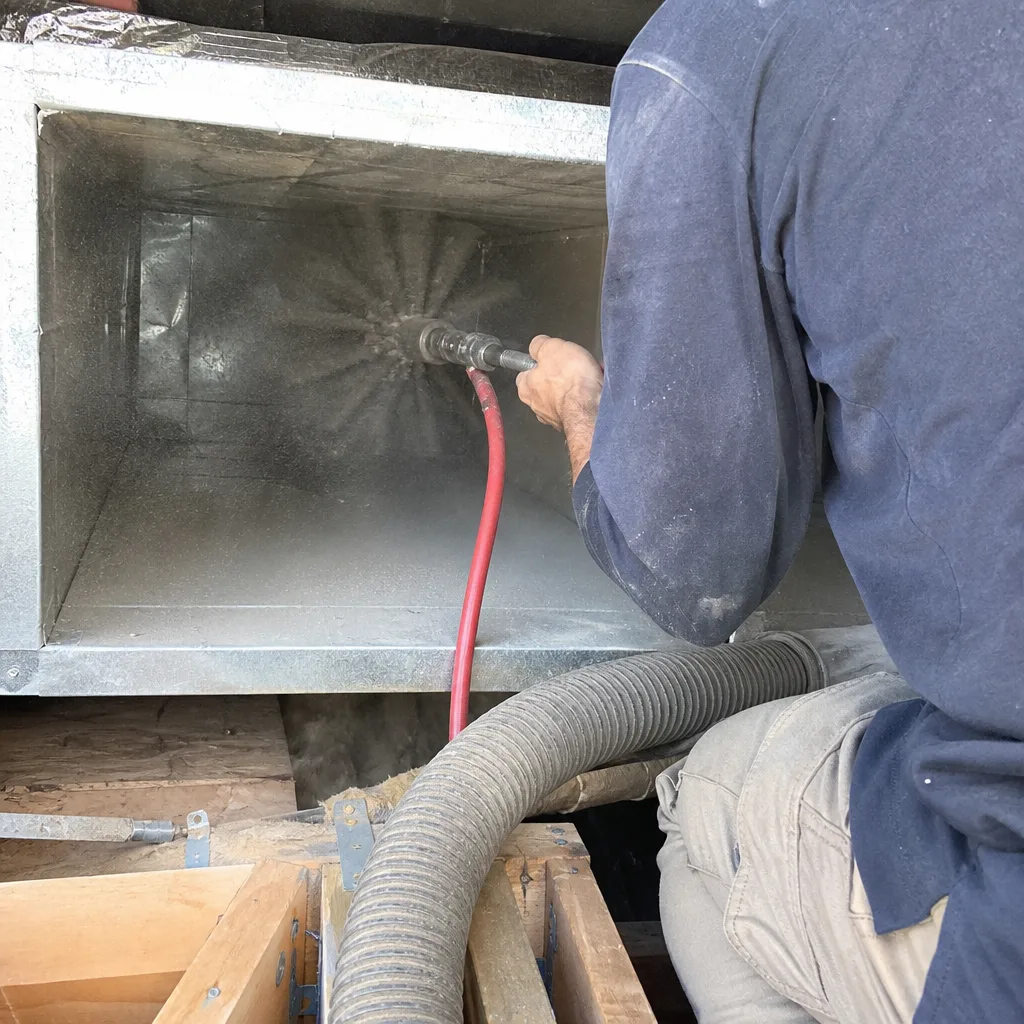
Spring duct cleaning in Marietta is preventive, not corrective. The goal is removing debris before the system enters five months of near-continuous operation.
We see this pattern repeatedly in East Cobb and the Indian Hills area. A homeowner notices pollen coating outdoor furniture in late March. They change the HVAC filter, which helps at the return grille but does nothing for debris already inside the ductwork. By June, that pollen has been joined by skin cells, pet dander, and fine particulate from road dust on Johnson Ferry and Roswell Road. The system distributes it continuously because the thermostat rarely rests.
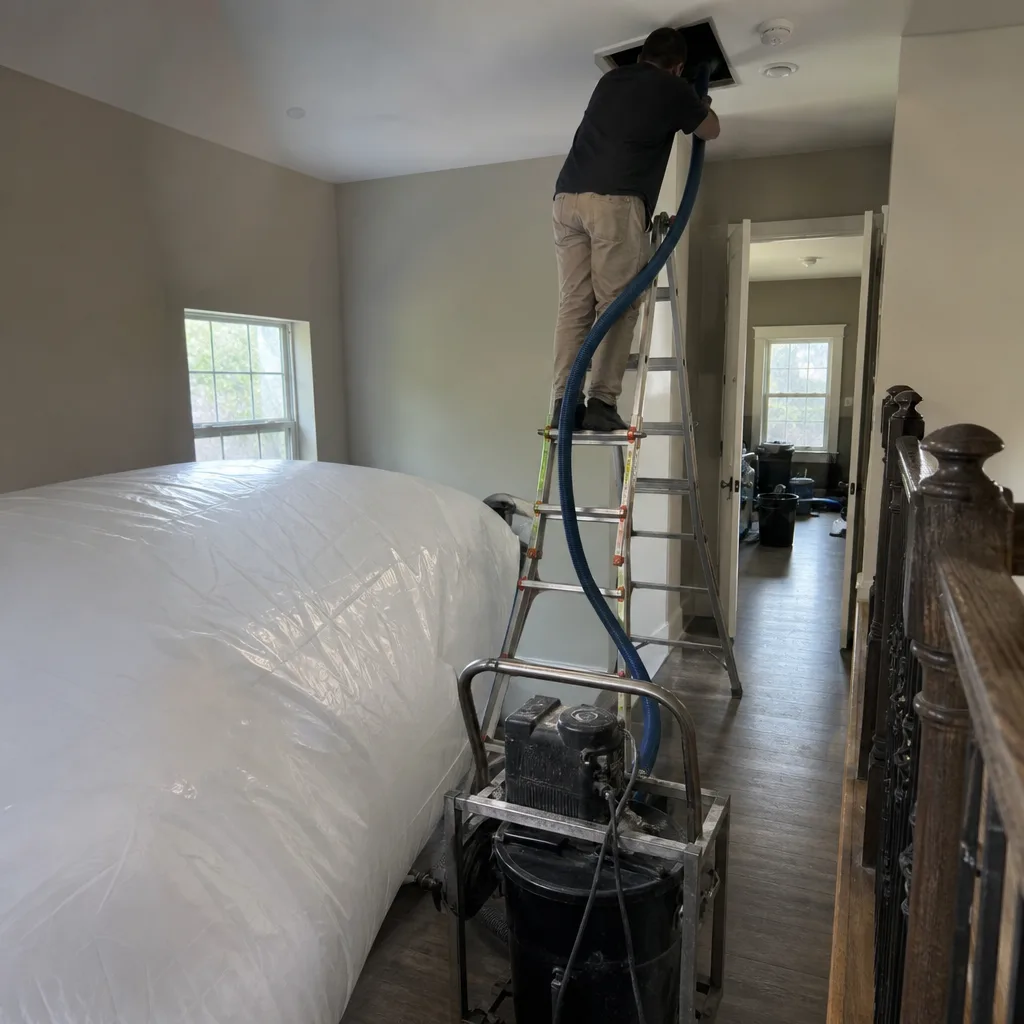
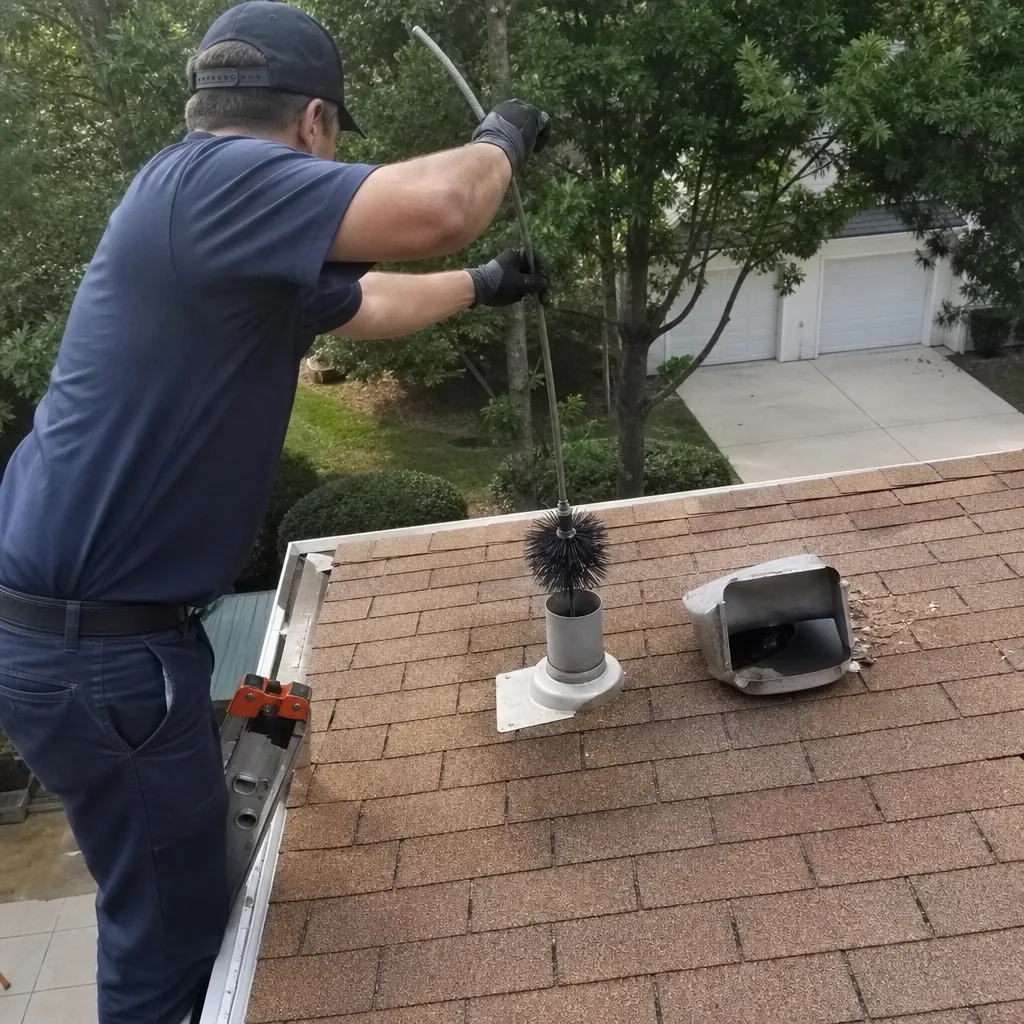
For families with allergies or asthma, pre-summer cleaning is particularly effective. The Air Duct Cleaning in Marietta service we deliver includes negative-pressure extraction (a sealed suction process that pulls debris from the duct run without releasing it into the home) using Nikro equipment, with a documented photo record of every duct run before and after. But the value of that service depends entirely on timing. Cleaning in October removes what accumulated; cleaning in April prevents what would accumulate.
Spring is also when we find the most construction debris in newer Marietta homes. Drywall dust, in particular, settles in the plenum and hardens into a crust that standard household vacuums cannot dislodge. Professional-grade equipment from Rotobrush and Abatement Technologies breaks that adhesion and removes it mechanically rather than relying on suction alone.
Key spring indicators that your system needs attention:
- Visible yellow pollen accumulation on return grilles (the vent covers where air enters the system)
- Renovation or repair work completed within the past 12 months
- Allergy symptoms that persist indoors despite closed windows
- System runtime exceeding 14 hours daily by late May
Fall Window: Post-Cooling-Season Mold and Condensation Damage
Fall cleaning addresses what the summer created. This is the window most Marietta homeowners recognize, but they often misunderstand what they’re actually treating.
By October, the average Marietta home has run its cooling system for roughly 2,200 hours since May. Every hour moved air through ductwork that, in unconditioned attics, experienced extreme temperature swings. The result is a specific contamination profile: not general dust, but moisture-activated microbial growth at insulation breaches, plus debris that has settled in low-velocity sections of the system during months of constant airflow.
In neighborhoods like Whitlock Heights and the historic district near Marietta Square, we regularly find older metal ductwork with separated seams that have drawn humid attic air into the system all summer. In newer subdivisions, flex duct with compressed insulation (often from workers walking on it during construction) shows condensation staining that indicates years of moisture cycling. The debris in these systems isn’t just dirty; it’s been wet, dried, and rewet, creating a adhered layer that requires mechanical agitation to remove.
Fall cleaning also provides the best opportunity for inspection. With the system about to transition to heating, a technician can identify problems that would worsen under winter conditions: disconnected duct runs leaking heated air into the attic, damaged flex duct reducing airflow to distant rooms, or mold growth that would spread spores when the blower runs continuously on cold nights.
The HVAC Cleaning in Marietta service we perform in fall includes full system photography because, by this point, the contamination pattern tells a story about the home’s envelope and duct integrity that the homeowner needs to see.
The Condensation-Mold Cycle in Georgia Attic Ductwork
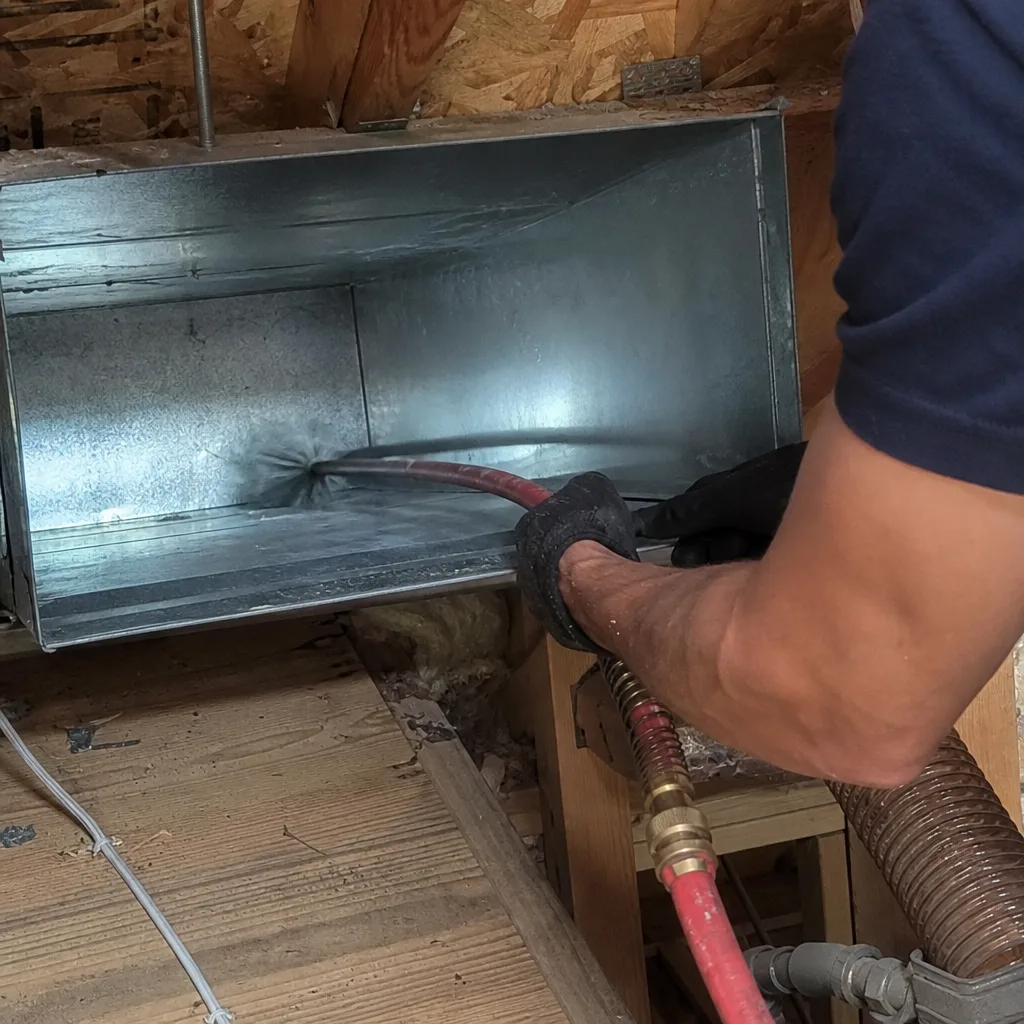
This is the mechanism competitors rarely explain, and it’s the single most important factor in Marietta duct degradation.
Georgia’s building code allows ductwork in unconditioned attics, which means your ducts live in a space that reaches 130°F in July while carrying 55°F air. That 75-degree temperature differential drives condensation wherever the duct’s thermal barrier is compromised.
Here’s how the cycle progresses:
- Insulation damage occurs. During construction, workers walk on flex duct. Over years, attic access, rodent activity, or simple compression from storage items create thin spots or tears in the insulation jacket.
- Condensation forms at the breach. When warm, humid attic air contacts the cold duct surface, water droplets form. This happens even with “insulated” duct if the insulation value is compromised.
- Debris adheres to the wet surface. Dust and organic material already in the airstream sticks to the condensation rather than passing through.
- Microbial growth establishes. In Marietta’s humidity, mold and bacteria colonize the adhered debris within 48 to 72 hours of wetting.
- The system dries, then rewets. Daily cooling cycles create repeated wet-dry cycles that bake the contamination into the duct lining.
- Spores release when disturbed. Fall heating startup, spring cleaning, or any significant airflow change dislodges spores into the living space.
We’ve photographed this exact progression in Marietta homes from Kennesaw Mountain views to the Paper Mill Road corridor. The location doesn’t matter; the attic environment does. The critical insight is that cleaning removes the symptom but doesn’t cure the insulation breach. A thorough fall inspection should identify where breaches exist so the homeowner can address them before the next cooling season.
CleanRun’s documented photo record includes close-ups of insulation condition at each duct run, delivered to the customer as part of the standard job record. Haven Standard Clause 2, Full Disclosure, requires that we show what we found, not just report it.
Seasonal Filter MERV Guidance for Marietta Homes
Filter selection is where many Marietta homeowners inadvertently damage their systems or waste money. The right MERV rating (Minimum Efficiency Reporting Value, the industry measure of particle capture) changes with the season.
March through May: MERV 11 to 13
During peak pollen, a higher MERV rating captures the 10-100 micron particles that trigger allergies. But this only works if the system is designed for it. Higher MERV filters create more resistance to airflow. In Marietta’s older homes, particularly those with original ductwork near the Square or in the Brumby area, a MERV 13 filter can reduce airflow enough to freeze the evaporator coil or overheat the blower motor. If your system was installed before 2010, test MERV 11 first and check for temperature stratification (uneven cooling) or longer run times.
June through September: MERV 8 to 11
During continuous cooling, airflow matters more than capture. A MERV 8 filter removes standard household dust and protects the coil without excessive resistance. The key maintenance is frequency, not rating: change monthly during peak season, as the filter loads faster with continuous operation.
October through February: MERV 10 to 13
Heating season in Marietta is shorter and less intense. Higher MERV ratings are generally safe, and they capture the mold spores and particulate that fall cleaning may have disturbed. This is also when indoor air quality matters most, as windows stay closed and the house is sealed.
Important limitation: No filter rating solves a structural debris problem. A MERV 13 filter at the return grille does not remove the 3-inch debris build-up at the first elbow, nor does it address mold growth inside the duct run. Filters protect equipment and reduce circulating particulate; they do not clean ductwork.
We specify Honeywell and Aprilaire filtration products when customers ask for recommendations, as these brands publish independent test data rather than marketing claims.
Two-Season Maintenance Calendar
This calendar is tied to observable conditions, not arbitrary dates. Use the environmental triggers that actually occur at your Marietta property.
Spring Action Items (Triggered by: first consistent pollen film on outdoor surfaces, typically mid-March)
- Inspect return grilles and registers. Remove covers and vacuum visible debris. If you find more than surface dust, the ductwork beyond likely needs professional attention.
- Change to seasonal MERV filter. Install MERV 11 or 13 rated for your system’s airflow capacity. Note the date on the filter frame.
- Run system fan for 30 minutes with windows open. This purges winter stagnation before pollen season peaks. Do this on a low-humidity day.
- Schedule professional duct inspection if: renovation work occurred in the past year, allergy symptoms are increasing indoors, or the system has not been cleaned in 24+ months.
- Verify condensate drain function. The line that removes humidity from your system should flow freely; algae blockages are common after winter dormancy.
Fall Action Items (Triggered by: first week of consistent nighttime temperatures below 60°F, typically mid-October)
- Switch to heating and smell-test each register. Musty or sour odors indicate microbial growth that activated with the heating cycle.
- Inspect attic ductwork if safely accessible. Look for insulation tears, condensation staining on duct jacket, or disconnected runs. Do not enter unsafe attic spaces.
- Change to seasonal MERV filter. Install MERV 10 to 13 for winter indoor air quality.
- Schedule professional cleaning with photo documentation if: odors are present, visible debris exits registers when system starts, or cooling season exceeded 2,000 runtime hours.
- Request inspection of flex duct insulation integrity. This requires a camera and trained eye; surface inspection from the attic access is rarely sufficient.
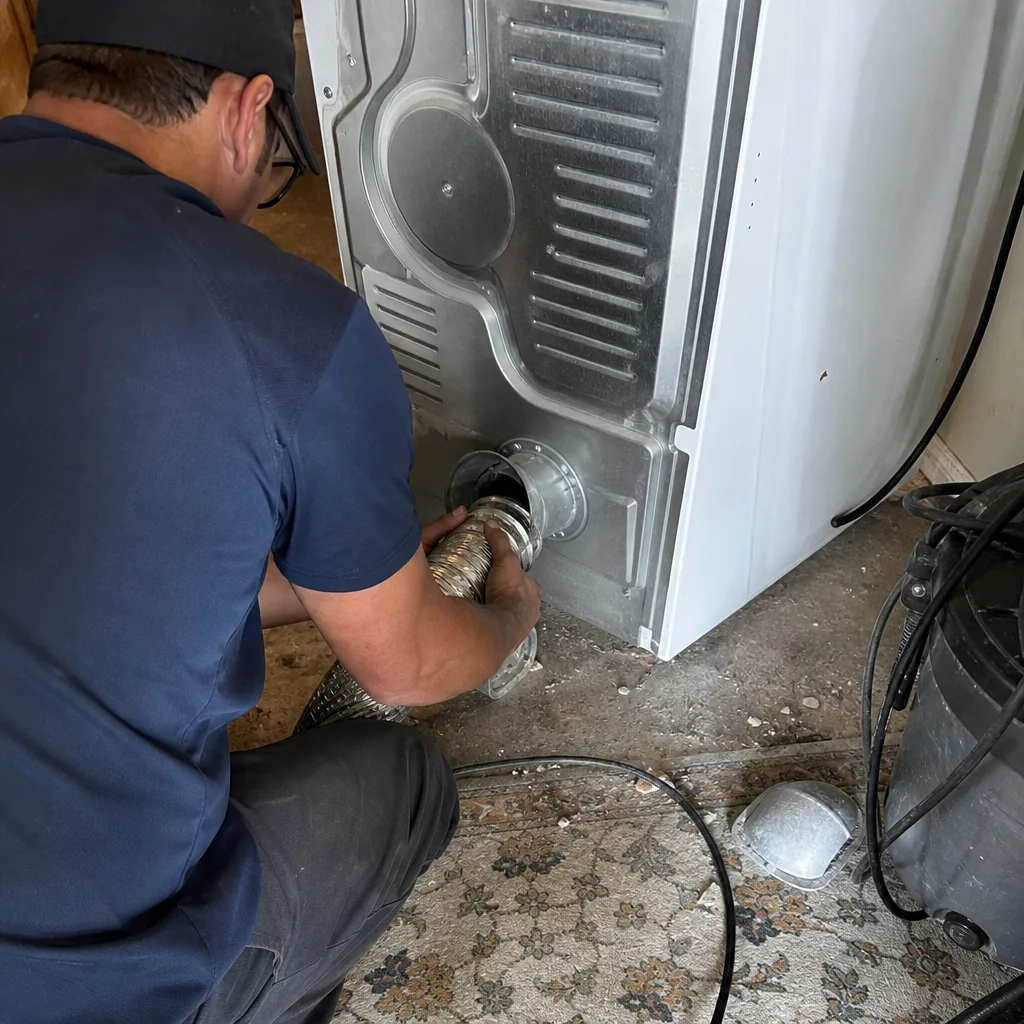
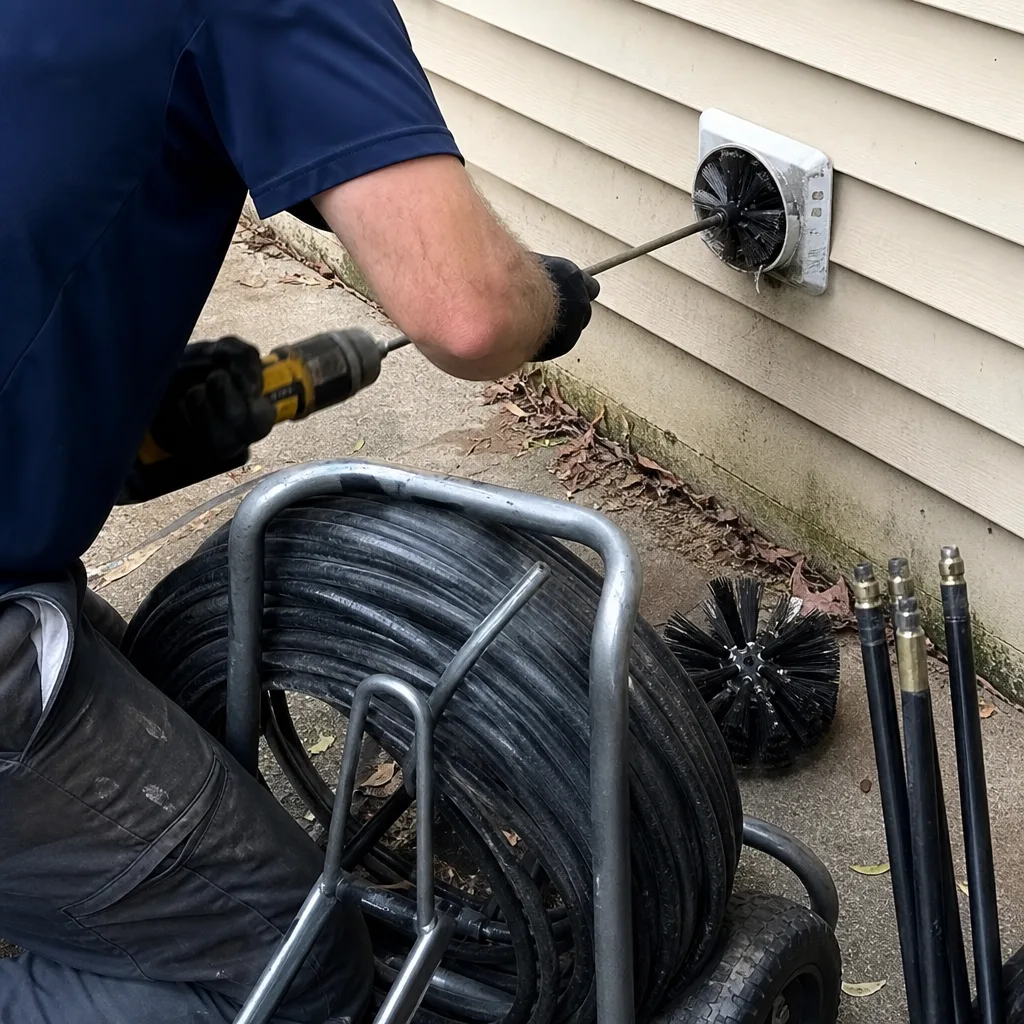
The Dryer Vent Cleaning in Marietta service should also be scheduled in fall, as lint accumulation accelerates in summer with heavier towel and bedding loads, and the heating season increases fire risk from restricted airflow.
What Duct Cleaning Costs in Marietta and When Timing Affects Price
CleanRun publishes pricing because Haven Standard Clause 1, Written Price Before Any Work Starts, applies to every job. The following ranges reflect whole-system pricing for typical Marietta homes, not per-vent teaser rates that balloon on arrival.
| Service | Typical Marietta Range | What Affects Price |
|---|---|---|
| Standard air duct cleaning (single system, up to 15 runs) | $450 - $750 | Accessibility of plenum, amount of debris, presence of flex duct vs. metal |
| Deep cleaning with mechanical agitation (heavy debris or construction residue) | $650 - $950 | Number of elbows with buildup, need for contact vacuuming at each register |
| Mold remediation with antimicrobial treatment | $800 - $1,400 | Extent of growth, accessibility, need for post-treatment verification |
| Duct repair and sealing (per run) | $150 - $350 | Length of run, access difficulty, material (flex vs. metal) |
| Dryer vent cleaning | $120 - $220 | Length of run, number of turns, roof vs. wall termination |
Timing affects price indirectly. Spring scheduling (March to mid-April) and fall scheduling (October to mid-November) book consistently because informed homeowners recognize these windows. Booking 3 to 4 weeks ahead secures preferred slots. Emergency scheduling outside these windows, particularly during summer peak when crews are committed to breakdown calls, may involve longer waits or after-hours rates.
The more significant cost factor is what we call “vacuum noise” versus documented work. Competitors advertising $79 to $149 whole-house specials typically run a shop vac at the plenum for 45 minutes, never entering individual duct runs, and provide no photo record. The homeowner has no evidence that work occurred. CleanRun’s documented photo record, included on every visit, shows the inside of every duct run before and after, with timestamps. This practice has been standard since our first job in 2013.
Every job receives a written price before any work starts. No exceptions. If a competitor has provided a written estimate, CleanRun offers a Free Second Opinion at no cost, with our written number placed beside theirs.
Common Mistakes to Avoid
- Scheduling based on calendar month rather than environmental conditions. “Every three years in January” ignores Marietta’s specific contamination windows and may mean cleaning after the damage is done.
- Assuming a new home has clean ducts. Construction debris in Marietta’s 2015-2025 housing stock is often severe; drywall dust and wood particulate settle in ductwork during the build and are never removed by the builder.
- Over-relying on high-MERV filters to compensate for dirty ductwork. A MERV 13 filter at the return does not remove adhered debris in the plenum or mold on duct lining. It protects equipment; it does not clean the system.
- Ignoring attic ductwork because it’s out of sight. In Marietta’s climate, attic duct insulation damage is the primary driver of mold contamination. Surface inspection from the attic access is rarely sufficient to identify problems.
- Accepting per-vent pricing or phone quotes without inspection. These structures invite bait-and-switch. A written price based on actual system configuration, delivered after inspection, is the only structure consistent with honest service.
- Failing to request photo documentation. Without images of each duct run, you have no evidence that work occurred. The documented photo record is not a premium add-on; it is basic accountability.
- Cleaning without inspecting for underlying damage. Removing debris from a duct run with separated seams or compressed insulation solves the symptom while the cause continues degrading the system.
When to Call a Professional
Call for inspection when you observe musty odors from registers, visible debris exiting vents at system startup, uneven heating or cooling between rooms, or if your Marietta home has not had documented duct cleaning in 24 months. After any renovation involving drywall, flooring, or wall removal, schedule inspection within 60 days. If you suspect mold, do not attempt DIY removal; disturbed spores distribute through the entire system.
CleanRun Air Duct Cleaning Marietta offers free estimates in Marietta. Every estimate includes a written price before any work starts, and every completed job includes a documented photo record of every duct run. Call (470) 516-9337 to schedule.
Frequently Asked Questions
Whole-system air duct cleaning for a typical Marietta home ranges from $450 to $750 for standard service, and $650 to $950 for deep cleaning with mechanical agitation of heavy debris. Prices below $300 for whole-system service typically indicate “vacuum noise” rather than documented work in each duct run. Call (470) 516-9337 for a written estimate based on your specific system configuration - estimates are free.
Low quotes usually rely on per-vent pricing that expands once the technician arrives, or they represent surface cleaning at the plenum only without entering individual duct runs. A legitimate service requires time, professional-grade equipment like Nikro negative-pressure systems, and documentation. The $79 to $149 whole-house special cannot cover labor, equipment, and insurance for actual duct-run cleaning. Ask for a written scope specifying each duct run to be cleaned and whether photo documentation is included.
Demand a documented photo record with timestamps showing the inside of each duct run before and after cleaning. CleanRun has included this as a standard deliverable on every job since 2013. Without images, you have only the technician’s word. With images, you have evidence that can be reviewed, compared, and retained for your records.
For most Marietta homes, every 24 to 36 months aligns with the two contamination windows, assuming normal occupancy and no renovations. Homes with continuous cooling seasons exceeding 2,000 hours annually, recent construction, or residents with severe allergies may benefit from 18-month intervals. The correct interval depends on runtime hours and observable conditions, not a fixed calendar.
Spring is better for prevention, particularly for allergy sufferers, because it removes debris before five months of continuous cooling distribution. Fall is better for correction, addressing mold and condensation damage accumulated during peak humidity. If you clean only once per cycle, choose spring for prevention; if you clean twice, the fall service should include inspection for insulation damage that the spring cleaning might have missed. Our Air Duct Cleaning Maintenance Checklist for Marietta Homeowners covers the full inspection protocol.
No. A higher MERV rating captures more particles at the filter location but does not clean existing debris inside ductwork. In fact, MERV ratings too high for your system’s blower capacity can reduce airflow, strain equipment, and increase energy costs without addressing the underlying contamination. Match MERV to season and system capability, and treat duct cleaning as a separate maintenance need.
The Bottom Line
Marietta’s 109 days above 90°F and heavy spring pollen load create two distinct contamination windows that reward strategic timing. Clean in March or April to prevent debris distribution through the cooling season; clean in October or November to address mold and condensation damage before heating begins. Between these windows, maintain appropriate filtration and observe your system for the environmental triggers that actually matter. For related topics, explore more guides & resources on our blog. The homeowners who get lasting value from duct cleaning are those who match service timing to climate reality, not calendar habit.
Written by Tomas Reyes, Owner at CleanRun Air Duct Cleaning Marietta, serving Marietta since 2013.