
Last updated September 23, 2026
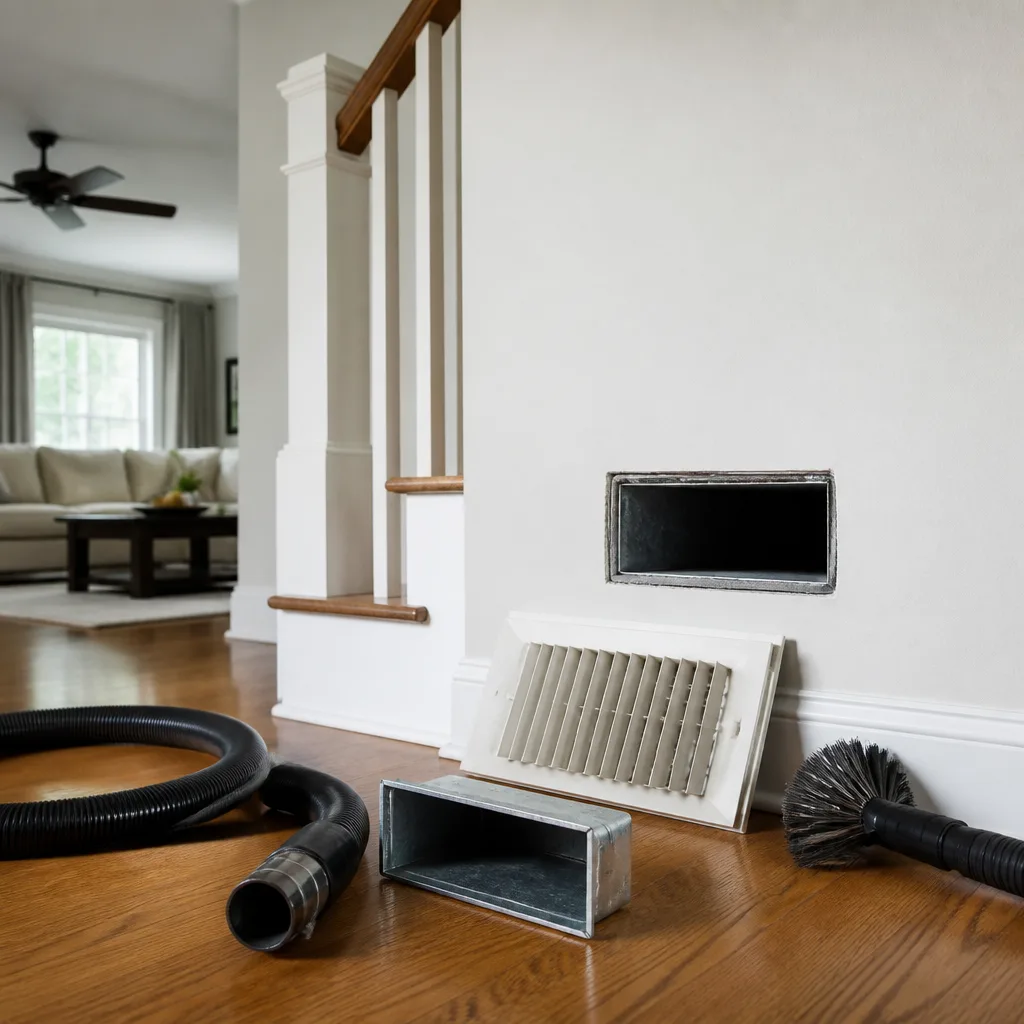
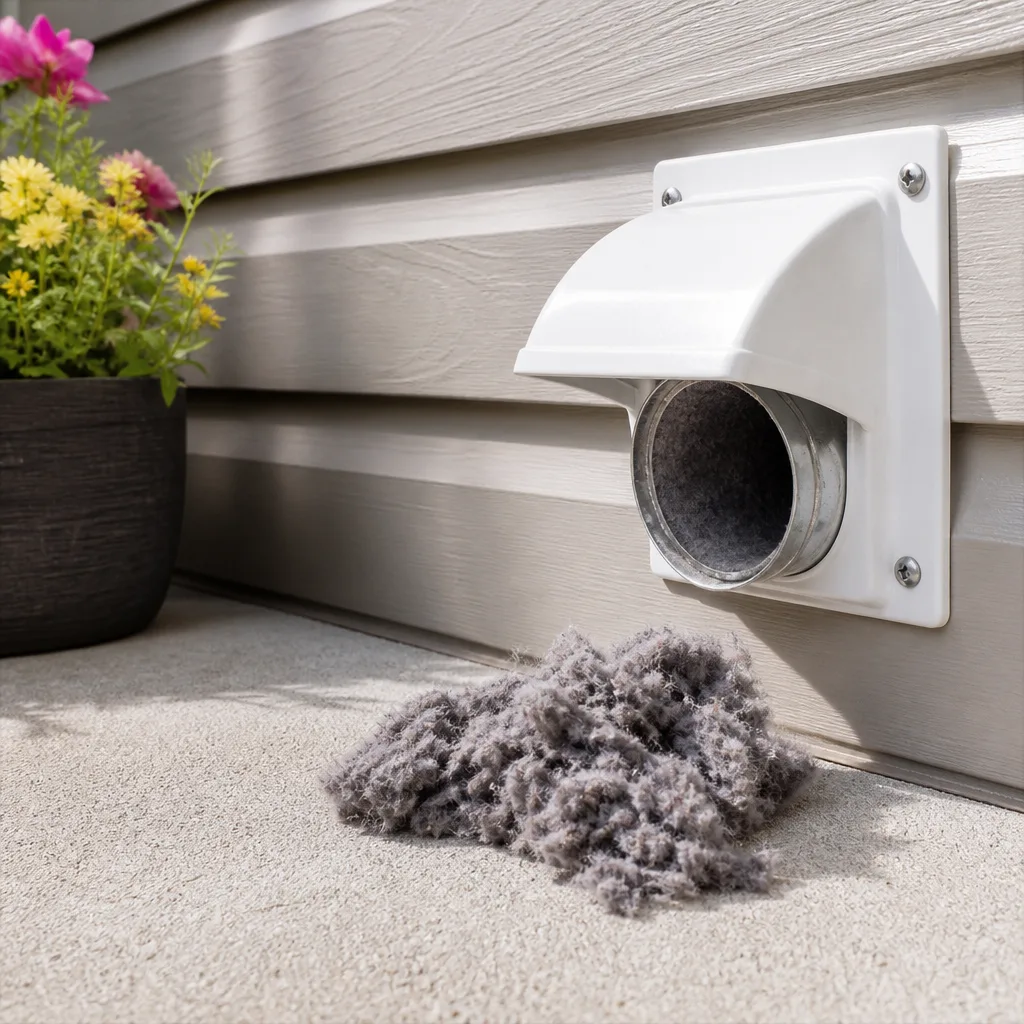
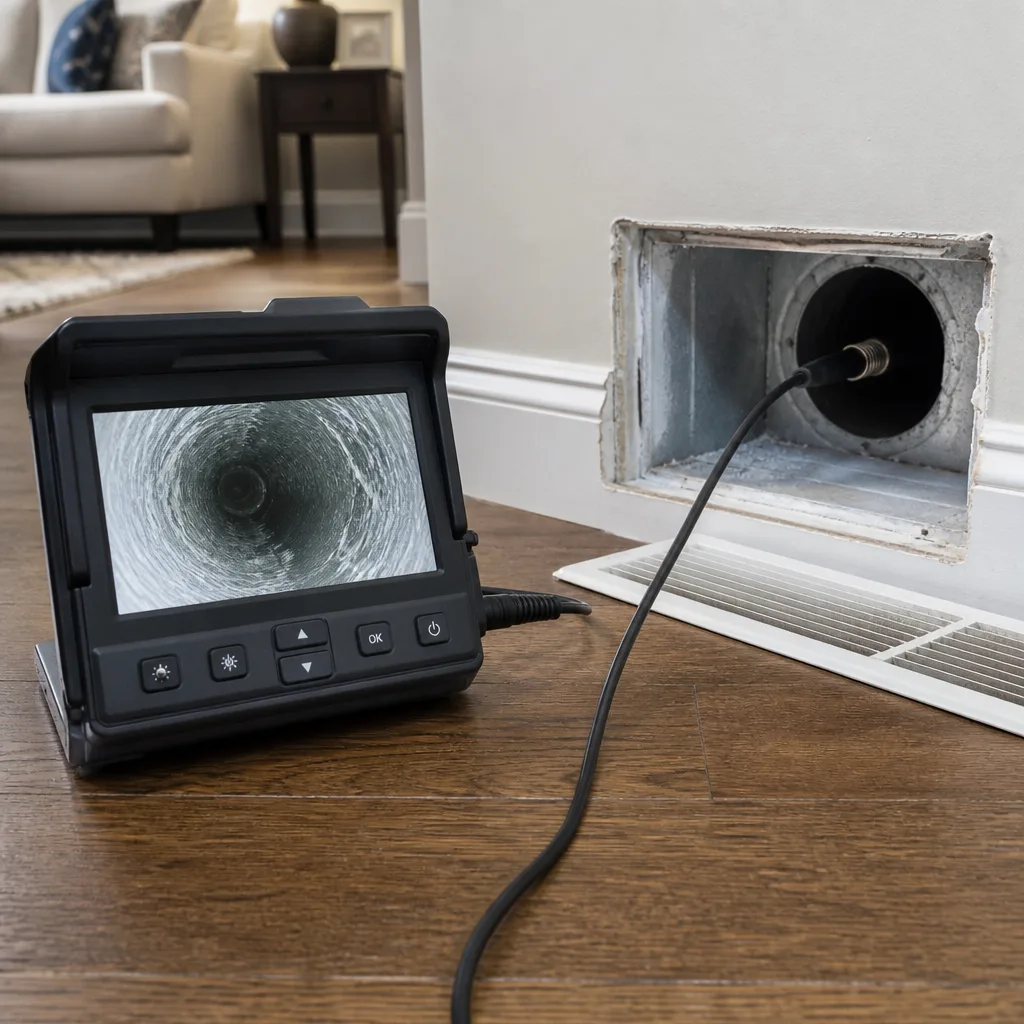
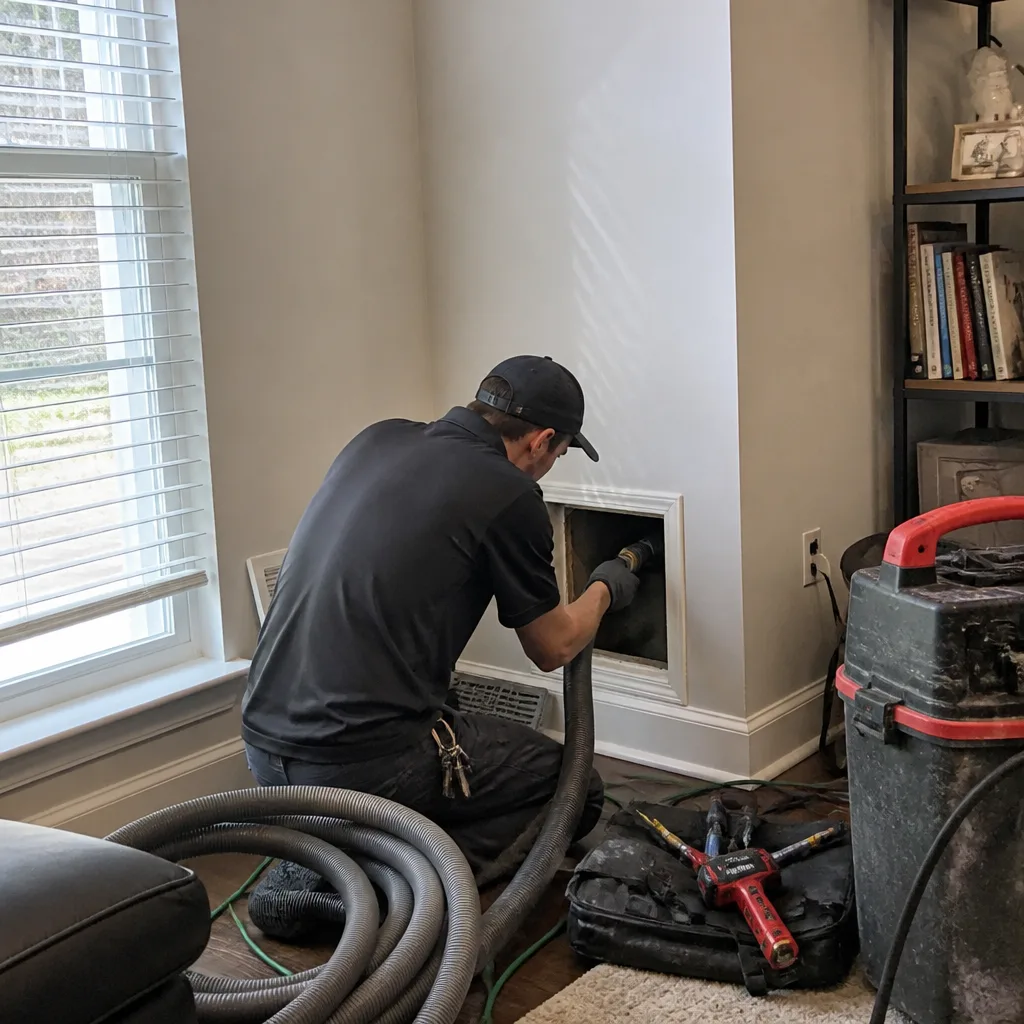
Whole-system duct and dryer vent check with before-and-after photos - you see exactly what came out of your vents
That "$99 whole-house special" is a bait ad - the real number appears once they are in your hallway, or the "clean" is a shop-vac at the register. We photograph the inside of your ducts before and after instead.
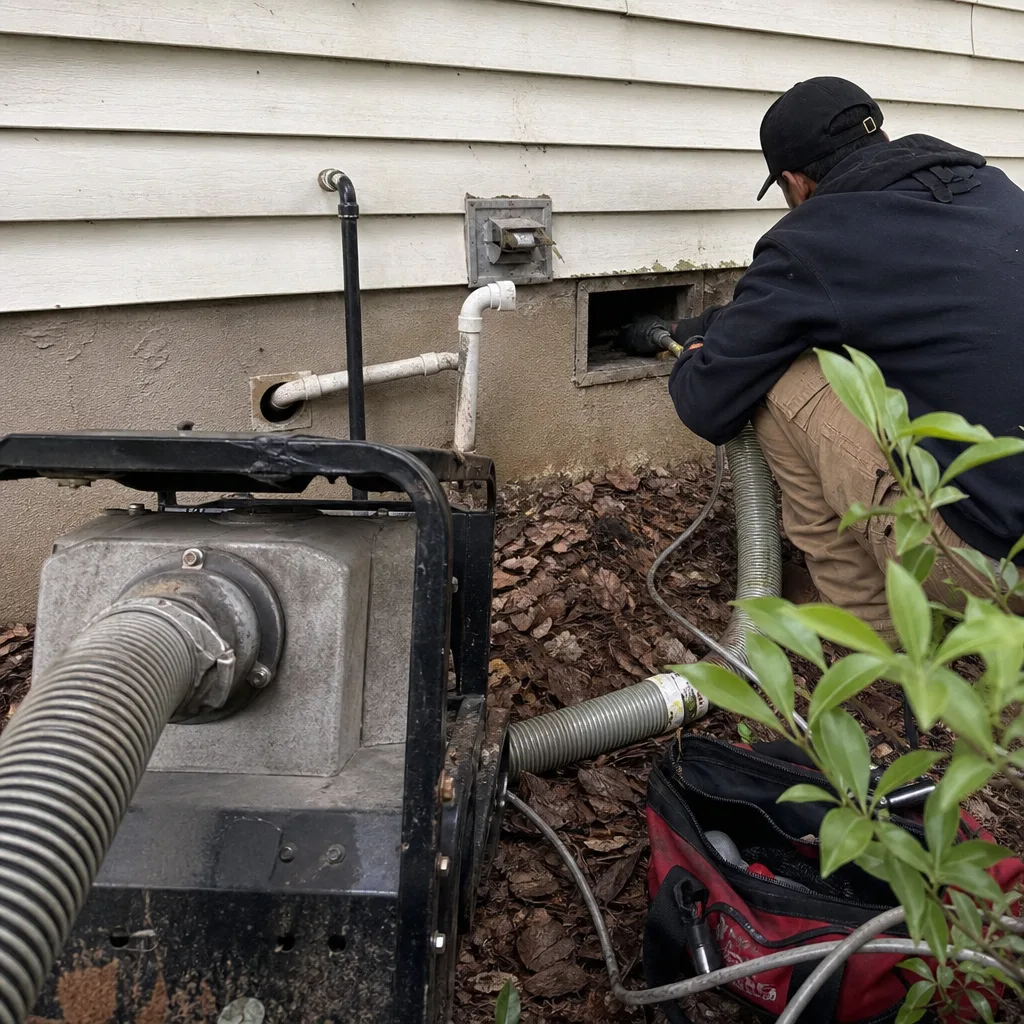 Before
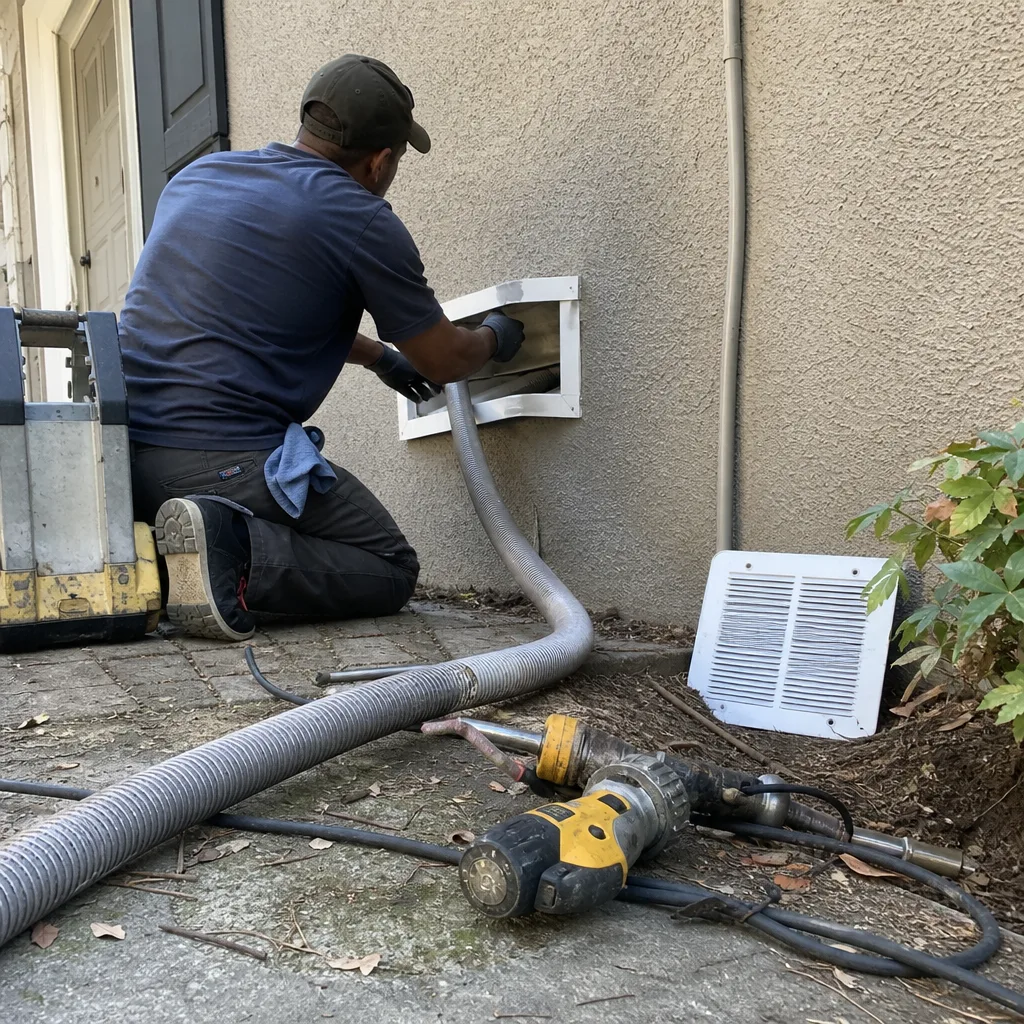 After
After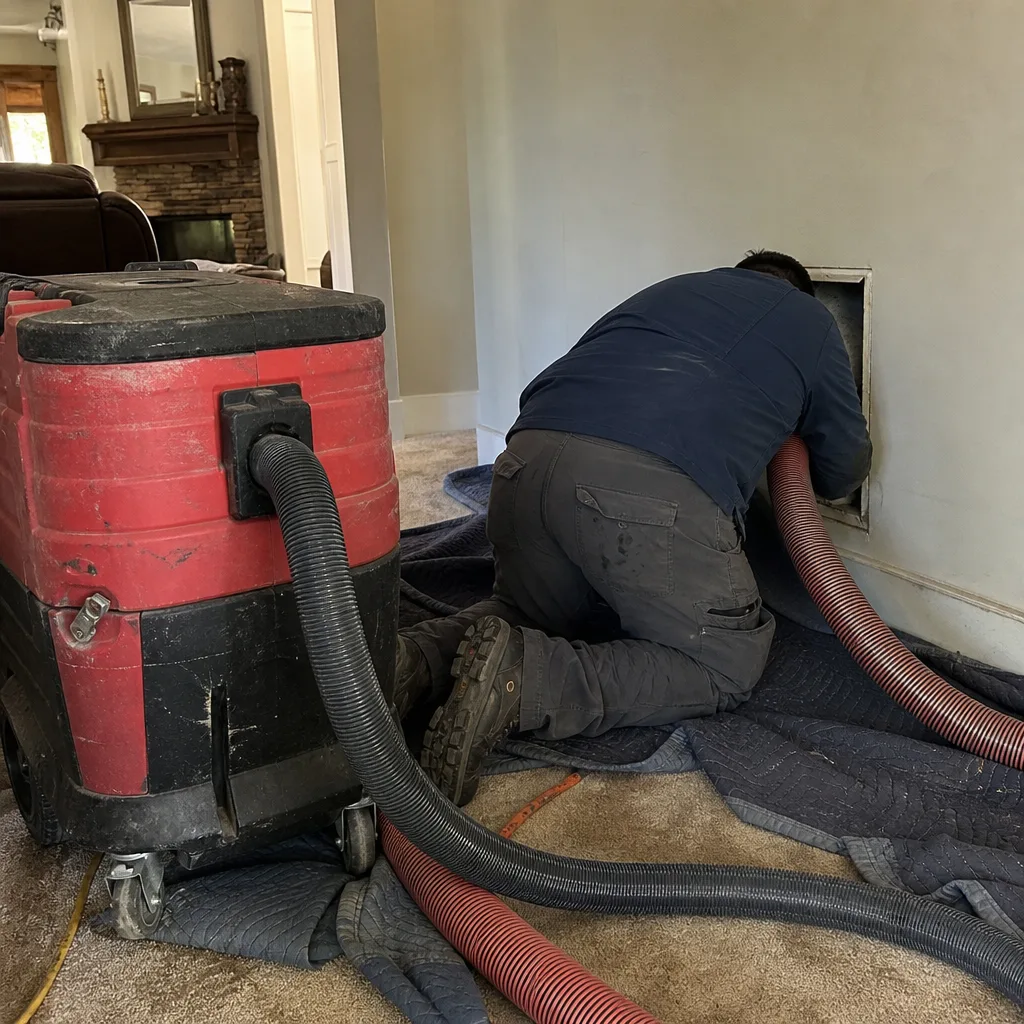 Before
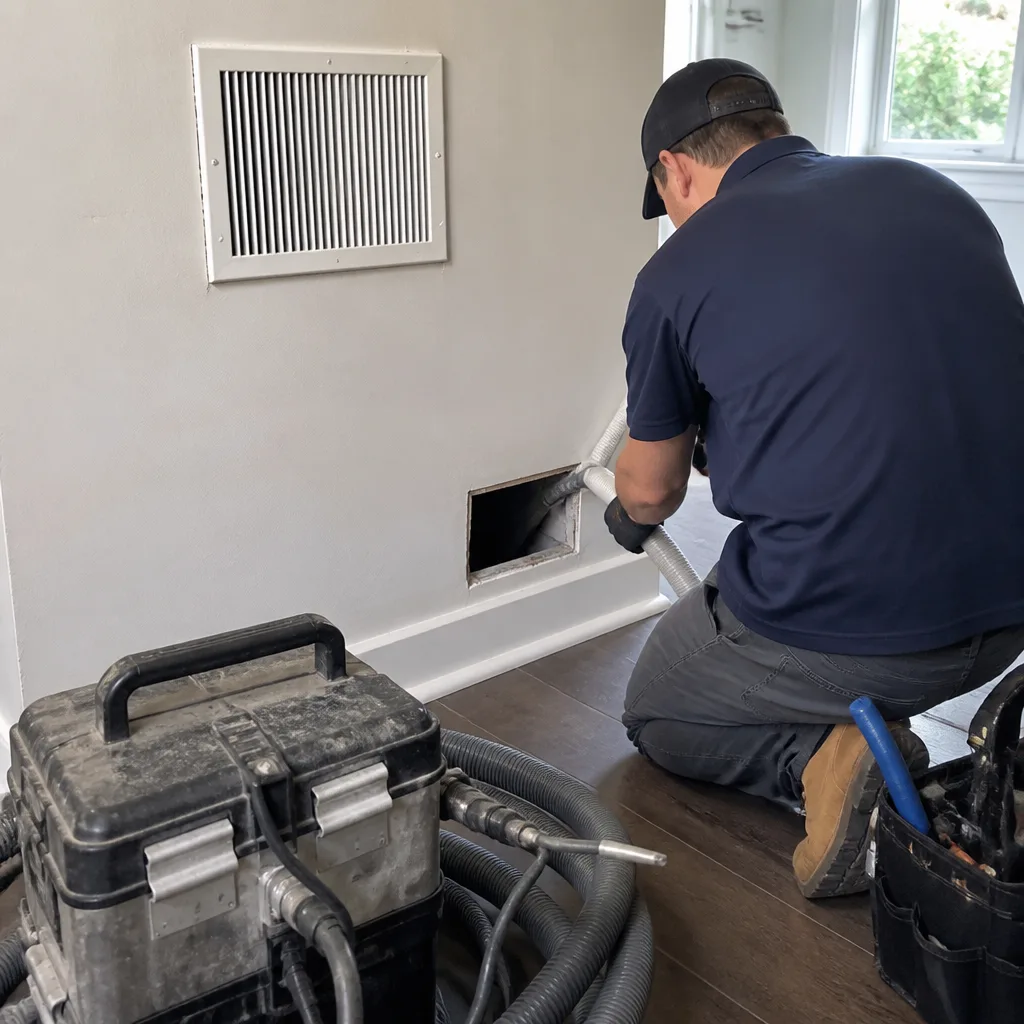 After
After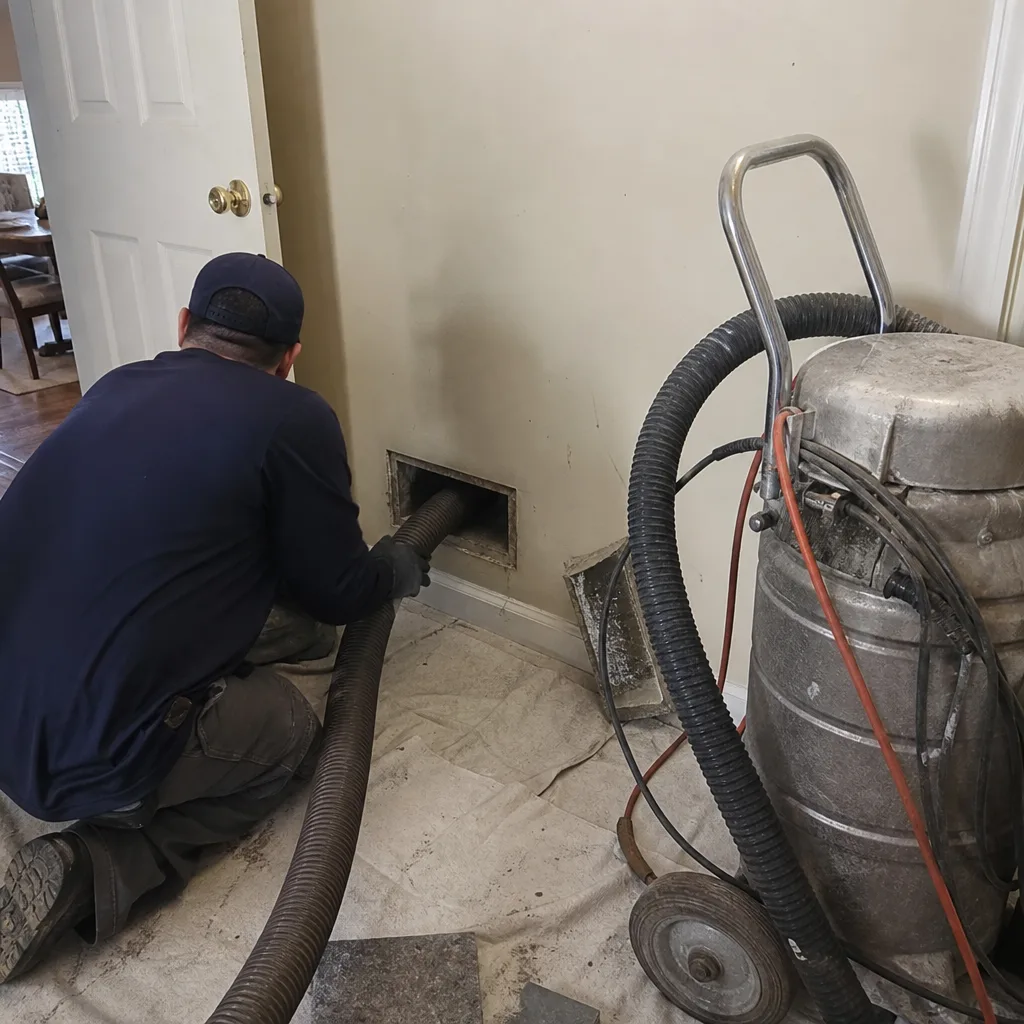 Before
 After
AfterAir Duct Cleaning Permits, Codes & Inspections in GA: What You Need to Know
Here’s the distinction that costs Marietta homeowners thousands at closing: air duct cleaning itself requires no permit in Georgia, but the duct repair work that cleaning almost always reveals does. A technician who seals a disconnected flex duct run with mastic and a new coupling has performed mechanical work under Georgia’s State Minimum Standard Codes, whether or not they mentioned a permit. In this guide, we’ll show you exactly where the line falls, how to verify a contractor’s license, what unpermitted work means for your home’s resale value, and the two questions every homeowner should ask before any air duct cleaning or repair begins.
Quick Answer
The Complete Guide to Air Duct Cleaning in Marietta explains that debris removal from existing ductwork does not require a permit anywhere in Georgia. However, duct sealing, replacement, rerouting, or any modification to the HVAC distribution system falls under the Georgia State Minimum Standard Mechanical Code and requires a permit in most jurisdictions, including Cobb County. Homeowners should verify that any contractor performing repairs holds a valid Georgia Conditioned Air Contractor license, which can be confirmed through the Georgia Secretary of State’s licensing portal.
Table of Contents
- Cleaning vs. Repair: Where the Permit Line Actually Falls
- What Georgia’s Mechanical Code Says About Ductwork
- Cobb County Permit Requirements for HVAC Work
- What Unpermitted Duct Repair Means at Resale
- EPA Mold Guidance and When It Changes the Contractor You Need
- How to Verify a Georgia Mechanical Contractor’s License
- The Two Questions to Ask Before Any Repair Begins
- How CleanRun Documents Every Job Under the H.A.V.E.N. Standard
BeforeAfterCleaning vs. Repair: Where the Permit Line Actually Falls
The Georgia Department of Community Affairs draws a sharp line between maintenance and mechanical work, and most homeowners never hear about it until something goes wrong.
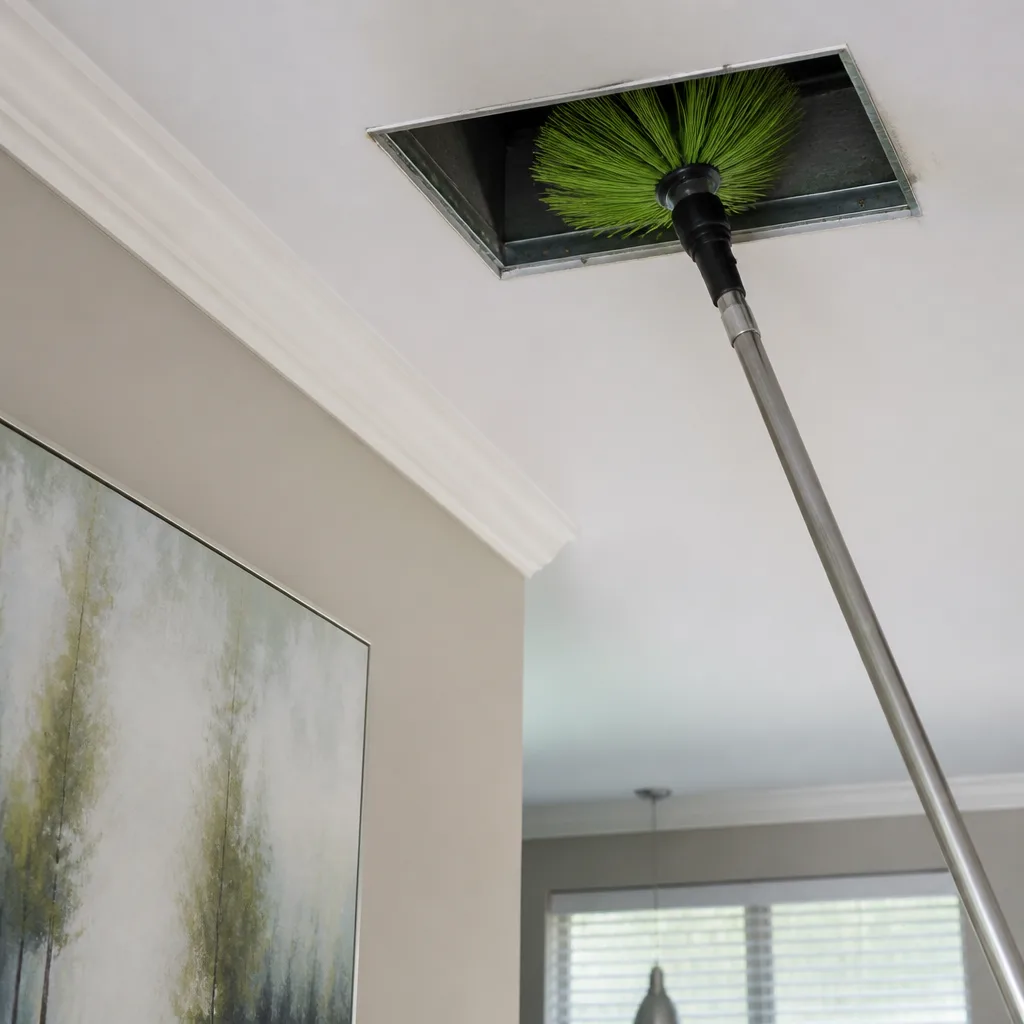
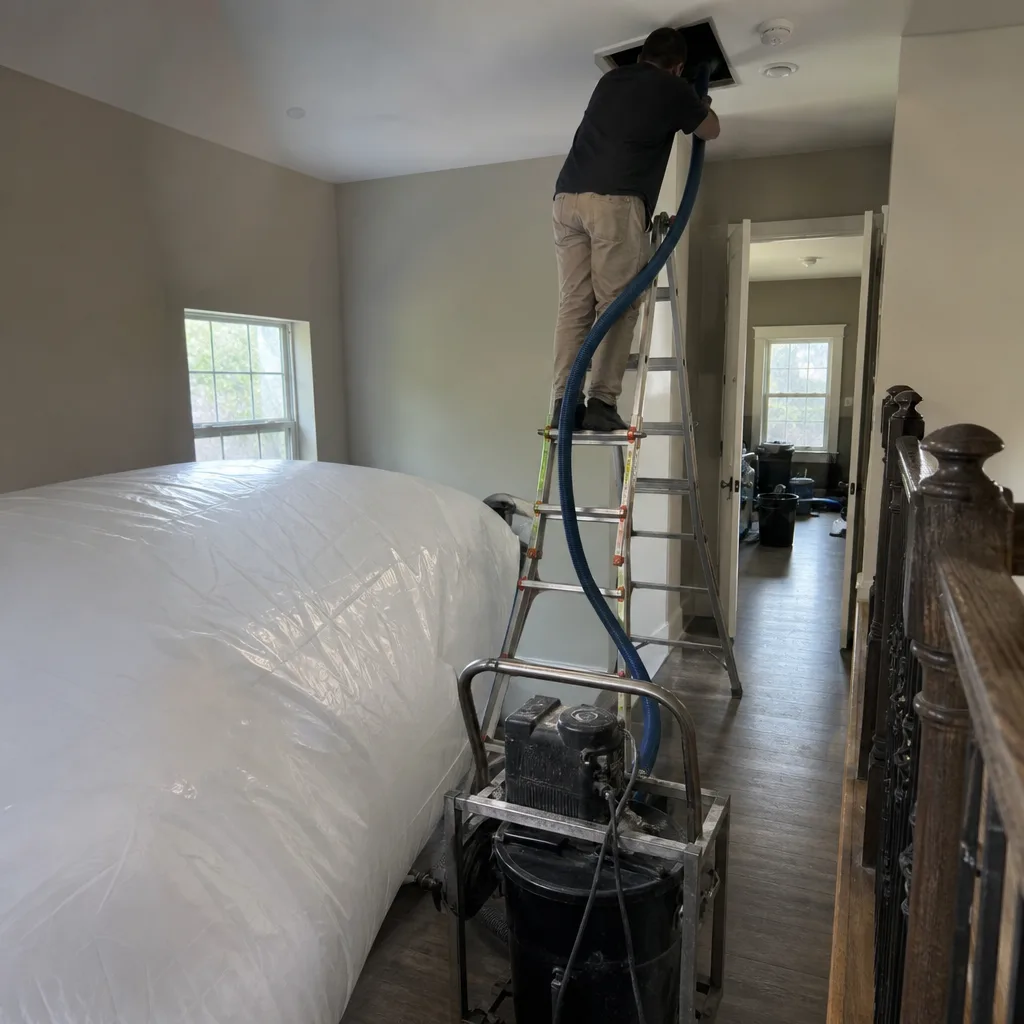
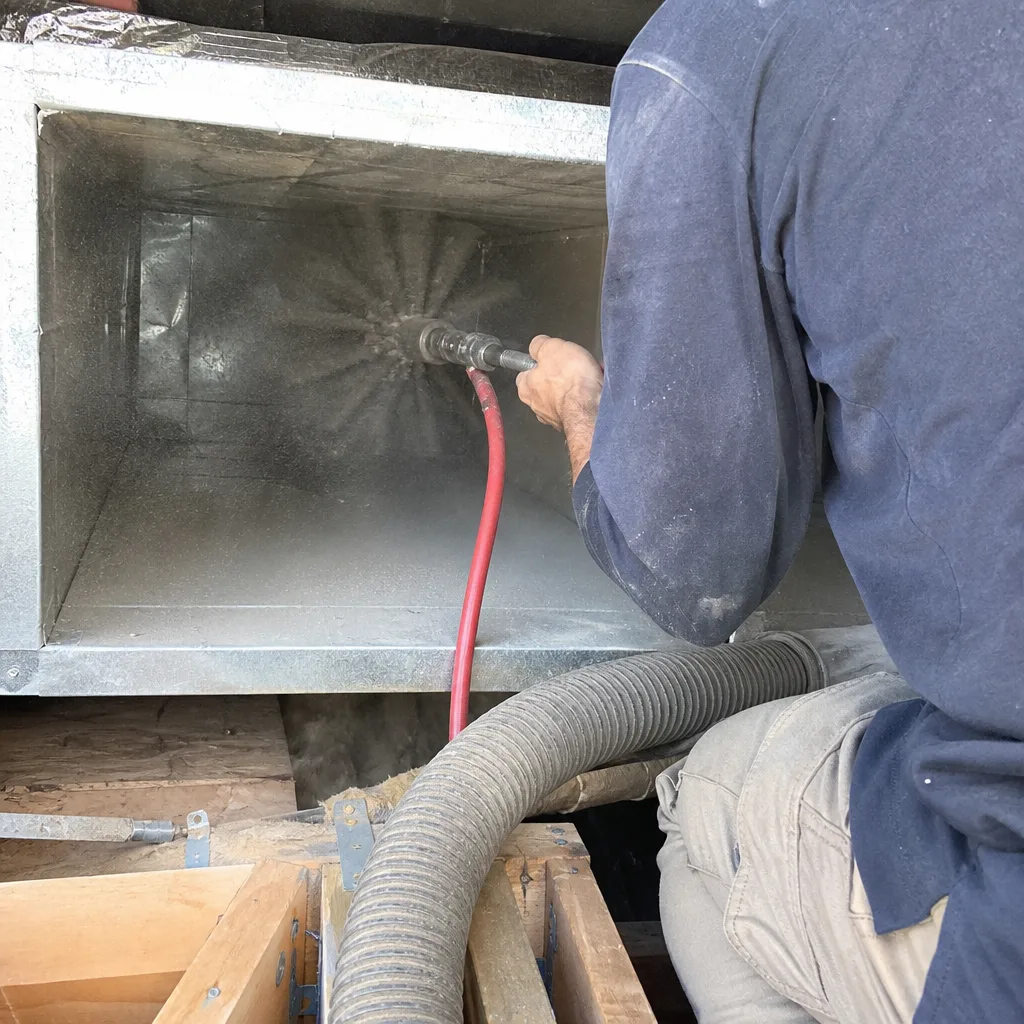
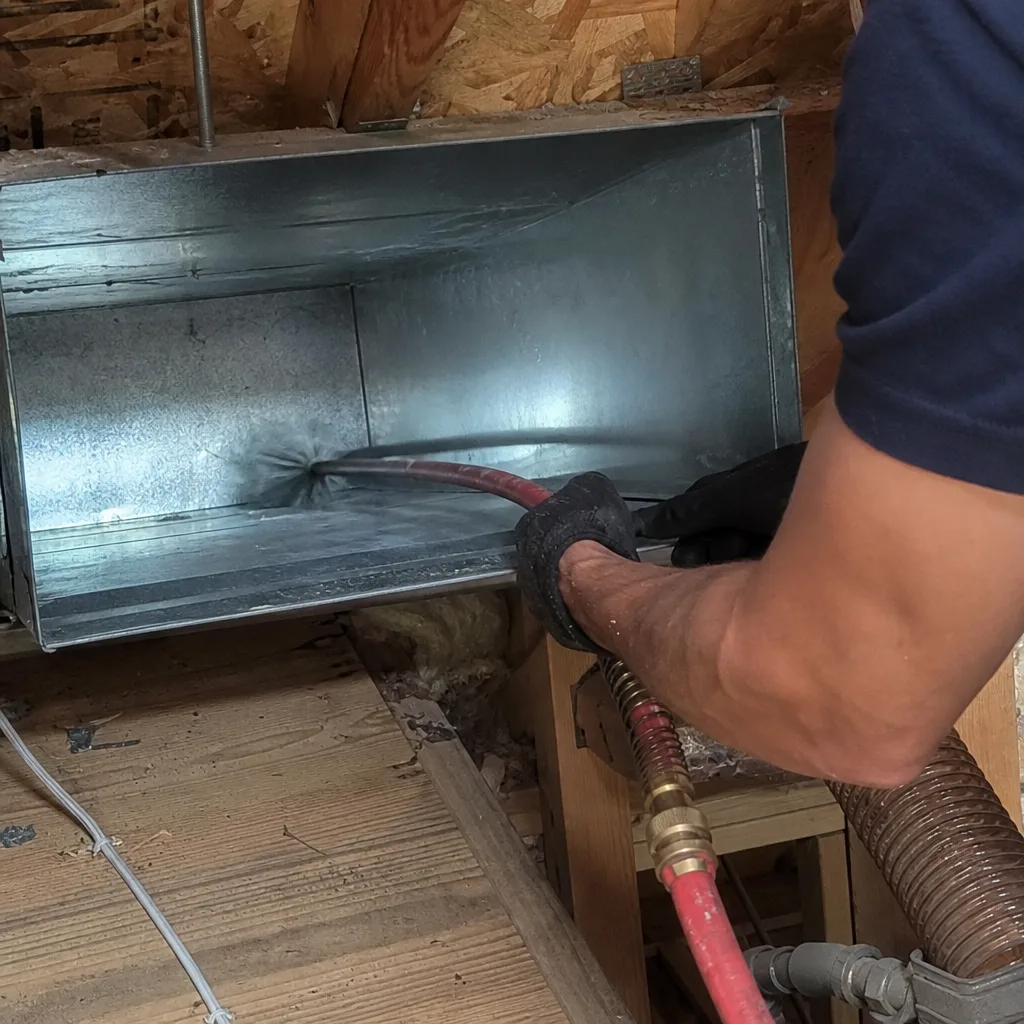
Cleaning, no permit required: Debris removal from existing ductwork using negative-pressure extraction (a vacuum system that pulls contaminants out while the duct system remains intact), agitation brushes, or compressed air tools. This includes cleaning the plenum, the metal or flex duct runs, and the registers. The physical structure of the system doesn’t change. The airflow path isn’t altered. No materials are added or removed beyond the debris itself.
Repair, permit required in most jurisdictions: Any work that modifies, restores, or replaces components of the HVAC distribution system. Specific examples we’ve encountered in Marietta homes include:
- Sealing disconnected flex duct with mastic and a new coupling
- Replacing crushed or deteriorated flex duct runs in attics
- Rerouting ductwork to improve airflow to a room that was always too hot or too cold
- Installing new return air pathways or enlarging existing ones
- Replacing rusted or corroded metal duct sections
- Adding manual or motorized dampers to balance airflow
The climate in Marietta complicates this distinction. Our hot, humid summers and occasional freeze-thaw winters stress attic ductwork in ways that accelerate deterioration. Flex duct in a 140-degree attic degrades faster here than in cooler climates. We’ve opened systems in East Cobb and Indian Hills where the cleaning revealed multiple disconnected runs, collapsed sections, or rodent damage that made the ductwork functionally useless-exactly the kind of problems covered in our Air Duct Cleaning Warning Signs: A Marietta Homeowner’s Reference Guide. The debris was gone after cleaning, but the system still couldn’t move air. That’s when the conversation shifts from maintenance to mechanical work, and that’s when the permit question becomes critical.
A contractor who performs repair work without pulling the required permit has exposed the homeowner to liability, even if the work was technically competent. The permit isn’t a formality. It’s a record that the work was inspected against code, and that record attaches to the property, not the contractor.
What Georgia’s Mechanical Code Says About Ductwork
Georgia operates under the State Minimum Standard Codes, adopted from the International Code Council family of model codes. The CleanRun Air Duct Cleaning Marietta home team works within these standards on every job. For HVAC systems, the relevant document is the Georgia State Minimum Standard Mechanical Code, currently based on the International Mechanical Code with Georgia amendments.
The code governs the design, installation, alteration, and repair of heating, ventilation, and air conditioning systems. Key provisions that affect ductwork include:
- Duct construction and installation standards: Materials must be rated for the temperatures and pressures they’ll encounter. Flex duct must be supported at intervals that prevent sagging and kinking, which restrict airflow and trap condensation in Marietta’s humidity.
- Sealing requirements: All joints and seams in the duct system must be sealed to prevent leakage. The code specifies approved sealants and methods. Duct tape, despite its name, is not an approved sealant under the mechanical code for permanent repairs.
- Insulation requirements: Ductwork in unconditioned spaces, including virtually all attics in Marietta, must be insulated to specified R-values to prevent energy loss and condensation formation.
- Return air pathways: The code restricts where return air can be drawn from, with specific prohibitions against drawing return air from certain spaces to prevent combustion safety hazards and contamination.
When a contractor modifies any of these elements, they’ve triggered code compliance requirements. The permit process ensures an independent inspector verifies that the work meets these standards. Without that verification, the homeowner has no assurance that the repair won’t create new problems, from energy waste to safety hazards.
We’ve photographed duct repairs in Marietta homes where a previous contractor had used standard cloth-backed duct tape on flex duct connections. In our Georgia humidity, that adhesive fails within months. The “repair” looked acceptable at completion but was already deteriorating when we documented it. Code-compliant mastic or approved tape products, properly applied, last years. The permit inspection doesn’t guarantee quality workmanship, but it does enforce minimum material and method standards that filter out the most common failures.
Cobb County Permit Requirements for HVAC Work
Cobb County, where Marietta sits as the county seat, enforces the Georgia State Minimum Standard Codes through its Community Development Agency. For homeowners in Marietta, understanding the local process matters because this is where permits are actually pulled, fees paid, and inspections scheduled.
When a permit is required in Cobb County:
- Installation of new HVAC equipment or ductwork
- Replacement of existing ductwork, including partial replacement of runs
- Alteration of duct system layout or sizing
- Sealing or repair work that involves disassembly and reassembly of duct components
When a permit is typically not required:
- Cleaning of existing ductwork without disassembly
- Filter replacement
- Minor register or grille replacement that doesn’t modify the duct connection
The permit application in Cobb County requires the contractor’s license number, proof of insurance, and detailed scope of work. The fee structure scales with project value. For typical residential duct repairs, expect permit fees in the $75-$200 range, with inspection fees additional. The total cost is modest compared to the value of documented compliance.
Cobb County inspectors examine ductwork for proper support, adequate insulation, correct sealing methods, and compliance with return air pathway restrictions. They’ll also verify that load calculations were performed if the repair affects system capacity. In Marietta’s older neighborhoods, like the historic district near Marietta Square or the ranch homes built in the 1960s and 1970s, we’ve seen inspectors flag issues that modern contractors might overlook, such as asbestos-containing duct insulation that requires abatement before any disturbance.
Homeowners can verify permit status through Cobb County’s online permit portal or by contacting the Community Development Agency directly. Any contractor who resists providing a permit number or who suggests that permits “aren’t really necessary for small jobs” is signaling a practice that puts the homeowner at risk.
What Unpermitted Duct Repair Means at Resale
This is where the permit question transitions from technical compliance to real money. Marietta’s housing market has been active, with many homes in neighborhoods like West Cobb, East Cobb, and the Walton High School district changing hands at significant price points. Home inspectors in this market are trained to look for unpermitted mechanical work, and they find it with increasing frequency.
Here’s how unpermitted duct repair creates negotiation liability:
- The inspection report flags the work: A competent home inspector examines the HVAC system, notes recent duct modifications, and checks permit history. If no permit exists for visible repairs, it goes in the report as a material defect requiring disclosure.
- The buyer’s lender may require resolution: Many mortgage underwriters, particularly for FHA and VA loans, require that unpermitted work be brought into compliance before closing. This can mean retroactive permitting, which in Cobb County requires opening walls or ceilings to expose the work for inspection, or complete rework by a licensed contractor.
- The seller faces a compressed timeline: With closing dates fixed, the seller must either accept a price reduction, pay for expedited permitting and repair, or risk the deal. We’ve been called into situations where a $400 duct repair done without a permit became a $3,000 closing cost problem.
- Insurance complications: Some homeowners’ insurance policies contain exclusions for damage arising from unpermitted work. If a duct repair fails and causes water damage or mold growth, the insurer may deny the claim based on the lack of permit and inspection.
In Marietta’s competitive market, buyers with multiple options will walk from a property with unpermitted mechanical work rather than absorb the uncertainty. Sellers who believed they saved money with an unpermitted repair discover they’ve purchased a future liability.
The documented photo record that Air Duct Cleaning in Marietta should provide becomes valuable here. If cleaning reveals needed repairs, the photos establish the pre-existing condition and support the case that the work was necessary. But the photos don’t replace the permit. Both matter.
EPA Mold Guidance and When It Changes the Contractor You Need
The Environmental Protection Agency’s guidance on mold in HVAC systems creates a second contractor classification that homeowners in Marietta’s humid climate should understand. The EPA does not regulate mold remediation specifically, but its guidance documents, particularly the Mold Remediation in Schools and Commercial Buildings guidelines adapted for residential use, establish standards that affect contractor selection.
Standard air duct cleaning: Removal of dust, debris, and particulate matter. This falls within the scope of a standard duct cleaning contractor using equipment like Rotobrush or Nikro negative-pressure systems.
Mold-contaminated ductwork: When visible mold growth is present inside hard-surface ducts or on other components of the HVAC system, the EPA recommends that remediation be performed according to professional standards, specifically those of the National Air Duct Cleaners Association (NADCA) or the Institute of Inspection, Cleaning and Restoration Certification (IICRC).
The critical distinction: if mold is present, the contractor must use EPA-registered antimicrobial products and follow containment and removal protocols that exceed standard cleaning. More importantly, the source of moisture that enabled mold growth must be identified and corrected. In Marietta, that typically means finding the condensation point, duct leak, or humidity intrusion that created the conditions for growth.
Some contractors cross into mold remediation without appropriate training or licensing. Georgia does not have a standalone mold remediation license, but contractors who perform mold-related work may need additional certifications, and their work may trigger notification requirements under certain circumstances. A contractor who treats mold contamination as “just a heavier cleaning job” is misapplying EPA guidance and potentially spreading contamination.
We document mold findings with photography, describe the extent in the written scope, and recommend appropriate remediation specialists when the contamination exceeds standard cleaning parameters. Haven Standard Clause 1, written pricing, applies even to these recommendation conversations: the homeowner receives a clear description of what we found, what we can do, and what requires a different specialist, with costs stated before any commitment.
Equipment matters here. Our Rotobrush and Nikro systems are designed for debris removal, not mold remediation. When we name these brands, we’re being specific about capabilities and limits. Customers can verify the equipment specifications independently, and that verification supports informed decisions about whether the right tools are being applied to the right problem.
How to Verify a Georgia Mechanical Contractor’s License
Georgia requires a Conditioned Air Contractor license for anyone who installs, maintains, or repairs heating, air conditioning, or ventilation systems. This is not a business registration. It is a professional license issued to an individual after examination and continuing education requirements. The license number must be displayed on all advertising, contracts, and vehicles.
Step-by-step verification process:
- Obtain the license number: Ask the contractor for their Georgia Conditioned Air Contractor license number. A legitimate contractor provides this without hesitation. CleanRun publishes its license information and operates under the H.A.V.E.N. Standard, which includes Haven Standard Clause 3: Verified Crews.
- Access the Georgia Secretary of State portal: Visit the Professional Licensing Boards division of the Secretary of State website. The license lookup tool is publicly accessible and free.
- Enter the license number: The system returns the licensee’s name, license status (active, inactive, expired, revoked), expiration date, and any disciplinary history.
- Verify the name matches: The person who presented the license number should match the name on file. Some contractors use another person’s license number, a practice that is illegal and voids any warranty or insurance coverage.
- Check for reciprocity or non-resident status if applicable: Out-of-state contractors working in Georgia must hold proper Georgia licensure or valid reciprocity agreements.
Red flags that should stop the conversation:
- The contractor provides only a business tax ID or general contractor number, not a Conditioned Air Contractor license
- The license lookup shows expired, inactive, or revoked status
- The name on the license doesn’t match the person performing or supervising the work
- The contractor claims the work is “too small” to require a licensed professional
- Pressure to begin immediately without time to verify credentials
In Marietta, we’ve encountered homeowners who accepted work from unlicensed contractors because the price was lower or the scheduling faster. The immediate savings typically evaporate when the work fails, when no warranty exists because the contractor was uninsured, or when the unpermitted status surfaces at resale. Verification takes five minutes. The consequences of skipping it can last years.
The Two Questions to Ask Before Any Repair Begins
Every homeowner can protect themselves with two questions, asked before any tool touches the ductwork. The answers, and the contractor’s willingness to provide them, reveal whether you’re working with a professional or a risk.
Question 1: “Is this work permitted?”
A valid answer is specific: “Yes, we’ll pull a Cobb County mechanical permit before beginning, and the inspection will be scheduled for [timeframe].” The contractor should identify the permitting jurisdiction, explain the process, and include permit costs in the written estimate.
An invalid answer is evasive or false: “Permits aren’t required for this kind of work,” or “We handle permits after the job is done,” or “The homeowner usually takes care of that.” In Cobb County, the licensed contractor is responsible for permit application. Post-work permitting is sometimes possible but significantly more complicated and may require exposing completed work for inspection.
Question 2: “Can I see your Georgia mechanical contractor’s license number?”
A valid answer is immediate and verifiable: The contractor provides the number, explains how to check it on the Secretary of State website, and confirms that the licensed individual will supervise or perform the work.
An invalid answer deflects: “Our company is licensed,” without specifying the individual license, or “I left my card in the truck,” or irritation that you’re asking. Company registration is not professional licensure. Only the individual Conditioned Air Contractor license authorizes the work.
These questions aren’t confrontational. They’re standard due diligence, the same verification a bank performs before approving a construction loan or an insurer performs before writing a policy. A professional contractor respects the questions and has ready answers. A contractor who becomes defensive or evasive has already told you what you need to know.
At CleanRun, we provide the license number in our written estimate, before any work is discussed in detail. Haven Standard Clause 1 requires written pricing; Haven Standard Clause 3 requires verified credentials. Both are delivered before the customer commits to anything.
How CleanRun Documents Every Job Under the H.A.V.E.N. Standard
Our approach to the permit and code question is embedded in the H.A.V.E.N. Standard, the operational framework we’ve used since 2013. Each clause addresses a specific point where homeowners in the duct cleaning industry typically lose transparency or accountability.
Haven Standard Clause 1: Written Price Before Any Work Starts
Every estimate specifies whether the scope is cleaning only or includes repair work. If repair work is identified, the estimate notes whether permitting is required and who will obtain it. The price is fixed per system, not per vent, with no escalation after the crew arrives. This eliminates the bait-and-switch pattern common in the industry, where a low cleaning price becomes a high-pressure repair sale once access is gained.
Haven Standard Clause 2: Documented Photo Record
The inside of every duct run is photographed before and after service. These images show the actual condition of the ductwork, including damage that may require repair. When we find disconnected runs, collapsed flex duct, or contamination that exceeds cleaning parameters, the photo record supports our recommendation and the homeowner’s decision about next steps. Since 2013, we’ve maintained this practice on every job, delivering the photo record as a standard deliverable, not an optional add-on.
Haven Standard Clause 3: Verified Crews
All technicians are background-checked, uniformed, and identified by name before arrival. License numbers are published and verifiable. Equipment is professional-grade from trade-recognized brands: Rotobrush and Nikro for cleaning systems, Honeywell and Aprilaire for air quality components. Customers can research these brands independently and verify that the tools match the task.
Haven Standard Clause 4: The 365-Day Done Right Promise
If the work is not right, we make it right. This is a written guarantee, not a policy subject to manager discretion. It applies to cleaning effectiveness and to any repair work we perform under permit. The guarantee period extends well beyond the typical 30-day industry standard because proper ductwork, installed and sealed correctly, should last years without recurrence of the original problem.
In Marietta’s climate, documentation matters more than promises. Our humidity, temperature swings, and active real estate market create conditions where unpermitted or undocumented work surfaces as a problem eventually. The H.A.V.E.N. Standard is designed to prevent that surface point, or to provide clear records if it does.
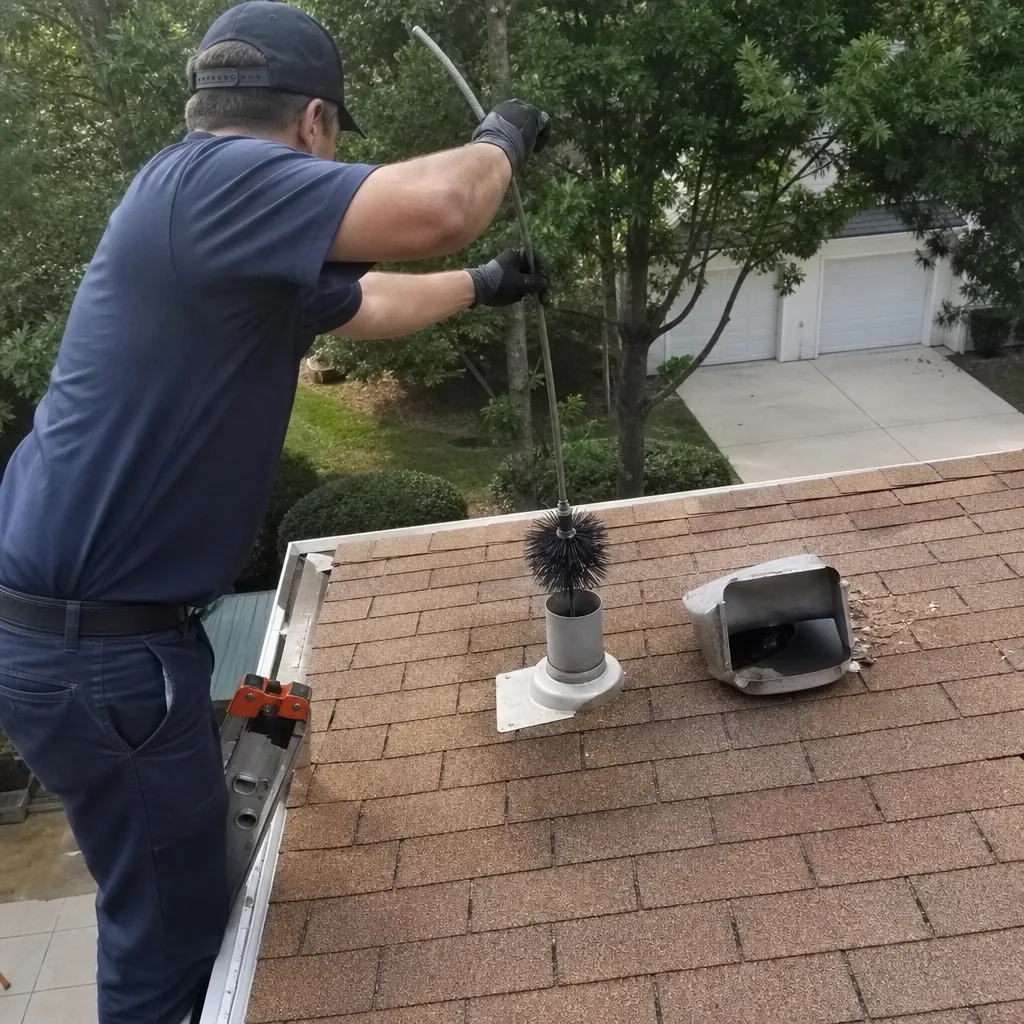
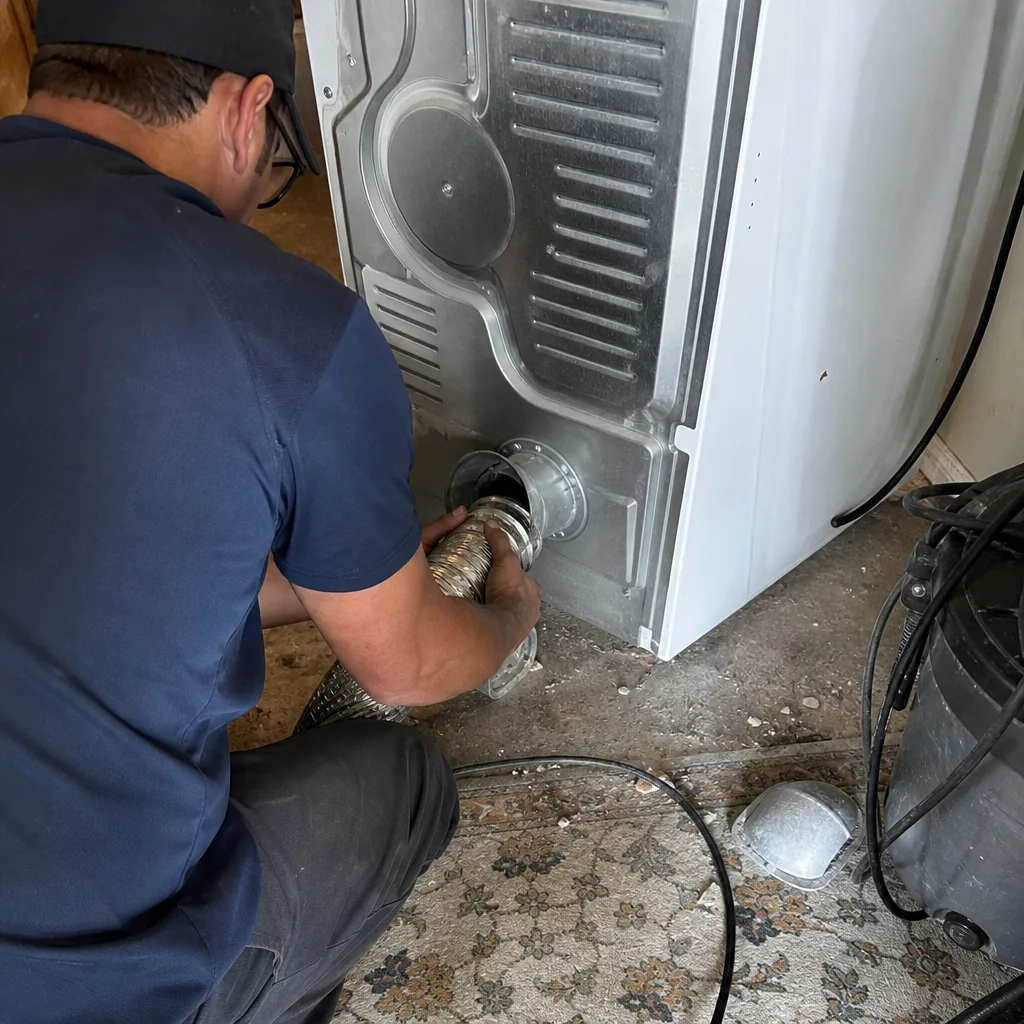
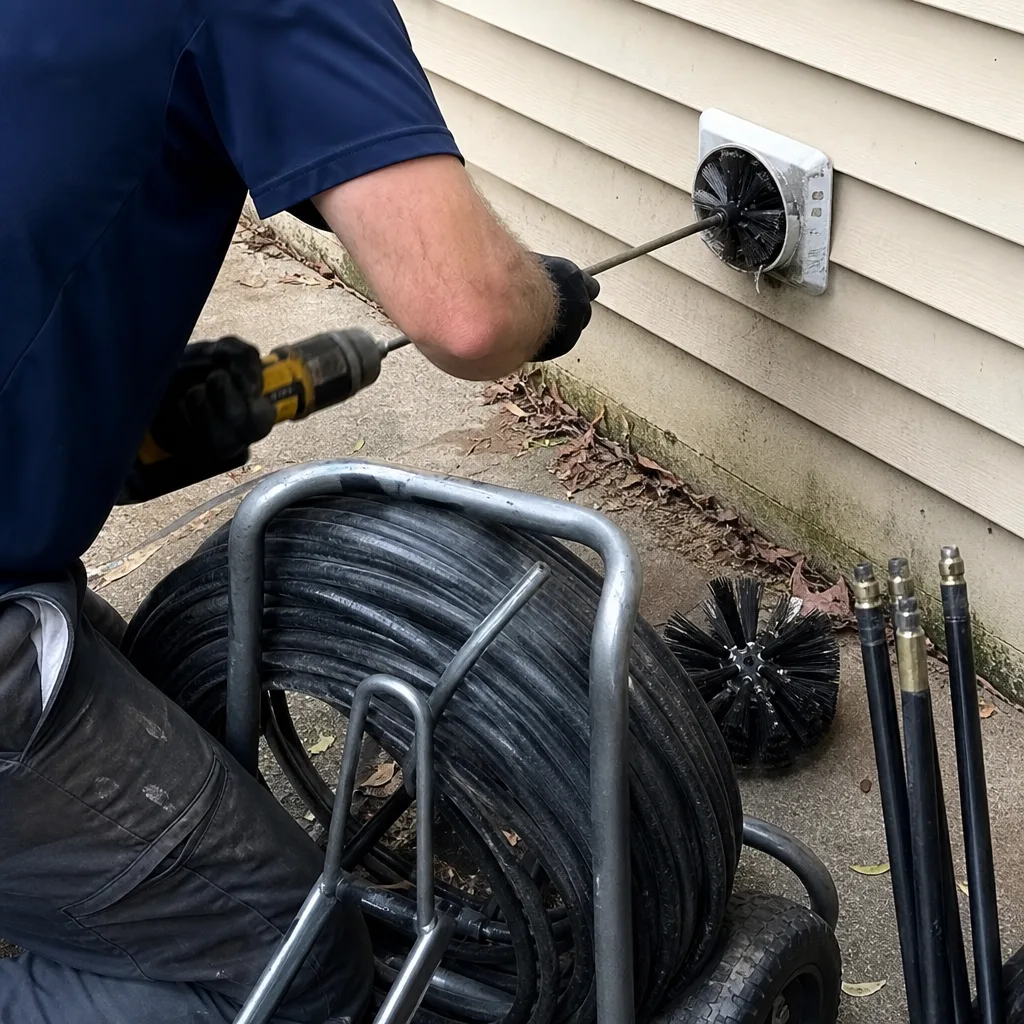
For Dryer Vent Cleaning in Marietta, the same documentation standards apply. Dryer vent repair and replacement, particularly when routing through walls or roofs, may also trigger permitting requirements depending on scope.
Common Mistakes to Avoid
- Assuming cleaning and repair are the same permit category. Homeowners who don’t distinguish between debris removal and mechanical modification may unknowingly authorize unpermitted work. Ask explicitly which category each element of the scope falls into.
- Accepting verbal assurance that a permit “isn’t needed.” Permit requirements are documented in municipal code, not subject to contractor discretion. Verify independently through Cobb County’s Community Development Agency.
- Choosing the lowest quote without verifying licensure. Unlicensed contractors can price lower because they carry no insurance, no bond, and no continuing education costs. The savings disappear when the work fails or when unpermitted status blocks a sale.
- Neglecting to request the photo record. Without photographic documentation, you have no evidence of pre-existing conditions or of work actually performed. This matters for warranty claims, resale documentation, and dispute resolution.
- Ignoring mold indicators to avoid “complicated” remediation. Musty odors, visible growth, or health symptoms that improve when away from home suggest mold contamination that exceeds standard cleaning. Delaying appropriate response allows contamination to spread.
- Failing to confirm that repair work will be inspected. A permit that isn’t followed by an inspection is incomplete. The inspection is what creates the record of code compliance. Ask for the inspection date and the approval documentation.
When to Call a Professional
Call a licensed professional when cleaning reveals damage, when airflow problems persist after cleaning, when mold is suspected, or when you’re preparing a Marietta home for sale and need to verify that all mechanical work is properly permitted and documented. The cost of professional assessment is modest compared to the cost of undiscovered problems.
CleanRun Air Duct Cleaning Marietta offers free estimates in Marietta. Every estimate includes a written price before any work starts, a clear statement of whether permitting applies, and the license information needed for independent verification. Call (470) 516-9337 to schedule. For HVAC system cleaning that may involve additional mechanical components, see our HVAC Cleaning in Marietta service page.
Frequently Asked Questions
No. Debris removal from existing ductwork is classified as maintenance and does not require a permit anywhere in Georgia. However, if the cleaning reveals damage that requires sealing, replacement, or rerouting of ductwork, that repair work falls under the Georgia State Minimum Standard Mechanical Code and typically requires a permit in Cobb County and most other jurisdictions. Call (470) 516-9337 for an assessment that distinguishes cleaning from repair scope.
Permitted duct repair in Marietta typically costs 15-25% more than unpermitted quotes because the price includes permit fees, inspection scheduling, and the licensed contractor’s compliance costs. For typical residential repairs, total costs including permit run $400-$1,200 depending on scope, compared to $300-$900 for unpermitted quotes. The premium purchases documented compliance that protects resale value and warranty coverage. We provide written pricing that itemizes permit costs when applicable.
Check Cobb County’s online permit history by property address, or contact the Community Development Agency with your address and a description of the work. Permits from 2000 forward are generally searchable electronically. Older records may require an in-person records request. If no permit exists for visible modifications, assume the work was unpermitted and consider having a licensed contractor assess compliance before listing the home for sale.
Only if they hold a Georgia Conditioned Air Contractor license. Many duct cleaning companies do not employ licensed mechanical contractors and subcontract repairs or perform them illegally. Ask for the license number of the individual who will perform or supervise any repair work, and verify it through the Georgia Secretary of State portal. CleanRun provides license information in every written estimate.
The home inspector will likely flag the work, the buyer may demand remediation or a price reduction, and the lender may require permitting before closing. In Marietta’s active market, this can delay closing by weeks or derail the sale entirely. Retroactive permitting requires exposing the work for inspection, which is more disruptive and expensive than original permitted installation.
The EPA does not regulate residential mold remediation directly, but its guidance recommends that mold-contaminated HVAC systems be cleaned by contractors following NADCA or IICRC standards with EPA-registered antimicrobial products. Standard duct cleaning equipment and methods are insufficient for established mold growth. The source of moisture must also be identified and corrected, which may require additional contractor specialization.
Our written estimate specifies whether each element of scope requires permitting, identifies the permitting jurisdiction, and includes permit costs. We provide the supervising Conditioned Air Contractor’s license number for independent verification. Inspection scheduling and approval documentation are included in the job record delivered to the customer. The 365-Day Done Right Promise applies to all work, with permit compliance as a baseline requirement, not an optional add-on.
The Bottom Line
Air duct cleaning in Georgia requires no permit, but the repairs it frequently uncovers do. The line between maintenance and mechanical work is clear in code but often blurred in practice by contractors who avoid the permit process. Homeowners in Marietta protect themselves by asking two questions before any repair begins, verifying license status independently, and demanding documented records of both condition and completion. The cost of proper permitting is modest; the cost of unpermitted work surfaces at the worst possible moment, typically when a home sale or insurance claim depends on clear documentation. Written prices, verifiable credentials, and photographic records aren’t marketing claims. They’re the minimum standard for accountable work.
Written by Tomas Reyes, Owner at CleanRun Air Duct Cleaning Marietta, serving Marietta since 2013.