
Last updated September 23, 2026
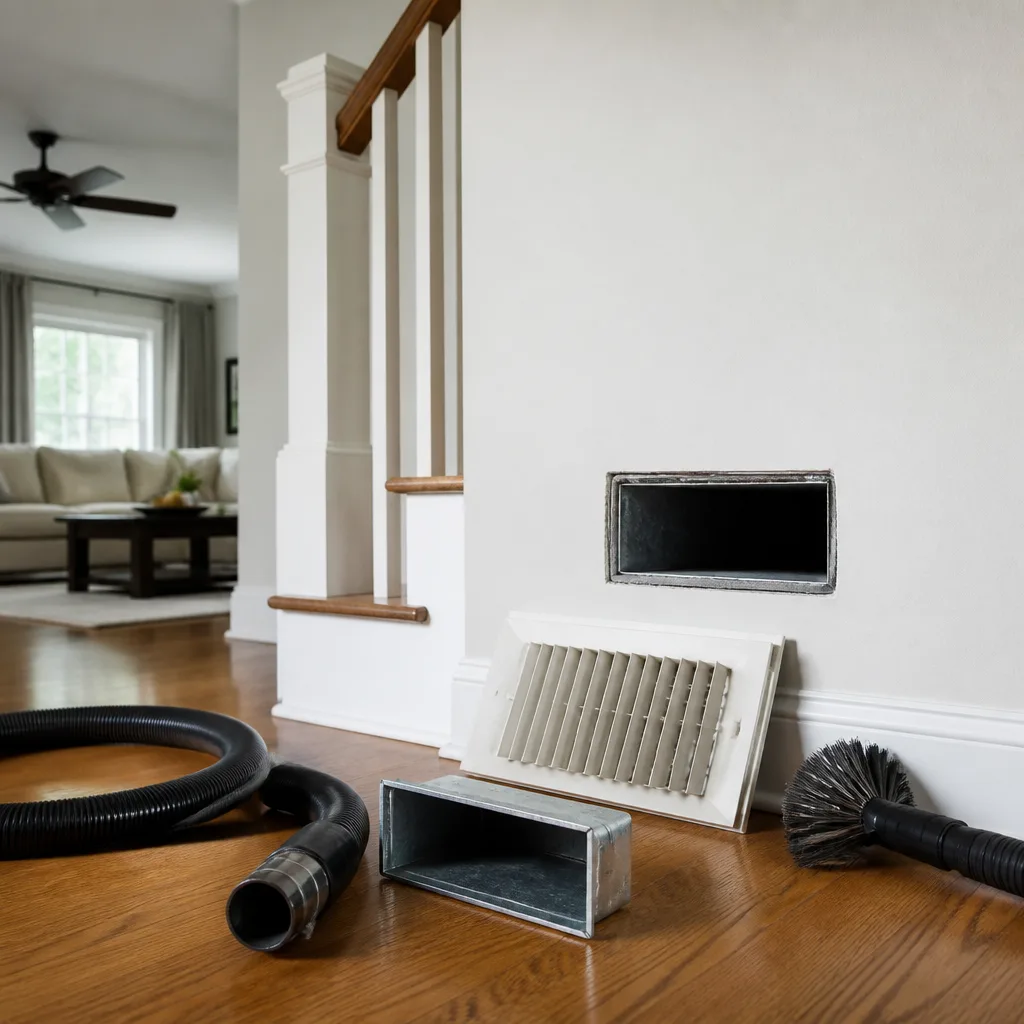
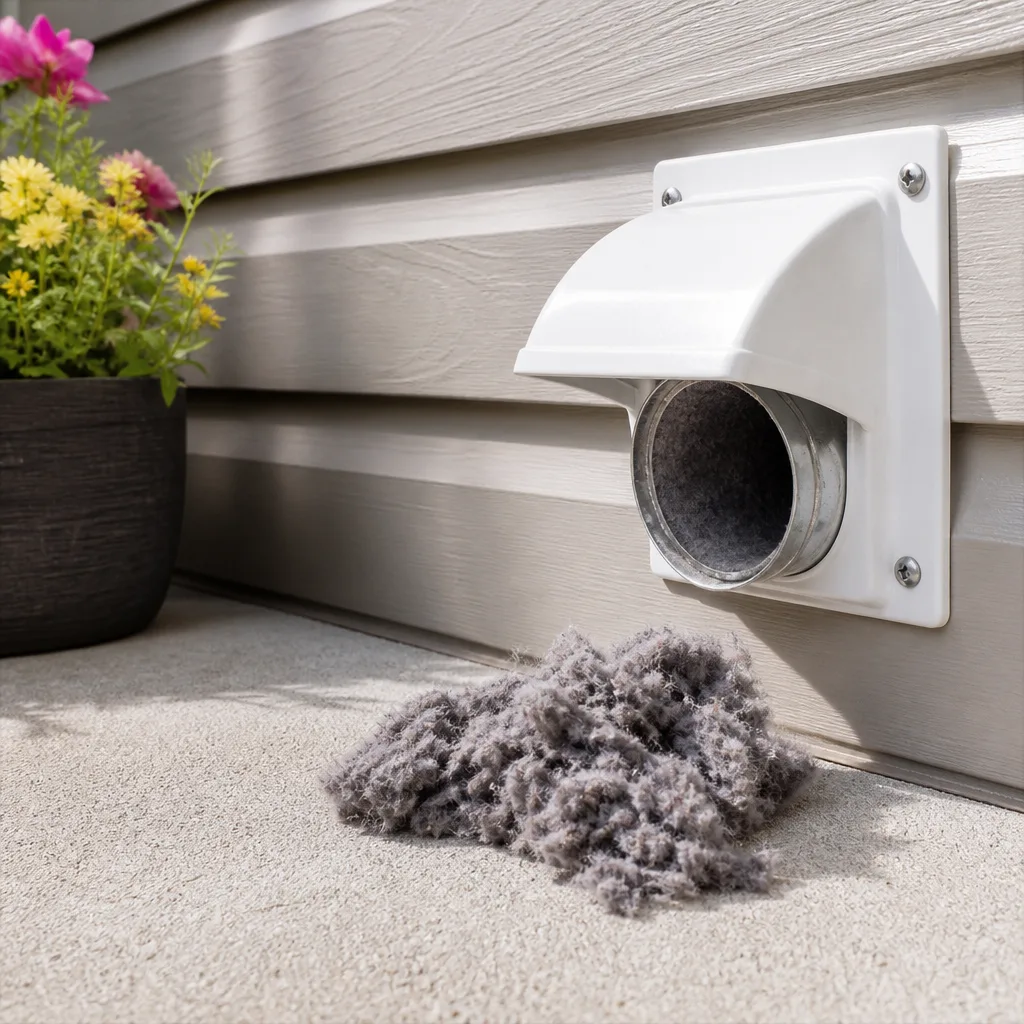
Whole-system duct and dryer vent check with before-and-after photos - you see exactly what came out of your vents
That "$99 whole-house special" is a bait ad - the real number appears once they are in your hallway, or the "clean" is a shop-vac at the register. We photograph the inside of your ducts before and after instead.
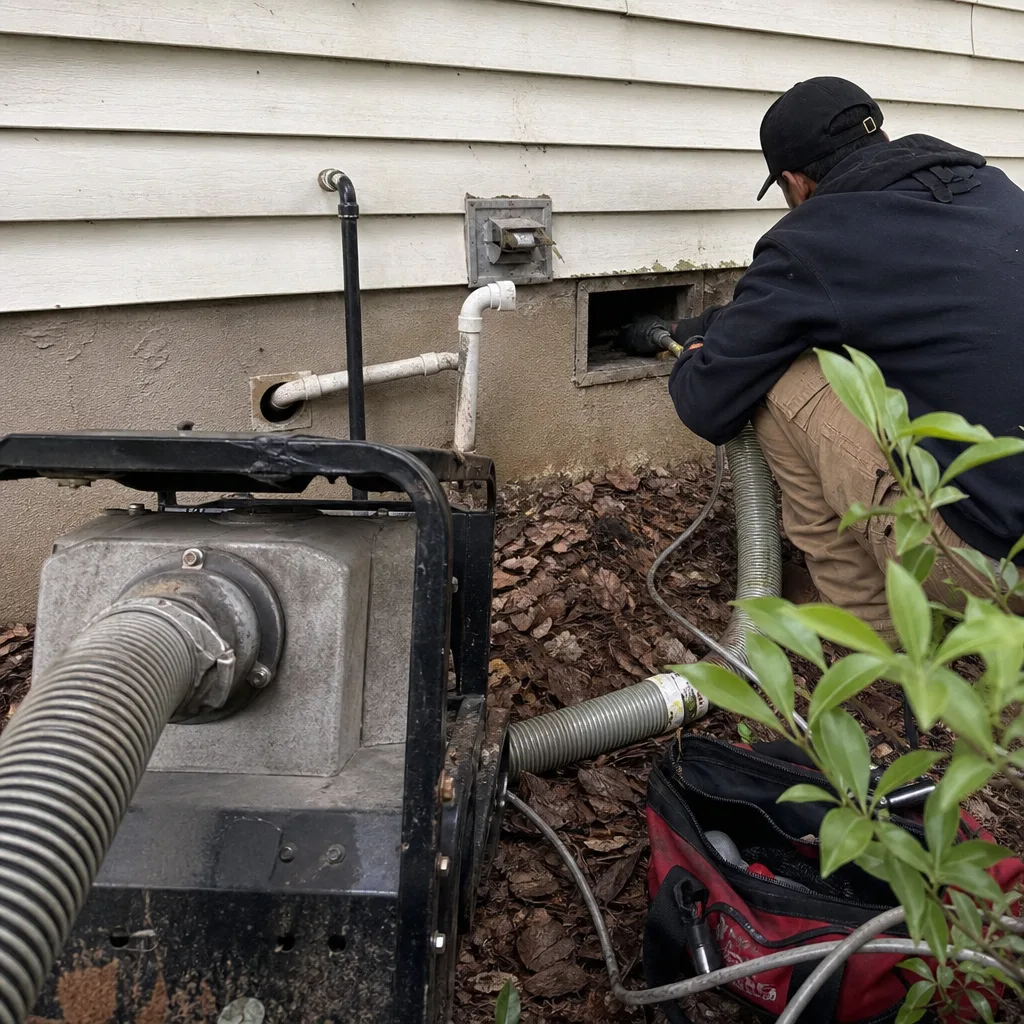 Before
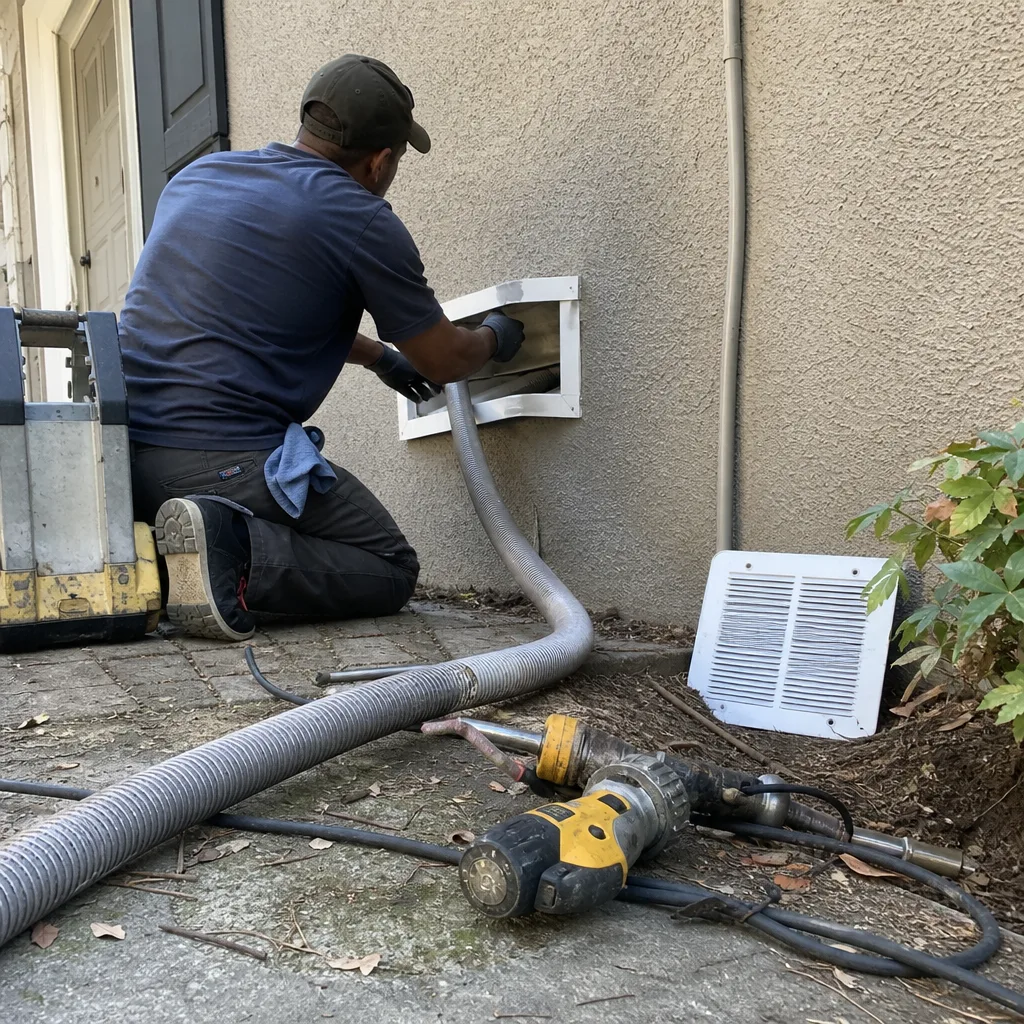 After
After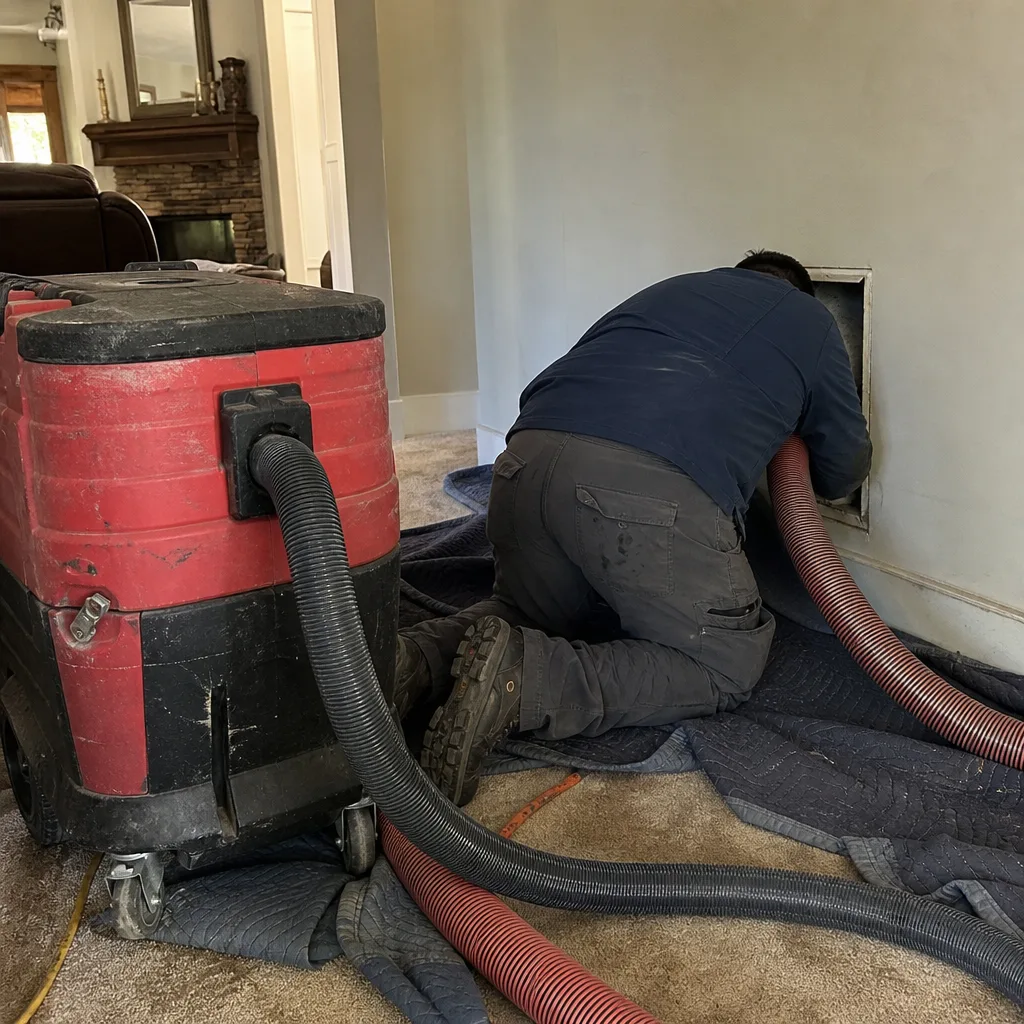 Before
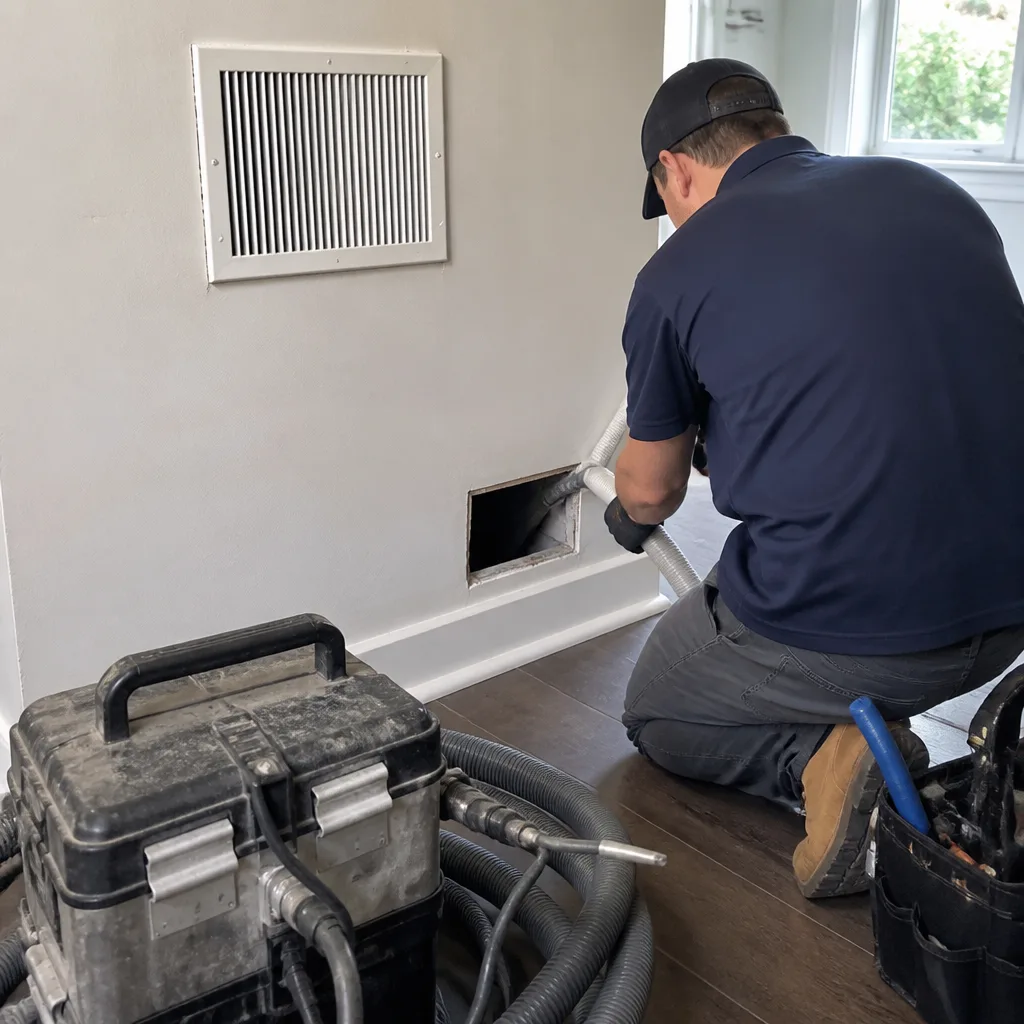 After
After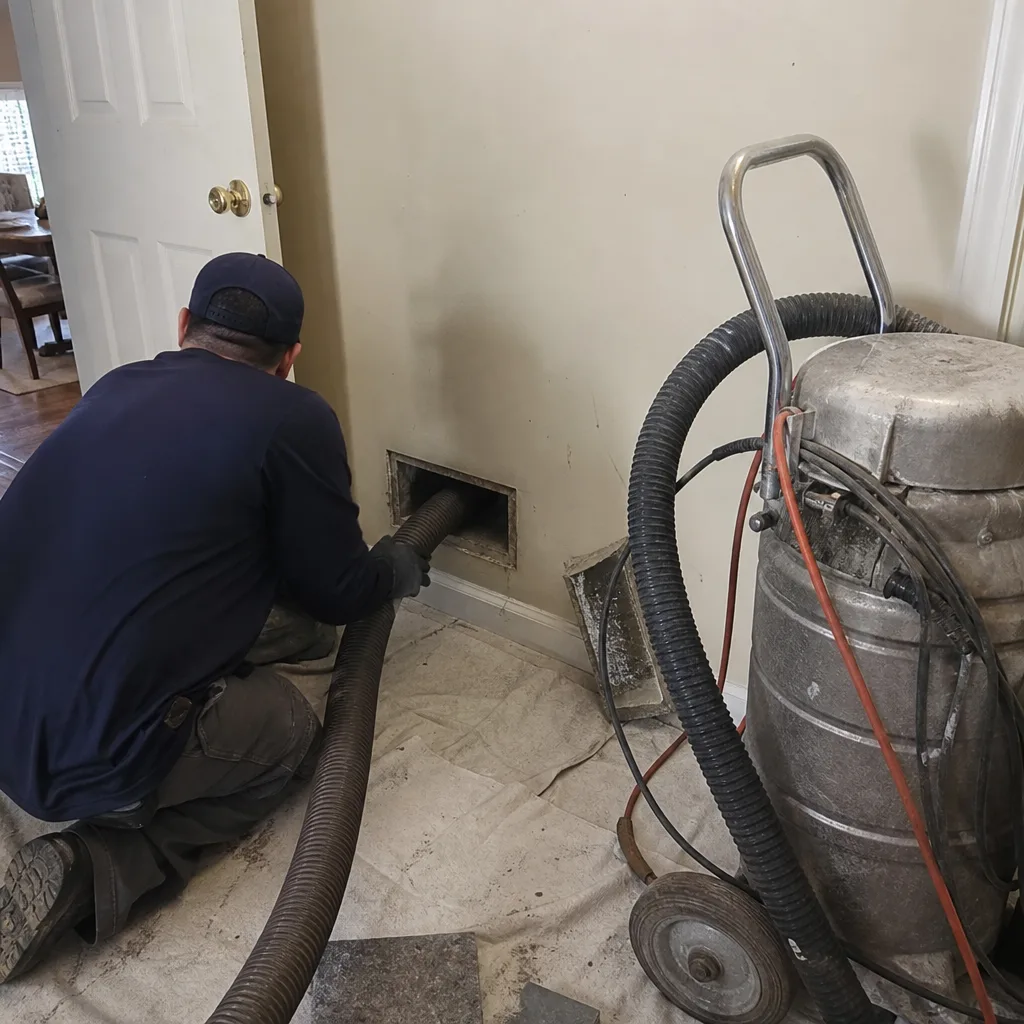 Before
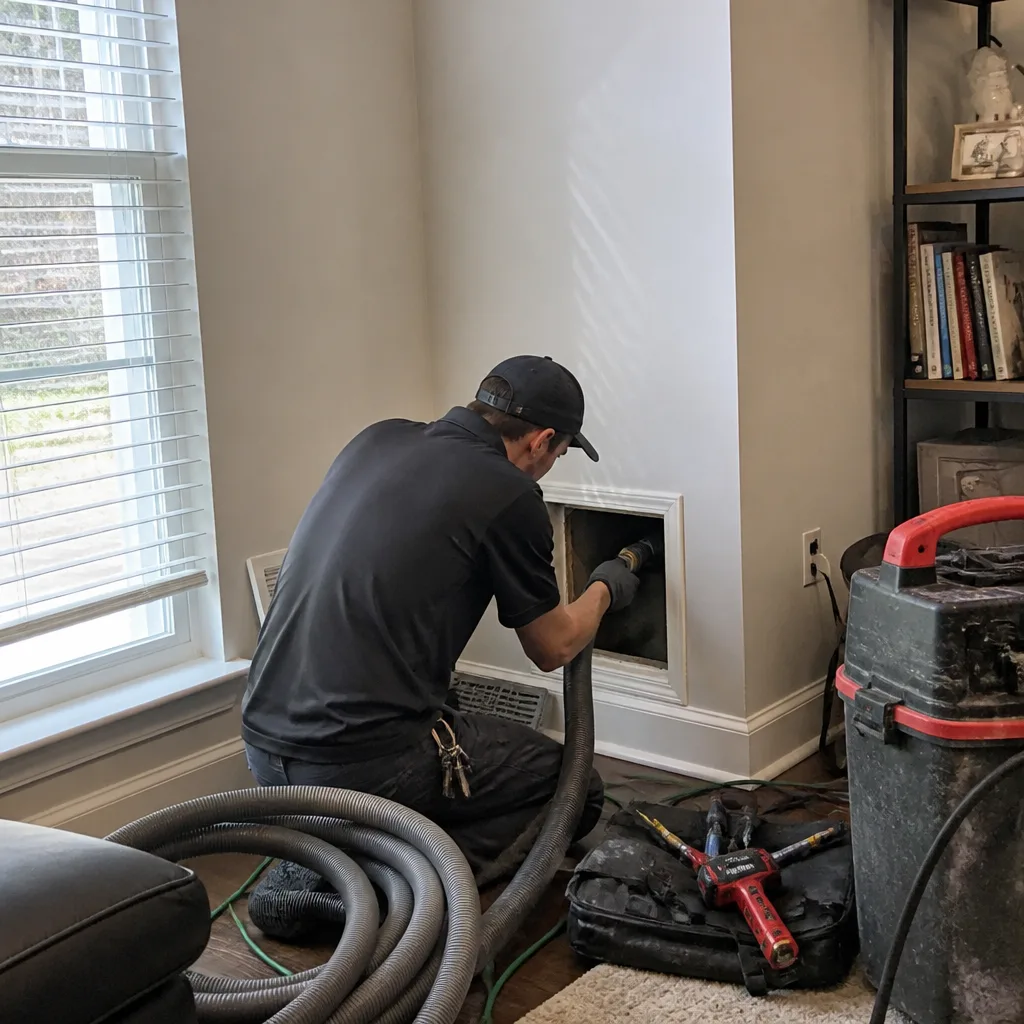 After
AfterHow to Hire a Air Duct Cleaning Contractor in Marietta: A Step-by-Step Guide
The $79 air duct cleaning special survives in Marietta because most homeowners walk into the transaction without a pre-set standard for what “done” looks like. When you cannot define completion, the contractor defines it, and you have no basis to disagree when the job finishes in 45 minutes with a shop-vac and a handshake. Since 2013, we’ve documented the inside of over 52,000 homes, and the pattern is consistent: the homeowners who get real results are the ones who run four specific procedural tests before money changes hands. Contractors who fail any one test reliably fail the work too. This guide shows you exactly what those four tests are, what answers to demand, and what red flags appear the moment a crew arrives at your Marietta home. For more guidance, explore our more guides & resources.
Quick Answer
Hiring a reliable air duct cleaning contractor in Marietta requires four procedural checks before booking: a written, line-itemized quote delivered before arrival, not at the door; verification of equipment CFM rating and whether it is truck-mounted or portable; confirmation that before-and-after photos of every duct run are standard deliverables, not add-ons; and proof of NADCA membership with explicit commitment to the ACR standard. Contractors who resist any of these four checks are structurally incentivized to perform incomplete work.
Table of Contents
- Why the $79 Special Works (and Why It Fails You)
- Test One: The Written Price Before Work Starts
- Test Two: Equipment Verification - CFM, Truck-Mounted vs. Portable
- Test Three: Photo Documentation as Standard Deliverable
- Test Four: NADCA Membership and the ACR Standard
- Red Flags That Appear on the Day of Service
- What Marietta Homes Specifically Need from Duct Cleaning
- Common Mistakes to Avoid
- When to Call a Professional
- Frequently Asked Questions
- The Bottom Line
BeforeAfterWhy the $79 Special Works (and Why It Fails You)
The $79 coupon is not a loss leader. It is a pricing structure designed around the certainty that most homeowners will not know what questions to ask. The contractor arrives with a portable vacuum, agitates registers for 30 minutes, and presents a bill that has ballooned to $400 or more through “additional vent” charges, “sanitizing” upsells, and “main trunk access” fees that were never disclosed.
We have photographed the aftermath of these jobs across Marietta, from East Cobb subdivisions built in the 1990s to newer construction in West Cobb near Kennesaw Mountain. The pattern is identical: debris remains at the first elbow past the plenum, the main trunk line has never been accessed, and the homeowner has no documentation to prove what was or was not done. The camera does not lie, but the absence of a camera leaves only the contractor’s word.
The $79 model works because it exploits an information gap. The homeowner does not know that negative-pressure extraction, the method specified by NADCA’s ACR standard, requires equipment pulling 5,000+ CFM through a truck-mounted system. They do not know that a portable unit rated at 1,500 CFM cannot generate sufficient airflow to dislodge debris from a main trunk. They do not know to ask whether before-and-after photos are included, because they have never been told that such documentation is possible. This guide closes that gap.
Air Duct Cleaning in Marietta varies widely in quality because Georgia does not license duct cleaning as a standalone trade. Anyone with a vacuum and a business card can advertise the service. The four tests below are your only protection in an unregulated market.
Test One: The Written Price Before Work Starts
Haven Standard Clause 1 is straightforward: every job receives a written price before any work begins. This is not a courtesy. It is a structural safeguard against the upsell model that dominates the industry.
When a contractor provides a written quote only after arriving at your home, they gain leverage. You have already invested time in the appointment, cleared your schedule, and allowed a stranger into your house. The contractor knows that most homeowners, faced with an on-site price that exceeds the phone estimate by 200%, will pay rather than restart the search. This is not accidental. It is the business model.
A legitimate written quote in Marietta should include:
- Scope of work: number of supply vents, return vents, and main trunk lines to be cleaned
- Access method: how the contractor will reach the main trunk (typically through the plenum or a sealed access port)
- Equipment specification: whether truck-mounted or portable, with CFM rating stated
- Included deliverables: before-and-after photo documentation, written completion report
- Add-ons priced separately: sanitizing, sealant application, register replacement, with per-item costs
- Total price with no open-ended categories like “additional vents as needed”
At CleanRun, we have held this standard since our first job in 2013. The written price is delivered before the truck leaves our facility, not when it arrives at your driveway. If a contractor in Marietta tells you they need to see the system first, that is reasonable for repair work, but not for standard cleaning. A supply vent is a supply vent. A return is a return. The scope is countable before arrival.
Our CleanRun Air Duct Cleaning Marietta home page includes our standard pricing structure for Marietta homeowners who want to compare against any written quote they have received.
Test Two: Equipment Verification - CFM, Truck-Mounted vs. Portable
Ask this exact question when you call: “What is the CFM rating of your vacuum system, and is it truck-mounted or portable?” Document the answer. Compare it to what arrives.
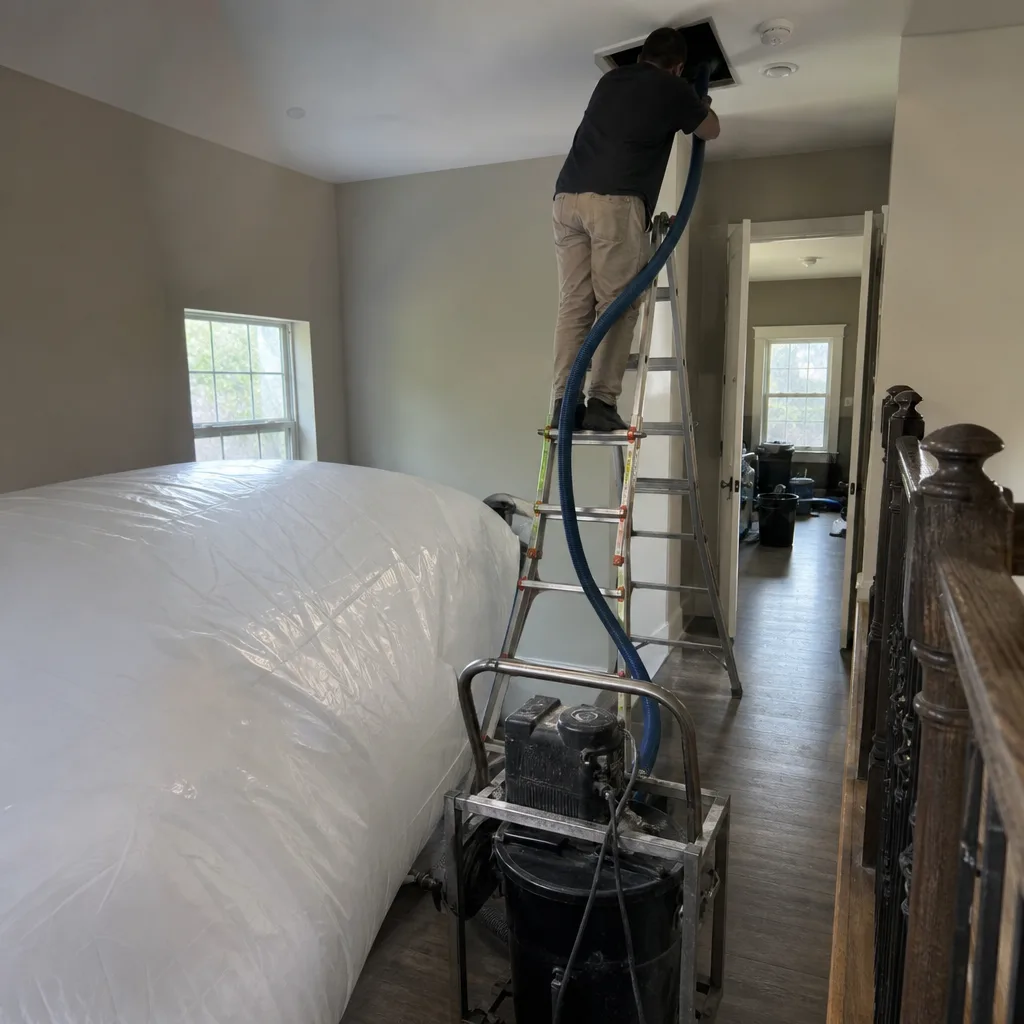
CFM, or cubic feet per minute, measures airflow volume. NADCA’s ACR standard specifies negative-pressure extraction, which requires sufficient airflow to create suction throughout the entire duct system. Truck-mounted systems typically pull 5,000 to 15,000 CFM. Portable units range from 1,000 to 3,500 CFM. The difference is not incremental. A portable unit may clean the first few feet of a duct run but cannot maintain negative pressure through a main trunk line, especially in larger Marietta homes with extended ductwork in conditioned attics or crawl spaces.
The equipment brands matter because they are verifiable. Professional-grade systems in this trade include Nikro portable extractors, Abatement Technologies truck-mounted units, and Rotobrush mechanical agitation systems. When a contractor names their equipment, you can look up specifications independently. When they say “commercial-grade” without naming a manufacturer, you have no basis to verify.
In our experience across Marietta, from the historic homes near Marietta Square to the larger systems in Indian Hills, equipment misrepresentation is common. A contractor may claim truck-mounted capability but arrive with a portable unit, blaming “truck trouble” or “this job doesn’t need the big system.” Your documented phone answer protects you. If the equipment does not match the description, you have grounds to refuse service before work begins.
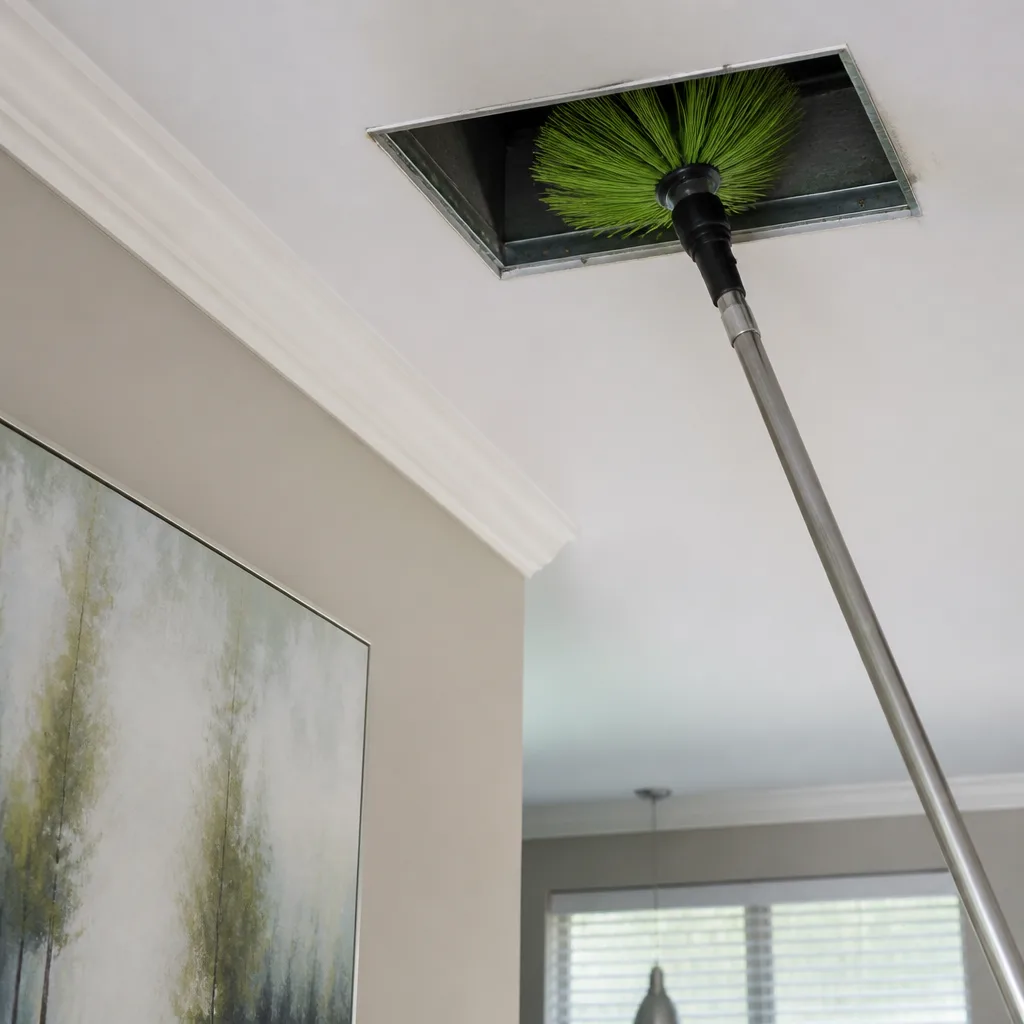
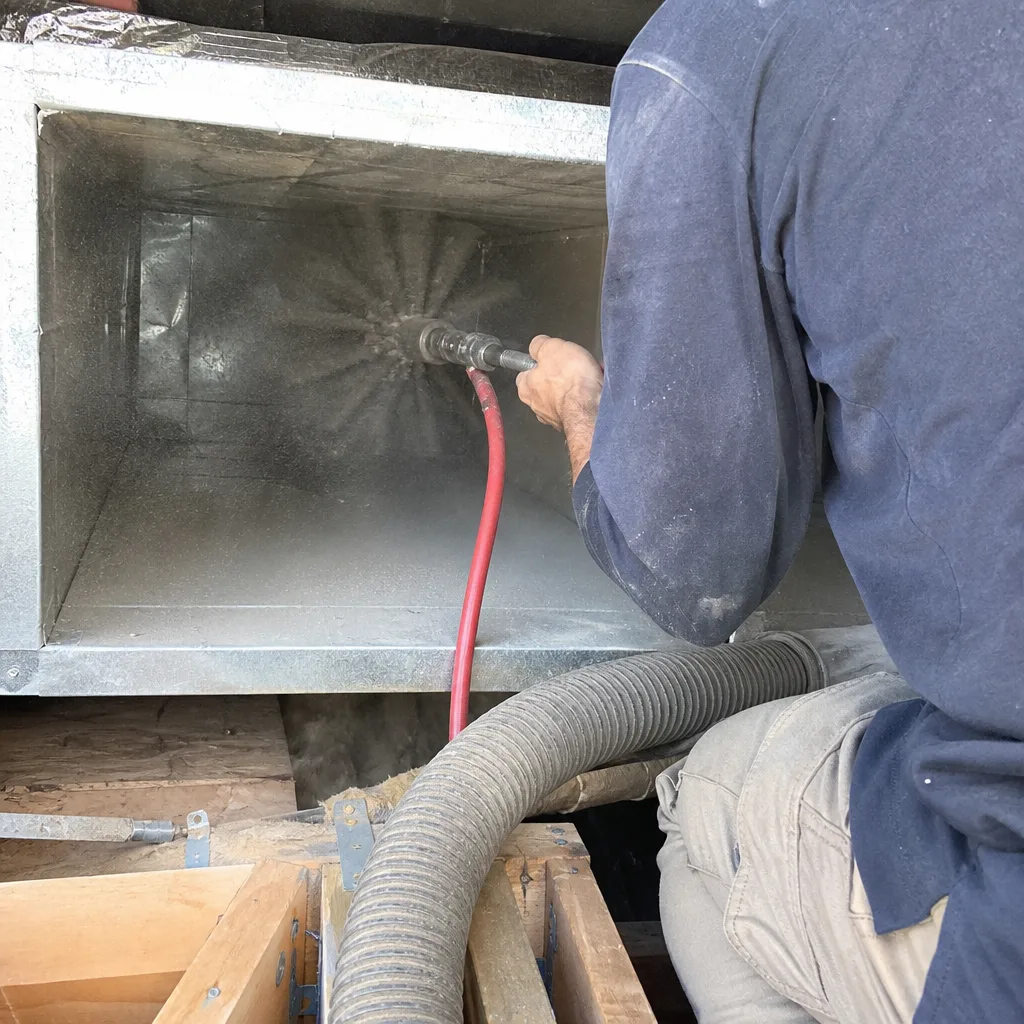
Ask specifically whether mechanical agitation is included. Negative pressure alone will not dislodge adhered debris. The ACR standard requires agitation, typically through pneumatic whips, rotary brushes, or compressed air systems. A vacuum with no agitation is not a duct cleaning. It is a vacuuming.
Test Three: Photo Documentation as Standard Deliverable
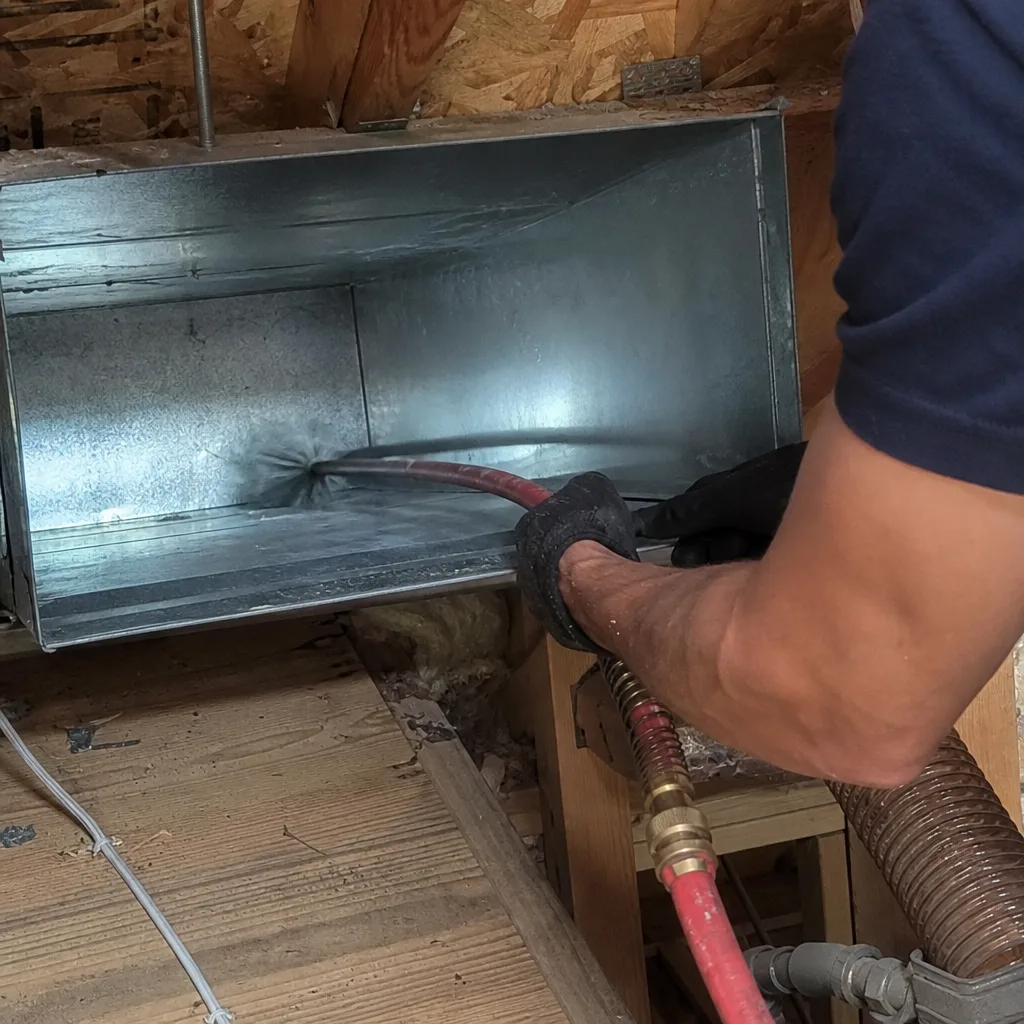
Ask before booking: “Are before-and-after photos of every duct run standard, and what format does the report take?”
The answer reveals whether the contractor operates on documentation or assertion. A contractor who photographs every run has nothing to hide and creates a record that protects both parties. A contractor who treats photos as an add-on, or who provides only “representative” images from other jobs, is structuring the transaction so that completion cannot be verified.
The format matters. A PDF report emailed within 24 hours creates a timestamped record. Physical printouts handed at the door can be lost or altered. Email attachments with no organization make comparison difficult. The standard we have held since 2013 is simple: every duct run, before and after, compiled in a dated digital report with the homeowner’s address and job number.
In Marietta’s climate, documentation has specific value. Our hot, humid summers and pollen-heavy springs create distinct debris patterns. A photo showing a 3-inch accumulation of compacted pollen and dust at a return elbow in April is different from a light dusting in November. Without documentation, you cannot correlate cleaning frequency with actual buildup, and you cannot prove to a subsequent buyer or HVAC technician that the work was performed.
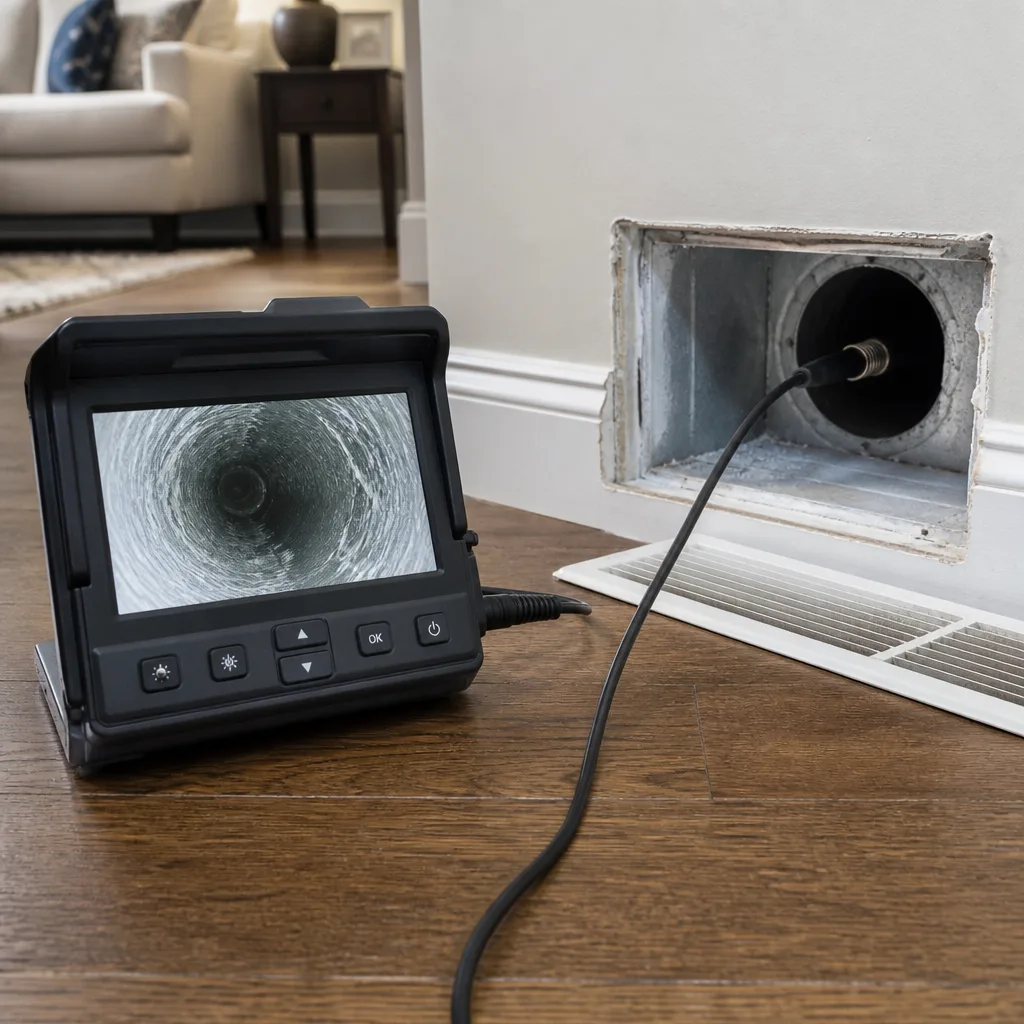
Ask specifically: “Will I see the camera footage before you begin cleaning?” A contractor who refuses is asking you to trust without verifying. The inspection camera, typically a flexible borescope inserted through register openings, shows current conditions in real time. This is your baseline. If the contractor begins work without showing you this footage, you have no way to assess whether the “after” state represents real improvement or merely different lighting.
Test Four: NADCA Membership and the ACR Standard
NADCA, the National Air Duct Cleaners Association, is a minimum bar, not a quality guarantee. Membership requires adherence to the ACR standard, but enforcement is complaint-driven, not proactive. A NADCA member who performs substandard work keeps their membership until a formal complaint is filed and sustained.
That said, non-membership is a red flag. The ACR standard is the only widely recognized procedural guideline for residential duct cleaning. It specifies:
- Assessment: visual inspection of the entire system before cleaning, with documentation of conditions
- Cleaning: negative-pressure extraction with mechanical agitation, applied to all duct runs including main trunk lines
- Restoration: return of the system to operational condition with verification that all access ports are sealed and the HVAC unit is undamaged
When you contact a contractor, ask: “Do you follow NADCA’s ACR standard, and can you provide the specific procedures you use to comply?” A member should answer immediately with their documented protocol. A non-member may dismiss the standard as unnecessary, or may claim to follow “similar” procedures without specificity.
In Marietta, we have encountered contractors who claim NADCA membership but cannot produce a membership number, or who confuse NADCA with unrelated trade organizations. Verify membership at nadca.com before booking. The five minutes spent checking are less costly than a failed cleaning that leaves debris in your system and requires a second contractor to correct.
Red Flags That Appear on the Day of Service
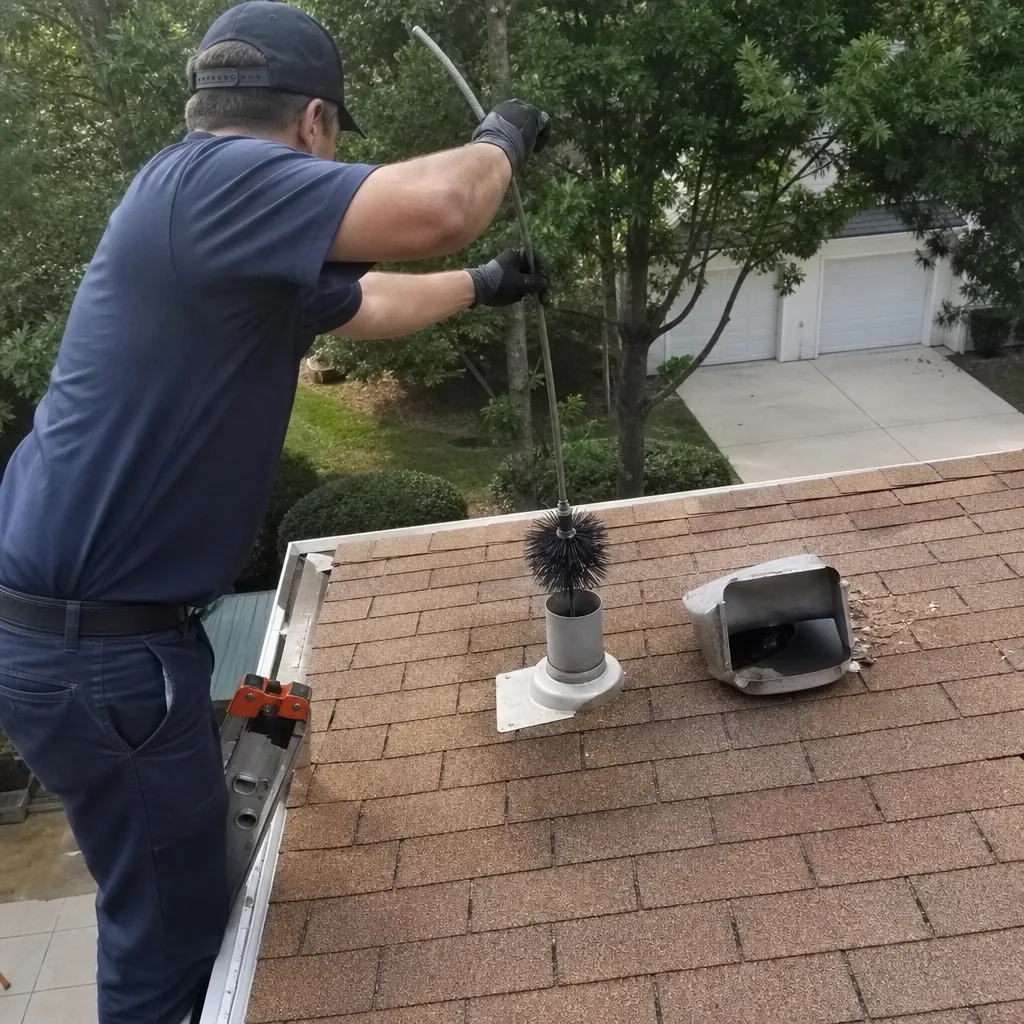
Even contractors who pass phone screening may reveal problems on arrival. Watch for these specific behaviors:
- Arriving with a single portable vacuum when truck-mounted was promised. The CFM differential is not negotiable. A portable unit cannot perform negative-pressure extraction on a main trunk line. Refuse service and document the discrepancy.
- Quoting additional vents at the door. Your written quote should specify vent count. A contractor who claims “we didn’t know about the basement vents” or “the returns are extra” is executing a planned upsell. The vent count is knowable from a phone description or satellite imagery.
- Refusing to show camera footage before beginning work. The inspection camera is your baseline. Without it, you cannot verify results. A contractor who begins agitation before documentation is hiding current conditions.
- No uniform, no name identification, no vehicle marking. Haven Standard Clause 3, Verified Crews, requires background-checked technicians identified by name before arrival. Anonymous labor is unaccountable labor.
- Pressure to add sanitizing or sealant without showing debris first. Sanitizing is appropriate after cleaning, not instead of it. A contractor who leads with antimicrobial upsells before demonstrating actual contamination is selling chemistry, not cleaning.
- Completion in under 90 minutes for a standard residential system. Proper negative-pressure extraction with mechanical agitation, documentation, and reassembly takes time. A 45-minute job is register vacuuming, not duct cleaning.
- No written completion report or photo documentation provided at departure. If the contractor promises to “email it later,” you have no confirmation that documentation exists. The report is a standard deliverable, not a follow-up task.
These red flags cluster. A contractor who arrives with wrong equipment typically also lacks documentation and pressures for upsells. Your written quote and phone documentation give you standing to refuse payment for incomplete or misrepresented work.
What Marietta Homes Specifically Need from Duct Cleaning
Marietta’s housing stock and climate create distinct Air Duct Cleaning services requirements that generic guides miss.
The city spans multiple construction eras. Homes near Marietta Square, built 1880 to 1940, often have been retrofitted with central air through extended ductwork in unfinished basements or sealed crawl spaces. These retrofits create sharp elbows and low-clearance runs where debris accumulates. The flexible duct common in 1980s and 1990s East Cobb construction, particularly in subdivisions like Chimney Lakes and Wynford, is prone to internal insulation degradation that standard vacuuming can damage. Newer construction in West Cobb and around Town Center Mall uses rigid metal duct with tighter seals, but smaller diameter runs that require precise agitation to avoid dislodging connections.
Climate drives contamination patterns. Marietta’s pollen season, February through May, deposits significant organic material in return ducts, especially in homes with mature oak and pine canopies. Summer humidity, regularly exceeding 85%, supports microbial growth on debris accumulations in poorly sealed systems. Winter heating cycles re-suspend settled particles. These patterns mean that “clean” in Marietta is not a static state but a seasonal condition that documentation helps track.
Local code affects access. Cobb County amendments to the Georgia State Minimum Standard Codes require specific sealing of duct access ports created for cleaning. A contractor who cuts access without proper closure creates a code violation and an air leak. Ask specifically: “How do you seal trunk access ports, and do you comply with Cobb County mechanical code amendments?” The answer should reference mastic sealant or approved mechanical fasteners, not tape or temporary covers.
Neighborhood-specific issues we have documented: In Indian Hills and neighborhoods along the Chattahoochee River, elevated humidity from the river corridor accelerates debris compaction. In older East Cobb subdivisions with original HVAC systems, we regularly find that the plenum, the central distribution box connected to the air handler, has never been accessed for cleaning despite being the primary collection point for system-wide debris.
HVAC Cleaning in Marietta addresses the full system including coils and blower, which duct-only cleaning does not cover. For homes with integrated humidifiers or electronic air cleaners, this broader scope is often necessary.
Common Mistakes to Avoid
- Booking based on review count without reading procedural details. A contractor with 500 reviews may have 500 instances of register vacuuming. Look for reviews that mention documentation, time on site, and specific equipment.
- Accepting a “whole house” price without vent count specification. “Whole house” is meaningless. A 1,200 square foot ranch with 8 vents is not the same scope as a 3,500 square foot two-story with 22 vents. The written quote must count what will be cleaned.
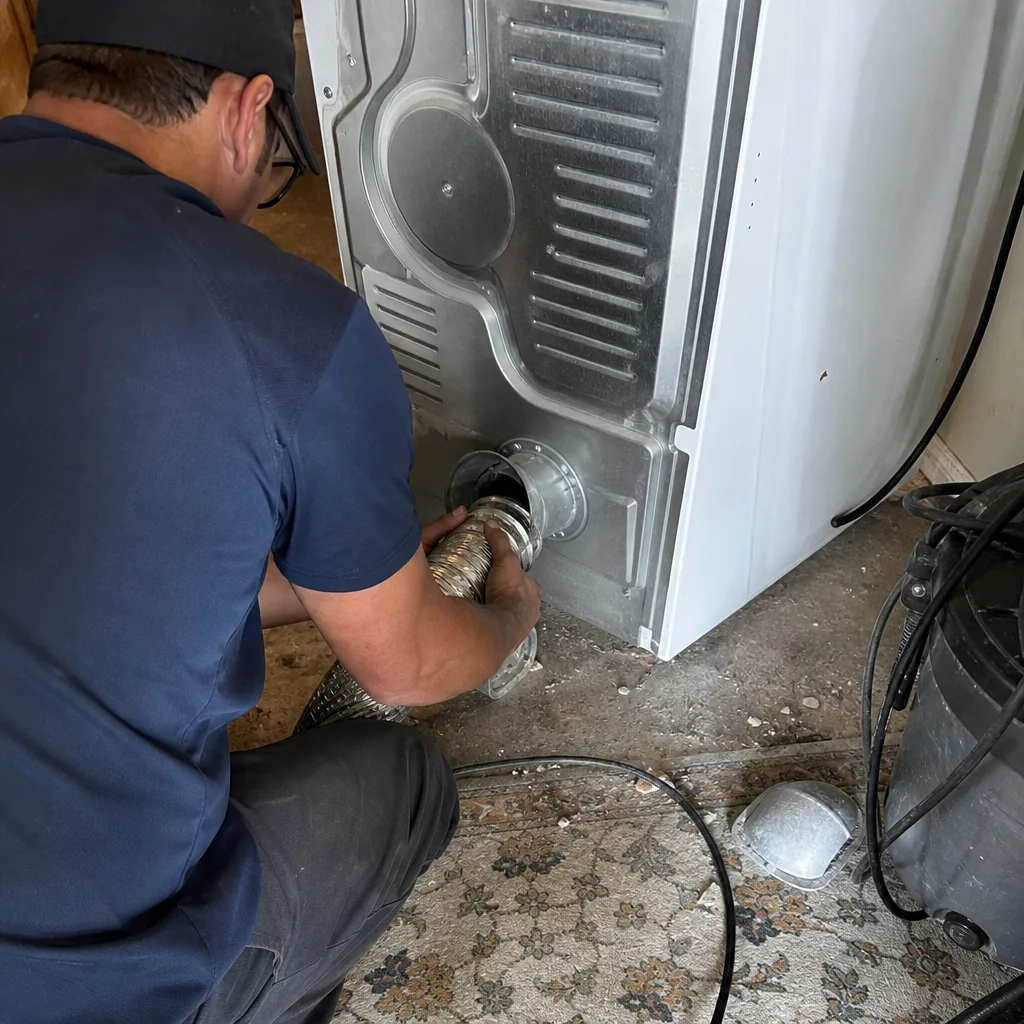
- Ignoring the dryer vent connection. In Marietta, many duct cleaning contractors also offer Dryer Vent Cleaning in Marietta, but some do not. A clogged dryer vent creates fire risk and reduces HVAC efficiency. Verify whether this is included or available as a coordinated service.
- Assuming NADCA membership equals quality. Membership is a procedural commitment, not a performance guarantee. Verify that the contractor actually follows ACR standards on each job, not merely maintains annual dues.
- Neglecting to ask about access port sealing. Unsealed or improperly sealed access ports leak conditioned air and violate Cobb County code. The contractor’s method of closure should be specified in writing before work begins.
- Failing to document the phone conversation. Your notes on CFM claims, equipment type, and photo documentation promises are your only protection against bait-and-switch. Write them down, with date and representative name.
- Prioritizing speed over thoroughness. A contractor who emphasizes “in and out in an hour” is not performing negative-pressure extraction with mechanical agitation. Proper work takes the time it takes.
When to Call a Professional
Call a duct cleaning contractor when you can document specific symptoms: visible debris at registers, reduced airflow from specific vents, musty or stale odors when the system cycles, or unexplained increases in dust accumulation on surfaces. After renovation work, particularly drywall sanding or flooring replacement, duct cleaning is preventive maintenance, not reactive repair.
In Marietta’s climate, homes with mature landscaping, pets, or occupants with respiratory sensitivity benefit from documented cleaning every three to five years, with interval adjusted based on photo documentation from the previous job. New homeowners in the 2015-2025 purchase cohort, particularly those buying previously occupied homes without maintenance records, should treat duct inspection as standard due diligence.
CleanRun Air Duct Cleaning Marietta offers free estimates in Marietta. Every estimate includes a written, line-itemized quote before any work is scheduled, with no obligation. Call (470) 516-9337 to request yours.
Frequently Asked Questions
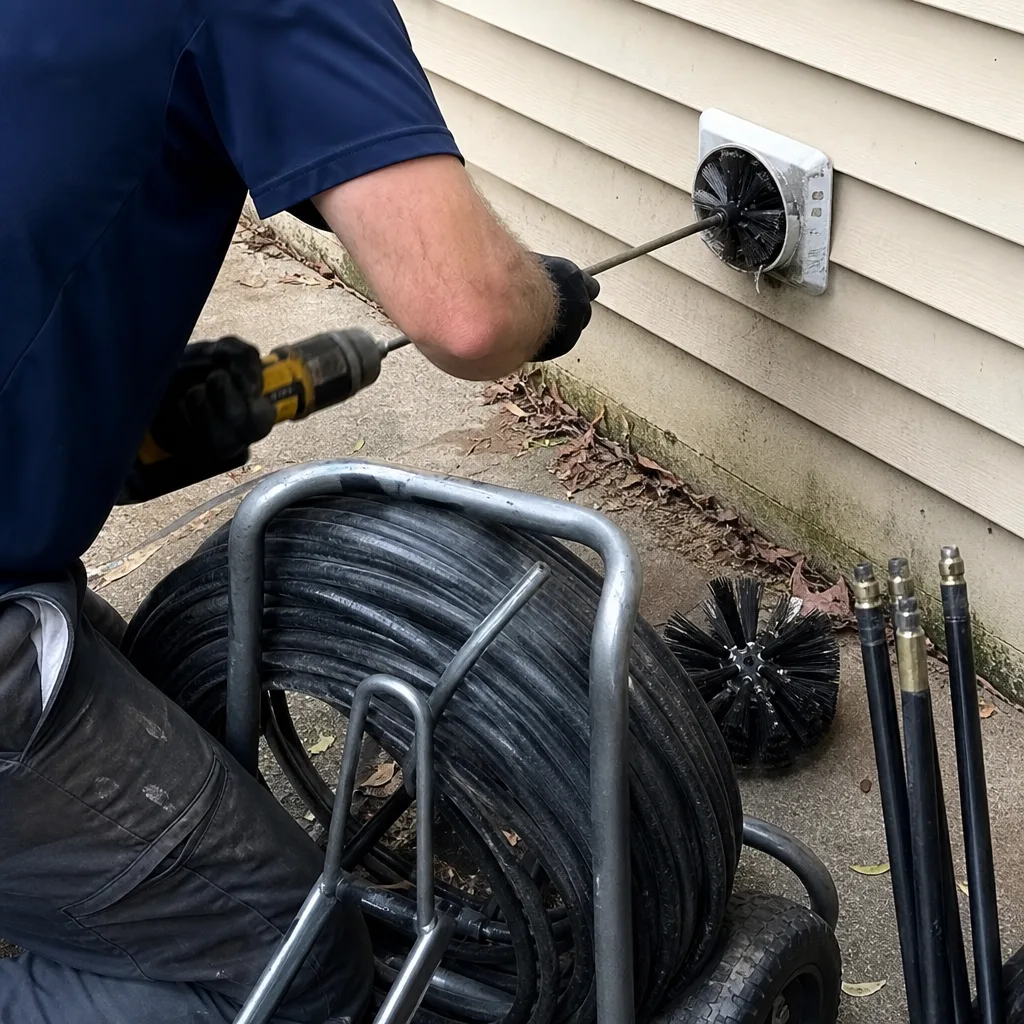
A thorough, documented residential duct cleaning in Marietta typically ranges from $400 to $800 for a standard system of 12 to 18 vents, with larger homes or systems requiring main trunk access at the higher end. See our Air Duct Cleaning Cost Breakdown: The Marietta Homeowner’s Reference for 2026 for detailed pricing factors. Prices below $300 generally indicate register vacuuming without negative-pressure extraction or documentation. Call (470) 516-9337 for a written quote specific to your home, estimates are free.
The price gap reflects scope differences that contractors rarely explain upfront. A $79 to $149 quote typically covers register vacuuming with a portable unit, excludes main trunk cleaning, excludes photo documentation, and relies on upsells at the door for actual revenue. A $400 to $800 quote reflects truck-mounted or high-CFM portable negative-pressure extraction, mechanical agitation of all runs, and documented before-and-after photos as standard deliverables. The cheaper quote is not a discount. It is a different service with a different name.
Demand a documented photo record of every duct run, before and after, as a standard deliverable included in the base price, not an add-on. The photos should be date-stamped, address-specific, and organized by run location. At CleanRun, this has been our practice on every job since 2013. Without such documentation, you have only the contractor’s assertion, which is not verification.
For most Marietta homes, every three to five years with interval adjusted based on documentation from the previous cleaning. Homes with heavy pollen exposure from mature oak and pine canopies, multiple pets, or occupants with allergies may need more frequent service. The photo record from your last cleaning shows actual accumulation rates, replacing arbitrary calendar schedules with evidence-based maintenance.
No. NADCA membership requires adherence to the ACR standard, but enforcement is complaint-driven, not proactive. Membership is a minimum qualification, not a quality assurance. Verify that the contractor follows specific ACR procedures, ask for their documented protocol, and confirm that photo documentation is standard practice. A NADCA member who skips steps keeps their membership until someone files a formal complaint.
Ask for the CFM rating and whether the system is truck-mounted or portable, then document the answer. Truck-mounted systems pull 5,000 to 15,000 CFM; portable units range 1,000 to 3,500 CFM. Ask whether mechanical agitation is included, as negative pressure alone will not dislodge adhered debris. Ask for equipment brand names, Nikro, Abatement Technologies, and Rotobrush are trade-recognized manufacturers whose specifications you can verify independently. Compare the phone answer to what arrives at your door.
The Bottom Line
Hiring an air duct cleaning contractor in Marietta is a procedural decision, not a popularity contest. The four tests, written price before arrival, verified equipment specifications, photo documentation as standard, and NADCA membership with ACR commitment, protect you in an unregulated market where anyone with a vacuum can advertise expertise. Contractors who resist any test are revealing their business model. The $79 special exists because homeowners have not learned to ask. Run the tests, document the answers, and demand the same accountability you would expect from any other trade working in your home.
CleanRun Air Duct Cleaning Marietta has operated under these standards since 2013: written price before work starts, every time; documented photo record of every duct run on every visit; background-checked, uniformed technicians identified by name before arrival; and the 365-Day Done Right Promise backed in writing on every job. Our equipment includes Nikro, Abatement Technologies, and Rotobrush systems, with specifications available for your review. For a free written estimate in Marietta, call (470) 516-9337.
Written by Tomas Reyes, Owner at CleanRun Air Duct Cleaning Marietta, serving Marietta since 2013.